Friday, December 30, 2011

Judge Says Chicano Studies Program Violates Arizona Law

Article from the Latin American Herald Tribune [Click header to go to original article.]
Cartoon by Lalo Alcaraz


Less than a week before classes are set to resume after the Christmas break, the future of Tucson’s Mexican-American studies program has been cast into doubt by a judge’s finding that it violates Arizona law.

The Tucson Unified School District could lose up to $15 million in state funding annually unless it drops or substantially modifies the program.

“This decision was not a surprise for us; in a way, we expected it,” school board member Adelita Grijalva told Efe Wednesday.

The board – itself divided on the issue of Chicano studies – must now decide how to respond to Tuesday’s finding by state administrative law Judge Lewis D. Kowal.

Tucson’s program violates a new Arizona law barring ethnic studies courses that promote “the overthrow of the United States government” or “resentment toward a race or class of people,” Kowal concluded.

That law likewise excludes curricula “designed primarily for pupils of a particular ethnic group” or that seek to “advocate ethnic solidarity instead of the treatment of pupils as individuals.”

The judge rendered his opinion in the form of a non-binding recommendation to the Arizona education department, which has 30 days to decide whether to pursue legal action against the TUSD if it refuses to bring its program into compliance.

State education superintendent John Huppenthal, who launched the initial challenge to the Chicano studies program, welcomed Kowal’s finding.

“I made a decision based on the totality of the information and facts gathered during my investigation – a decision that I felt was best for all students in the Tucson Unified School District. The judge’s decision confirms that it was the right decision,” Huppenthal said in a statement.

Eleven TUSD teachers filed suit in federal court to challenge the Arizona law as unconstitutional, but the case is still pending.

The attorney representing those plaintiffs, Richard M. Martinez, told Efe he was surprised that Kowal did not even address the constitutional aspect of the law.

The federal lawsuit contends the Arizona measure is discriminatory toward the Hispanic community and that it violates the right to freedom of expression.

Defenders of the Tucson program say it informs students about the history and contributions of Latinos in Arizona and the United States.

The program is more than 40 years old.

Hispanics (Chicanos) make up 61.4 percent of the TUSD’s 51,866 students.

Critics of the new say it was specifically crafted to end the TUSD’s ethnic studies programs, long a target of former Arizona education superintendent Tom Horne, now the state’s attorney general. EFE

-30-

Thursday, December 22, 2011

Houston Chicano Mural Will Be Saved, But Where?

Article by Pat Hernandez for KUHF FM
Photo by Johnny Hanson of the Houston Chronicle

Maria Jimenez is a University of Houston alum. She remembers the mural when it was being painted, in the part of the center where Mexican Americans often congregated. She says at the time they numbered 400 out of a total enrollment of 29,000 students.

"The Mexican-American Youth Organization was an active organization at the time, and its members wanted to preserve the history of the Chicano movement, but also wanted to be able to designate what had become home for us. The section had become our home, given that we were probably 99-percent of us, first generation college-goers."

Gloria Rubac is a retired educator and had already graduated from college. But she was very much involved in student activism and had helped paint part of the mural.

"It was extremely important at that time, because the Chicano movement was developing, and people were learning who Chicanos were. And now we have this gorgeous piece of history that talks about the struggle, the fight, the racism that was fought."

But the mural has become the center of attention with a planned renovation of the University Center.

This is graduate Hector Chavana:

"We want to send a clear message: Number one, we don't want the mural destroyed, we want it preserved. Number two, we really don't want it moved at all, because we fell that there's a possibility it could be damaged. And number three, we want it to take a more prominent role here at the University Center and in student life in general."

University spokesman Richard Bonnin says part of a comprehensive renovation and expansion of the University Center, which was approved in a student referendum, includes preserving existing artworks, like the Chicano mural.

"Absolutely, that's one of the reasons why we hired the art conservator. We are dedicated and committed to preserving not just this piece of artwork, but all of the artwork at the University that we consider to be a significant part of our history."

He says the conservator found the mural to be painted on canvas. That will allow it to be removed, cleaned, restored and mounted. Whether it remains at its current location...

"That is still being reviewed. We want to put it in a very prominent area. This particular location as of now, is badly in disrepair."

He says the mural could find a new home in another part of the campus, or it could remain in its present location once the renovation is done.

A renowned piece of Chicano art painted on a wall at the University of Houston will be preserved. But whether it remains at the present location is not known.
The mural created in 1973 by the Mexican-American Youth Organization is located on a wall in the basement of the University Center.

Thursday, November 10, 2011

Field Notes From the Revolution: Activists Occupy California’s Imperial Valley


Mike Davis for the Nation [Click header to go to the Nation.)

My car radio reports an Arctic blizzard on Wall Street, but Main Street in El Centro is comfortably baking in ninety-degree autumn heat. In California’s Imperial Valley, where federally subsidized Colorado River water has irrigated the profits of Anglo latifundistas for more than a century, and where farmworkers too often die of sunstroke and dehydration on 120-degree days in August, this is fine weather for protest.

Forty or fifty Valley residents are marching down Main, past recently boarded-up storefronts and extinct family businesses, stopping in front of several banks and a McDonald’s to chant “No more, no more, no more oppression. The 99 percent is fed up with all the exploitation.”

The protest wears two hats—Occupy El Centro and Occupy Imperial County—but both initiatives have now fused into a single emerging network of activists. (Their audacious name in Spanish, which I prefer, is Toma el Valle, or “Take the Valley.”)

After some lusty renditions of El pueblo unido jamas sera vencido(“Best chant ever,” an eighth-grader tells me), the marchers rally under a picnic canopy at Adams Park, where a serape-draped Day of the Dead altar has been erected in memory of the “American Dream.”

There are sprays of marigolds, painted papier-mâché skulls, a portrait of a santo (Cesar Chavez), corn husks, pumpkin seeds,pan de muertos, small American flags, amulets, a plaque with the names of local war dead and a copy of the 1848 Treaty of Guadalupe Hidalgo. Leaning on the altar is a large placard: “99%.”

But it could also have read “32%”—the official unemployment rate in Imperial County at the beginning of September. According to the Bureau of Labor Statistics, El Centro and its neighboring towns lead the nation’s metropolitan areas in joblessness.

Likewise, local per capital incomes are today nearly 10 percent less than twenty years ago. Half-finished subdivisions—targeted for sale to extreme long-distance commuters who work in San Diego—are becoming dusty ghost towns, and even the local cemetery is rumored to be in foreclosure.

Statistically, in other words, the sueño Americano in the Imperial Valley is almost without a heartbeat. And the outside world is eager to rub salt in the wound.

One yuppie lifestyle site, for example, recently voted El Centro the “worst city” in the United States, while William Vollman, the Forrest Gump of US literary journalism, has depicted Imperial County as the heart of border darkness, if not Hell itself, in an immense, sprawling, solipsistic book. His Imperial is 1,344 pages long; my edition of Tolstoy’s War and Peace, 1,296 pages.

After the rally, while organizers are dismantling the altar, I talk to several protesters about outside images of the Valley. One teenager thinks I’m pulling his leg when I describe Vollman’s magnum opus: “About El Centro, for real? Why? This is just an ordinary place.”

An older Latino man acknowledges the Valley’s brutal and extraordinary anti-union past, but also demands respect for its rich cultural core of family life, outdoor recreation and Mexican heritage. “If our kids leave,” he emphasizes, “it’s not because they hate the desert, but because there are no decent jobs.”

Water Transfer and Death Winds

Later, over apple pie and nachos at a nearby Denny’s, I have a chance to interview six of the occupationistas. I’m particularly interested in how they connect the broader themes of greed and inequality to their local situation.

I dub Imperial the most “reactionary” county in California. Susan Massey, a retired schoolteacher from nearby Holtville and a longtime peace activist, is skeptical.

“Poorest perhaps,” she says, but she points to the incremental enfranchisement (80 percent of the population is now Latino) that has ended the long era of overt farm fascism, when shouting anti-plutocratic slogans on Main Street would have resulted in a jail cell or even a lynching. Electorally, Imperial is now a reliable national Democratic stronghold (represented in Congress by liberal Bob Filner), even if voters still overwhelming reject gay marriage.

But everyone at the table agrees that the scale of the Valley’s unemployment problem far exceeds the meager resources available to local government. And as in southern Louisiana, jobs and environment are inextricably linked as the region approaches a dangerous tipping point.

Anita Nicklen, a migrant rights advocate and mother of two of the younger protesters, explains the links in a potentially fatal chain. “Farmers are under tremendous pressure to fallow land and sell their water entitlements to San Diego’s suburbs. Fewer crops means fewer farm workers and fewer dollars circulating in our local economy. There is also less runoff from irrigation into the rapidly shrinking Salton Sea. Fish die, migratory birds leave, tourists stay home. As the sea dries up, its toxic contents are exposed to the wind.”

(A scientist friend of mine later suggests a recipe for making the muck at the bottom of the sea: “Add alkali salts, deadly pesticides and carcinogenic industrial residues to vast quantities of fertilizer and sewage. Let it dry. Then let it blow. Roll up your car windows and quickly drive as far away as possible.”)

The peril is not theoretical. Los Angeles is currently spending hundreds of millions of dollars to restore parts of Owens Lake, whose water supply was diverted into the LA Aqueduct in 1913, to mitigate the alkali dust storms that for years have created acute respiratory problems in high-desert communities.

But the death of the Salton Sea, an extraordinary reservoir of sinister chemicals, would be like opening Pandora’s box, a creeping Chernobyl of respiratory illness and cancer. Partial depopulation of the Imperial and d valleys might follow.

To prevent such an apocalypse, Sacramento proposed a $9 billion restoration plan for the sea, but authority for the appropriation was blocked in court in 2009, and the plan now faces the triage of the state debt crisis. Meanwhile, climate change and a long drought in the Colorado Basin have reinforced political pressures to allow much larger water transfers from the Imperial Valley to the coast.

NAFTA Doesn’t Trickle Down

I change my line of inquiry. “OK, agriculture will likely decline, but what about the border economy?”

The Imperial Valley stands astride two major NAFTA transport corridors, and its Siamese twin in Mexico, the Mexicali Valley, is rapidly industrializing and diversifying.

El Centro has a population of 43,000; Mexicali, about 1 million. Across the border fence is a forest of foreign logos atop bustling maquiladoras: Sanyo, Kenworth, Allied Signal, Goldstar, Nestlé and so on. And an ambitious new industrial park, the “Silicon Border,” is fishing in Asia to bring semiconductor manufacturing back to North America.

Surely Mexicali’s dynamism must invigorate the Imperial Valley as well?
But no one at Denny’s can think of a single new manufacturing plant that free trade has added to the county (there apparently isn’t any). On the other hand, everyone has a horror story about the economic and personal impacts of the post-9/11 border.

Anita, who volunteers for Angeles sin Fronteras, a shelter for deported migrants in Mexicali, talks about cumulative fatigue of purgatorial two-hour-average waits in the northbound lanes to enter California. The delays, she points out, have killed off much of the cross-border retail trade that once nurtured Imperial Valley’s malls, markets and department stores. (Indeed, I discovered a 2007 study by the California Department of Transportation that estimates the Operation Gatekeeper–like delays have cost Imperial County several thousand jobs and tens of millions of dollars in sales tax receipts.)

The supposed benefits of NAFTA, in other words, haven’t trickled down to the Valley. Otherwise, how can you have the nation’s highest unemployment within spitting distance of one of the continent’s busiest trade corridors?

And the vigorous interventions by Mexico’s state and federal governments to keep Mexicali booming contrasts with the benign neglect of the Imperial Valley’s job crisis by both Sacramento and Washington.

Mobilize to Organize

I went to El Centro thinking that I might find a simple meme of the Wall Street protest: a copycat action, unlikely to grow in the hostile climate of Imperial County.

What I discovered, in fact, was a desert flower brought to blossom by a combination of long cultivation (local activist tradition), lots of sunlight (dialogue via social media) and, equally important, the existence of a local greenhouse (a physical space for meeting and interaction).

(I apologize to Occupy El Centro for not being able to interview more of its instigators, as well as for any errors in my interpretation of events.)

First, having a history: some of the older activists—Anita and Susan, for example—are veterans of the 2003 antiwar movement. Although never very large, the Imperial Valley Peace Coalition was a foundation for episodic actions and informal meetings and film viewings. It was also a political nursery where curious teenagers, like Camden Aguilera (now 24) from the town of Imperial, took their first steps in dissent.

The peace network recently roared back into existence when Wind Zero, a mysterious San Diego company headed by an ex-Navy SEAL, obtained permission from Imperial County supervisors to build a huge private military-training complex near the desert hamlet of Ocotillo. The plan is almost a carbon copy of Blackwater’s notorious attempt several years ago to construct a Goldfinger-like base in the eastern San Diego community of Potrero.

Blackwater (now Xe) was eventually defeated in San Diego by a unique grassroots coalition of conservative back-country residents and peace activists; and now People Against Wind Zero, supported by Occupy El Centro, is building a similar alliance.

Second, the importance of having a place: in the current global protests, physical fora and public space have re-established their centrality to rebellion. In the case of the Valley, Camden and Anita both stress the key role of the Center for Religious Science in El Centro, a meditation-focused spiritual center that provides performance space for actors, musicians and poets, and encourages meetings on issues of peace and environmental justice. Camden says the center enables creative countercultures and an alternative realm of ideas to exist in the Valley.

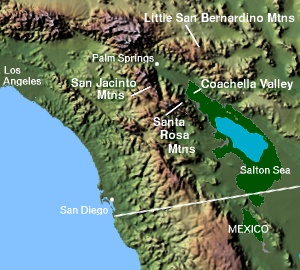
Although activists in the Coachella Valley (a northern extension of the Salton Sink) recently attempted to occupy Palm Desert’s Civic Center Park—nine were arrested—the Imperial Valley movement is conserving its forces for outreach. As Anita eloquently put it, “We must go from mobilize to organize.”

The prime movers of the El Centro demonstration bring together an impressive agenda of 99% issues, including migrant rights (Anita), anti–Wind Zero (Susan), feminism (Camden) and veterans’ rights (John Hernandez of Brawley).

Occupy El Centro provides a framework both for concentrating forces, as against Wind Zero, and for nurturing new solidarities on both sides of the steel wall that now separates the two Californias.

“Because the Imperial Valley is on the border,” Camden, said, she looks forward to “opportunities to take part in not only local or national activism, but global activism as well.” Anita hopes in particular that they can link with similar groups in Mexicali and begin to build an “Occupy the Border” dimension.

Finally, there is the virtual community aspect of the Occupy movement that enables participation in spite of geographical distance. Thanks to Facebook, for example, the Valley’s college diaspora, including recent UC Santa Cruz graduate Jessica Yocupicio, was able to play an integral role in planning the protest.

According to Susan, “a young man, Sky Ainsworth, ignited the process with an online call for action. When very few people responded, Jessica approached Anita, whom she knew from anti–Wind Zero organizing, and she contacted Camden and John Hernandez to start the planning dialogue. Other young people read the blogs and joined in.”

At the end of the day, however, occupying El Centro was an exercise in old-fashioned grit. As Susan explains: “I wanted to add that I was moved by the tremendous effort that the young organizers of the rally put forth. None of them have cars and get to work or school by public transportation. In Imperial Valley, buses are so few and far between it means spending two to three hours to go somewhere that is twenty minutes away by car. They are also very dedicated to helping friends and family with problems, so it was amazing that they could bring this off.”

-30-

Tuesday, November 08, 2011

CSUN professor paints her way through male-dominated art industry


By Christopher Ho for the CSUN Sundial

Growing up as a self-identified Chicana, Yreina Cervantez had little inclination that her childhood circumstances would eventually lead her into the Chicana/o movement and her position in the Chicana/o studies department at California State University, Northridge.

“Art is a powerful tool for transformation,” said Cervantez who immersed herself in the growing arts community. She said the collective spirit at Self Help Graphics was very dynamic and became a creative hotbed for artists during beginning of civil rights in the Chicana/o Movement.

It can be hard to find one’s identity in a male dominated movement, that is why she values her close solidarity with fellow female chicana artists, said Cervantez. These friendships also help to influence her work.

“Women have not been very visible in today’s art,” she said. “And if they have, they are portrayed very stereotypical. These pieces talk about the dignities of women and their strengths, while reclaiming a sense of empowerment and agency.”

That being said, Cervantez certainly wants to make clear that, the symbolism in her art is not a reaction but a thoughtful response.

Cervantez spent six years at Self Help Graphics, a non-profit in LA that supports community art. Self Help was more than just a company; it provided a platform for artists to support Chicana/o art, especially when there was little support in 1979, according to Cervantez.

Cervantez is a community worker and a painter in academia. Her work is currently being exhibited at the Fowler Museum in UCLA as a special show entitled “Mapping Another LA: The Chicano Art Movement.”

The exhibit began Oct.16 and continues until Feb. 26. “Mapping Another LA” is part of a larger project “Pacific Standard Time” that showcases Californian art from 1940s to 1980s. Cervantez’s work also has a reoccurring appearance at the Latino Museum located in the heart of downtown L.A.

When asked about showcasing her work, Cervantez offered humble gratification. Displaying one’s work is the goal as a working artist, Cervantez said.

“My work has been shown for over 30 years, but it’s always gratifying, definitely a sense of affirmation,” she said.

Cervantez is a third-generation Mexican who spent her childhood in the American Midwest and Mount Palomar in mostly rural areas culturally polarized. When her family moved to Orange County, the conservative attitude, according to Cervantez, influenced her to become part of the Chicana/o movement.

She credits her mother as an original inspiration of her painting career, as she was creative and artistic even though her mother was not necessarily an artist. Nonetheless her mother’s inspiration was absorbed by osmosis, helping propel a natural talent in Cervantez whether it was painting or drawing.

Cervantez paints in all mediums, but fine tuned her watercolor skills during her upbringing. “In high school, my art started to develop and so did my consciousness,” she said.

With her heart and skills in art, she went to college and received her undergraduate degree in the medium.

“I wanted to put my education to use; my education is not just in academia but also in the community,” said Cervantez.

Her first job as a resident artist involved working with local youth under the Social and Public Arts Resource Center in the murals department. To Cervantez it was a form of social justice, a way to serve the community through art.

Although the arts may sometimes be seen as a spontaneous event, the Chicana artist infuses research into her thoughtful responses during her creative process.

“Meso-American mythology inspires a lot of my work, by drawing from the past to apply to the contemporary,” she said.

Cervantez said she envisions her pieces a certain way, being an organic process though unanticipated things can happen. She enjoys the twist and turns “because the creative process is a combination of intellectual and visceral responses,” she said.

Art is not just a personal experience that resonates individually, but an opportunity to inspire change, which is why Cervantez decided to teach at a college level. It is a perfect opportunity to impact younger students at a more meaningful comprehensive and influential way, Cervantez said.

Cervantez said there is a lot of activism now in today’s younger generations, especially during the social unrest. And she feels responsible in teaching students a comprehensive and informed look at activism through Chicana/o art. Even if that means taking on the continual challenge between balancing painting and teaching.

-30-

Monday, October 17, 2011

Visual language of Malaquias Montoya


[To see more photos by Sandy Thomas click the header]

By Trina Drotar for the Sacramento Press

It was standing room-only for the people who came to hear Malaquías Montoya speak about art, life, protest and language Wednesday evening at the Center for Contemporary Art, Sacramento. The crowd spilled out the door onto 19th Street and included UC Davis students, CCAS members, artists and activists.

An electricity filled the room as voices rose and fell. Current and former students proclaimed they are all fans of Montoya.

Curator served as the evening’s host, leading the audience in a welcome applause before speaking about Montoya, under whom he had studied.

Montoya stepped up, without a microphone, and asked, “Why do we do the things that we do daily?”

He answered that question through sharing stories from his life. Montoya’s stories resonated with the audience, who sometimes laughed, sometimes remained silent, and always listened.

The artist begins to surface

Montoya recalled reading about Dick, Jane and Spot in elementary school readers, and he said the stories and their lives made no sense to him.

“The dog in my neighborhood didn’t look like Spot,” he said.

While that elicited some laughter from the group, when he spoke about being placed in a special class, the audience became quiet. Montoya spoke about labels placed on children, sometimes because of their names, accents, or clothes. His mother said the class would be best because he would receive attention.

“All we did was use glue, scissors, paper, and once a week the teacher wrote on the blackboard. The rest of the time, we’d draw or color,” Montoya said.

In that class, Montoya’s “artistic self began to surface.”

“I realized that I was someone people looked to. I gained pride, self-esteem.”

Earth, crepe paper, inner tubes, and tires

In the early ’60s, Montoya began working with silkscreen, cutting stencils and doing design. He recalls asking his mother about the family home and where, if they had no money, she found the money to transform the home with stencils, decals and paint.

“My mother married at 13, and when my father was working, she’d play. She went to the arroyos, scraped layers of earth, collected berries and brought back some white rock. From these, she’d create (paints) and gesso. She’d collect all of the crepe paper from celebrations, bring it home and put it in water. The crepe paper bleeds, and she’d use that to tint the earth colors.”

The decals and stencils were created from inner tubes from which Montoya’s mother cut designs and placed on thick cardboard.

“She made little printing blocks,” he said.

She cut apart old tires, dipped those in paint and printed on the walls.

“We’re born creative. We’re little geniuses,” Montoya said, adding that outside influences try to take that away from us.

A new way of learning

Two years after beginning work with a printer, Montoya enrolled in a commercial art class and found the education more positive than his earlier college experience. He already knew a great deal about silkscreen printing, and he knew that the professor had not given students all the information available, so Montoya supplemented the instructions.

“The students were excited. The teacher was angry,” he said.

Montoya was told he was not good as a writer and that he was not good at drawing. He was referred to Professor Joseph Zirker at San Jose City College, who told Montoya there was nothing wrong with his drawing. Zirker became Montoya’s mentor and friend, and Montoya recalls that Zirker was compassionate and sensitive, traits Montoya had applied to artists in his early years.

Montoya continually dropped his English classes when the first assignments were handed out. He enrolled in what was then termed “bonehead English” and was told that his work was fine.

“I’d buy new pencils, binders, a dictionary. I thought they would make a difference,” Montoya said.

He pursued self-hypnosis

“I am going to do it,” is what he said.

Montoya would not simply try. Determined to succeed, he wrote his paper, turned it in, then waited. He wanted a grade, wanted to read the comments, wanted not to fold the paper and put it in his pocket. On the day the papers were returned, Montoya’s was read (aloud) by the teacher.

“It was the beginning of a different way of learning. We all have different ways of learning.”

Montoya entered UC Berkeley in 1968, against Zirker’s recommendation, who feared the university would change Montoya’s work.

“I found school very difficult,” he said. “The type of work I did – didn’t call it Chicano, political – was of cotton pickers who looked Mexicano. Some called it outdated, archaic. I visited studios of the professors. One was drawing squares of color in the manner of Rothko.”

That type of drawing did not offer the means to express what Montoya wanted to say.

Toward a Mexican identity collectively

Montoya spoke about José Clemente Orozco, a Mexican socialist painter; Diego Rivera, known for his murals focusing on history and humanity’s future; and David Alfaro Siqueiros, a social realist painter whose works were about redefining Mexico.

“(These works) gave Mexico a new face, pushed the revolution that had happened,” he said. “(The artists) worked collectively to give us a Mexican identity. Collectives were geared toward workers to develop a strong working class. Younger artists wanted to be more individualistic.”

CIA as curator

The U.S. Information Agency, the CIA and multinational corporations were interested in the changes in mid-twentieth century Mexico.

“Rockefeller and others went to Mexico to change the artwork,” Montoya said.

Jose Luis Cuevas was invited to show his art in New York, which caused a rumble in Mexico, Montoya said.

“The U.S. wanted to push the school of muralism back,” said Montoya.

The murals of Orozco, Rivera, and Siqueiros raised the consciousness of the Mexican people, and that meant it was difficult to make business deals in Mexico.

In this way, art becomes a commodity, and artists create in order to sell their product.

“Art is a language for people to feel and understand,” he said. “When that is taken away, you lose.”

Chicano art today, validation, and memory

A question-and-answer session followed Montoya’s lecture.

To a question posed about Chicano art today, Montoya responded that there is much “so-called Chicano art,” that the corporations have bought into it, but the Chicano artists have lost their edge and have become good grant writers.

“For a lot of people, it’s even worse today than back then. We believe it.”

When asked if there is organizing to do, Montoya said, “It has to be done. Artists have to remember.”

Montoya spoke about the piece that attracted the attention of many attendees, “Memories,” created with two other pieces in 1992 on the quincentennial of the arrival of Columbus to this continent. The three-piece set denounces the atrocities committed against the indigenous people by Columbus and invading Europeans.

“It talks about how many died,” Montoya said.

He read the words printed across the top: “My memory will retain what is worthwhile. My memory knows more, about me than I do; it doesn’t lose what deserves to be saved,” from Eduardo Galeano, a Uruguayan journalist and novelist.

“What is it like to not be validated for your work?” another attendee asked. “Where do you seek your validation from?”

Montoya told a story of walking into a class one day and seeing his name written across the board. The teacher brought him to the board and, erasing the letters of his name from back to front until only three letters remained, asked “What if we call you Mal?”

His validation came from Zirker, and it came from César Chávez, and it came from the Chicano movement, out of which came newspapers.

“We were reading about ourselves. That validated our own bilingualism. It was power. I was validated by my community. We wanted to stop the war in Vietnam. It’s hard to instill in students today because of the diversions,” Montoya said, referring to iPod earbuds and shopping malls.

“They are allowed to wear raggedy clothes, to shave their heads, in a sense of freedom, instead of looking at what’s around (them),” he said.

The audience remained throughout the entire lecture.

“That is just what I needed to hear,” said Jen Cimaglio, Sacramento artist and activist, “I have work to do.”

-30-

AirTalk's Chicano ArtTalk and Pacific Standard Time Exhibit

This month, as part of the ambitious celebration of SoCal art that is "Pacific Standard Time," KPCC and AirTalk with Larry Mantle will divine our inner curator. We are excited to announce a one-night Chicano art exhibit with the artists themselves and their works in the Crawford Family Forum.

Trailblazers of the Chicano art movement, Patssi Valdez and the artist known as Gronk, will reveal the roots of this vibrant and distinct school. The next generation will be represented by Sonia Romero and Enrique Castrejon. We will trace their history in LA's art scene -- a history that began with struggle.

The early days of the modern American art movement were once described as "racist, aloof, pretentious and elitist" by Armando Vazquez. In his essay, "Reflection on the Chicano Art Movimiento," Vasquez said it wouldn't be until the 1950s and 60s that Chicanos, Jews, Blacks, Native Americans and women would penetrate the monolith known as 'American art and culture.' Los Angeles was a focal point of that fundamental shift. The birth of Chicano art coincided with the birth of LA as a center for contemporary art and artistic innovation distinct to Southern California. To see what separates this class of creative expression from the rest, come to the Crawford Family Forum on Wednesday, October 19th.

6:00pm - Doors Open
6:30pm - Program

Admission is FREE, but RSVP's are required. Click header for more RSVP info.

Wednesday, October 19, 2011
6:30 p.m. - 8 p.m.
The Crawford Family Forum
474 South Raymond Avenue
Pasadena, CA 91105

-30-

Friday, October 14, 2011

Jesús Garza: Summer 2011 Oil Paintings

I have placed on my wall the first of four oil paintings I completed this Summer. In a few months I will coat them with the appropriate varnish. They are not completely dry yet.

The first iPhone photo is of the painting on my wall and the second is a closeup detail. Feel free to send me your comments. I will start my Fall and Winter phase of painting in a few days.

-30-

Thursday, October 13, 2011

'Art Along the Hyphen' in Los Angeles


At the Autry in Griffith Park

Under the umbrella project "L.A. Xicano," the new exhibition "Art Along the Hyphen: The Mexican-American Generation" is one of five interrelated exhibitions organized by the UCLA Chicano Studies Research Center, the Autry, the Fowler Museum at UCLA and the Los Angeles County Museum of Art.

Presented as part of the Pacific Standard Time initiative, the exhibition brings together 100 rarely seen paintings and sculptures from 1945 to 1965 by artists Hernando Villa (1881-1952), Alberto Valdés (1918-98), Domingo Ulloa (1919-97), Roberto Chavez (1932- ), Dora de Larios (1933- ) and Eduardo Carrillo (1937-97).

Opens Friday, October 14, 2011

http://www.theautry.org.
The Autry in Griffith Park
4700 Western Heritage Way
Los Angeles, CA 90027-1462
T: 323.667.2000
F: 323.660.5721

Wednesday, October 05, 2011

Jesús Garza's Chicano Photographer show (1970-1975) continues for 30 more days


[Photo of César Estrada Chávez by Jesús Garza. Click image to view and/or download larger version. Suitable for printing.]

Chicano Photographer, an exhibition by Riverside, California documentary photographer Jesús Manuel Mena Garza opened at the San Bernardino County Museum (SBCM) Schuilling Gallery, March 26, 2011. The exhibition continues to November 6.

The photographs were captured from 1970 to 1975. During this period, Garza took intimate photographs of Chicano icons César E. Chávez, Rodolfo “Corky” Gonzáles and others. The photographs provide a retrospective glimpse from the unique perspective of the photojournalist and activist. The SBCM exhibition lists thirty-one select images from the photographer’s Imágenes Xicano Archive, a portion of which has already been exhibited on both coasts.

University of Redlands Professor Dr. Ann Marie Leimer adds, “During the past decades, Garza has extensively published and exhibited several documentary photographic series. The Chicano Photographer series explores important aspects of the American experience, historic events and cultural practices often marginalized by the dominant culture.” Photographs from the series have already been published in journals and books. Dr. Leimer recently completed a book on the photographic series. The exhibition is perfect for students 5 to 95. Please feel free to contact the museum or artist for more information.

San Bernardino County Museum
Schuilling Gallery
2024 Orange Tree Lane
Redlands CA 92374
Voice (909) 307-2669 ext. 227 Fax (909) 307-0689
www.sbcountymuseum.org

-30-

The International Accordion Festival’s battle against shrinking funds and ignorant lawmakers


The financial crisis affects everyone, but non-profits are particularly susceptible — especially arts non-profits.

“If you’re going to get rid of something, why are we getting rid of art instead of football?” former San Antonio First Lady Linda Hardberger told me in 2008. “I don’t understand. If we’re going to start naming frills … [football] costs a lot of money. But nobody wants to cut football, and everybody wants to cut arts.”

Go tell it to Gwen Rivera, director of the International Accordion Festival, celebrating its 11th edition this weekend at La Villita. The eclectic festival, arguably the best music festival in the city, if not the whole state, routinely attracts some of the best masters of the instrument in genres ranging from Argentina’s chamamé and Bulgarian wedding band music to Louisiana’s Cajun zydeco and, of course, our own conjunto music. The free festival only receives a small percentage of grants and foundational support, and relies on community donations and a percentage of vendor sales. The event has an annual budget of $150,000, but last year’s $35,000 NEA grant was slightly reduced for this edition.

“This year the festival received a grant for $30,000, which we appreciate because arts funding was cut across the board,” Rivera told the Current. “In this economic climate we are still hopeful as is any non-profit, but we still need the help of our most valued resource: our community. Last year we collected donations at the festival, which really helped us going into 2011, and we are hoping that our fans will do the same to help take us into 2012 — especially if we want to continue to offer this amazing free event.”

But the festival has more than the economic crisis to struggle against — they’ve also got to contend with U.S. Congressman Jeff Flake of Arizona. In May, Representative Flake grilled Rocco Landesman, chairman of the National Endowment of the Arts, as to why the NEA should give funds to certain groups that, according to the congressman, are “a bit tough to justify.” Out of a long list, the congressman specifically singled out two groups: the San Francisco Mime Troupe and the International Accordion Festival.

“Those kind of grants lend themselves to ridicule,” the Flake told Landesman during a House Appropriations subcommittee hearing.

Landesman held his own, saying that “the marketplace shouldn’t be the sole determinant of what is allowed to flourish.” He got help from Representative José Serrano (D-NY), who said Flake “will be getting hate mail from Polish folk musicians,” before adding that “even during difficult budget times, we have to protect, preserve and grow the arts.”

“Perhaps [Rep. Flake is] one of those people who think the accordion is too ‘working class’ to be celebrated,” said Catherine Ragland, this year’s festival curator, and a world authority on anything accordion-related. “If he had read the grant, he would have learned that the festival is not just about a bunch of people playing the accordion, drinking beer, and having a good time, though I don’t see anything wrong with that. The event is about promoting diversity, reaching out and across communities, and learning about different musical and cultural traditions around the world and within our own community.”

If you’ve never been to the festival, go to its website and see for yourself — these aren’t just party bands, but serious musicians who are masters in their genres.

Besides the Current’s picks (see sidebar), don’t miss Buille, a folk group that rarely plays in the U.S. In a country used to seeing Irish-American groups (nothing wrong with that), this is the real stuff.

“We are really very lucky to have them,” Ragland said. “This was quite a coup.” Buille has a distinctively Northern Irish style mixed with jazz and East European fusions, and it represent the festival goers’ only opportunity to hear and learn about the concertina, a free-reed type of small accordion.

This year’s cajun/zydeco representatives are among the best in the festival’s history: Grammy-nominated Pine Leaf Boys and Cedric Watson are young, contemporary artists who nevertheless understand and reach to the Creole and French roots of the genre. And the list goes on. La Villita is the place to be this weekend.

On a final note, Tejano music fans like to repeat there are Tejano fans all over the nation, especially in Arizona. If that is a fact (and it is a fact), when they find themselves at the polling booth they should remember who this guy Flake is — he’ll be running for the Senate. •

11th Annual International Accordion Festival

Free
Oct 7-9
6:30pm-10:30pm Fri
Noon-10pm Sat and Sun
La Villita

internationalaccordionfestival.org


Workshops and demonstrations
Noon-5:30pm Sat and Sun
Juarez Plaza Stage


Acoustic performances, open mics, and jams
Noon-5:30pm Sat and Sun
Bolivar Hall


Email Enrique Lopetegui


-30-

Friday, September 30, 2011

An LA Chicano artist's best friend: Chon Noriega

[Photo is the cover of the October 2011 issue of Artforum Magazine]

Having lived in SoCal for several years now, I have gained a respect for UCLA professor Chon Noriega. Along with his minions, he has done an incredible job of promoting Southern California Chicano artists. Here are a few examples:

1) Helped gain exhibitions at major galleries including LACMA, the Autry, UCLA and the Getty (at the biggies not just the small barrio galleries)

2) Coordinated or created compelling articles and books on local artists (quite a few... not just a couple)

3) Promoted artists in important publications like the SF Chronicle, LA Times, Artforum, NY Times, etc. (he is a promoter)

4) Held panels and events that highlighted Chicano artists (rarely a Northern California Chicano or Chicana in sight)

5) Apparently, promoted the work of Chicano artists to international galleries and publications (Mexico, Europe, Asia... nice)

Chon's Los Angeles artistic and academic collaboration is groundbreaking. In San Jose, San Francisco, Berkeley, Austin, etc., Chicanos are typically relegated to smaller galleries even though their work is just as good if not better than their peers in Southern California. These communities don't have a hard-working academic like Chon making waves and news.

Typically scholars are sequestered in their ivory tower writing books and participating on the occasional panel. These tired academics are the norm, but Chon has broken out of this paradigm. This is great for LA artists and definitely bad news for other communities who lack an articulate and passionate person who is promoting Chicano and Chicana art "con ganas". Makes me wish I was born in Los Angeles... almost.

=30-

Upcoming Exhibit: Come On Down!

  I'll have several photographs on display  @ the Cheech Exhibition: February 7 – September 6, 2026 Chicano Camera Culture: A Photograph...