Showing posts with label gays. Show all posts

Wednesday, October 14, 2009

I Wish More Colleges Offered These Courses


[Rodolfo "Corky" Gonzales by Jesus Manuel Mena Garza]


UCSB Chicano Studies Courses


LOWER DIVISION


1A-B-C. Introduction to Chicano Studies (4-4-4) Staff

An introduction to the historical and contemporary development of the Chicano community, interdisciplinary in nature, and focusing upon such components as the educational, sociological, and political. The course will critically analyze the societal context in which La Raza has sought to maintain and develop its culture.


10. Introduction to Chicano History (4) Garcia

Prerequisite: lower-division standing. Same course as History 10. Students who have received credit for Chicano Studies 9 may not take this course for credit.
The historical heritage of the Chicano from Indian and Spanish origins to the contemporary period. Particular stress will be placed on the interpretation and analysis between key periods in world and U.S. history to the experience of Chicanos.

11. Introduction to Race and Ethnicity in American History(4) Staff

Prerequisite: lower-division standing. Same course as History 11.
An introduction to the issues of race and ethnicity as they have affected the course of United States history from the colonial era to the present. Race and ethnicity will be dealt with as ideological issues as well as the history of particular race and ethnic groups in a pluralistic America.

12. Introduction to Chicano Spanish (4) Lomeli

Prerequisites: consent of instructor and some basic knowledge of Spanish.
The course will introduce students to tne Spanish language and help them to acquire oral and written skills, distinguish between standard speech of popular variants, and learn the Chicano Spanish lexicon.

UPPER DIVISION

102A-B. Quantitative Research and Issues in Chicano Studies (4-4) Staff
This two-quarter course sequence examines quantitative research problems in Chicano Studies. The emphasis is on the effective use of social survey data in formulating public and private policy. Students also receive an introduction to the computer as a research tool.

106. Introduction to Latin American Studies (4) Staff

Prerequisite: any quarter of Chicano Studies 1A, 18, or 1C, or History 8, or upper-division standing.
The Latin American heritage of Chicanos will be explored from various interdisciplinary perspectives: history, culture, literature, politics, and education. Stress will be placed on major past and contemporary cultural, political, and I social movements from the pre-Columbian past to the twentieth century.

110. Research Methods in Chicano Studies (4) Staff

Prerequisites: Chicano Studies 1A-B-C.
Using Chicano studies topics, the course will introduce students to: (1) the epistemology of scientific inquiry (its history and contemporarv movements); (2) the strengths and weaknesses of quantitative and qualitative methodologies; and (3) the mechanisms of research design (transforming an idea into a research plan).

115. Psychological Issues and the Chicano Child (4) Staff

To give the student an understanding of the fundamentals of psychology; to introduce tne fundamentals of child psychology; and to analyze and discuss pertinent psychological principles and research related to the Chicano child.

120. Bilingualism and the Chicano (4) Staff

Prerequisite: consent of instructor.
An introduction to the study of bilingualism and the Chicano. The course will focus on tne sociolinguistic and educational implications of bilingualism.

121. Writing Experience for Bilinguals (4) Staff

Prerequisite: consent of instructor.
A comparative analysis between Chicano Spanish, standard Spanish, and vocabulary building.

130B. The Chicano Quest for Educational Equality (4) San Miguel

Prerequisite: Chicano Studies 1A or 1B or 130A or upper-division standing.
This lecture course traces the legal, administrative, and political efforts made by Chicanos to secure more and better education for their children. It also assesses its impact and influ- ence on the public schools.

131. An Introduction to Issues in Chicano Bilingual Education (4) San Miguel

This is an introduction to bilingual education and its effect on Chicanos. Specific issues include the evolution and development of policy at the federal and state levels, theory and practice of bilingual education pertaining to Chicanos, the status and future of this program.

137. Chicano/Mexican Oral Traditions (4) Broyles-Gonzalez

Prerequisites.. upper-division standing and knowledge of Spanish and English.
The course will introduce students to the ancient roots of Chicano oral traditions. Contemporary forms of Chicano oral poetry, oral narrative, and drama will be examined, in addition to more ephemeral forms such as cabula, choteo, joke-telling, or dichos.

138. Barrio Poplar Culture (4) Broyles-Gonzalez

Prerequisite. upper-division standing
The course will explore various manifestations of popular and mass culture in Chicano urban and semi-rural communities throughout the southwest. Both secular and religious cultural phenomena will be analyzed (lowriders, saints, music, etc.). Relationships to mainstream culture will be examined.

139. Native American Heritage and Chicano Cultural Renaissance (4) Broyles-Gonzalez

Prerequisite: upper-division standing or Chicano Studies 1A, 1B, or 1C.
The course will explore the intense recourse to the Native American heritage during the Chicano cultural renaissance of the 1960s and 1970s. The rediscovery of the native ancestral cultures will be analyzed in poetry, prose, drama, the graphic arts.

140. The Mexican Cultural Heritage of the Chicano (4) Staff

Prerequisite: consent of instructor.
A panoramic view of present-day Chicano traditions analyzed from a Mexican cultural heritage perspective in order to comprehend and appreciate the uniqueness and difference of present-day Chicano culture, its achievements, and contribution to the overall American culture.

141. Roots of Chicano Culture in Interdisciplinary Perspective (4) Staff

Prerequisites: upper-division standing, two or more upper-division courses in sociology, religious studies, or anthropology.
This course will give students a general understanding of the origins, development, and contemporary variation in Chicano culture from an interdisciplinary approach.

142. An Introduction to Chicano and Barrio Art (4) Staff

An introduction to Chicano and barrio art and their major exponents. This course will emphasize Mexican mural painting as forerunner of Chicano mural art.

143. Chicano/Mexican Film Studies (4) Lomeli, Fregoso

Study of Chicano and Mexican cinema to view film as an art form and projection of the film-maker. Techniques, messages, and ideology stressed as instruments which propose film truth within the context of Chicano and Mexican social experiences.


144. The Chicano Community (4) Segura

Prerequisite: upper-division standing, or Chicano Studies 1A, 1B, or 1C, or a prior course in sociology. This course is the same as Sociology 144.
Origins of the Chicano in rural Mexico; context of contact; patterns of settlement in the United States; the Chicano community, social structure, and social change; acculturation and generational patterns; community leadership and change.

145. Chicano Art: Symbol and Meaning (4) Favela

Prerequisite: any quarter of Chicano Studies 1A, 1B, or 1C, Chicano Studies 142 or Art History 1 or 7E, Art His tory 161C, 161D, or 161E, or upper-division standing.
This course traces the sources and historical development of symbols and forms that originated in the art of New Spain and Mexico and became crucial for the development of a contemporary Chicano art. Emphasis is given to artistic conceptions of America and Aztlan by Mexican, Mexican American, and Chicano artists.

146. Contemporary Chicano Art (4) Favela

Prerequisite: any quarter of Chicano Studies 1A-B-C, 142, or Art History 1, 7E, 161C, 161D, or 161E, or Chicano Studies 145, or upper-division standing.
The Chicano art movement is examined and appraised within the context of contemporary American art and the contemporary art of Mexico. This course provides a survey of major Chicano artists and developments in Chicano painting, sculpture, graphic, and conceptual art from the late 1960s to the present.

147. Chicanos and the Film Media: A Comparative History (4) Fregoso

This course examines the various ways Chicanos have been portrayed in Hollywood films. Their characterizations are contrasted with the portrayals of women, Blacks, Jews, gays, and lesbians. The content is chronological and thematic in its examination of recurrent minority images.

154F. The Chicano Family (4) Segura

Prerequisites: upper-division standing or Chicano Studies 1A-B-C or consent of instructor or prior course in sociology. Same course as Socioloy 154F.
This course provides an overview of historical and contemporary research on Chicano families in the United States. Changing viewpoints on the character of Chicano families and their implications with respect to policy issues are examined.

155R. Chicana Research Issues (4) Segura

Prerequisites: upper-division standing or Chicano Studies 1A-B-C or consent of instructor or prior course in sociology. Same course as Sociology 155R.
This course is designed to enable students to develop and implement a research project that explores in depth one or more facets of the Chicana experience. Students will select and gather information in one area of interest such as: family, health, education, or employment.

155W. La Chicana: Mexican Women in the U.S. (4) Segura

Prerequisites: upper-division standing or Chicano Studies 1A-B-C or consent of instructor or prior course in sociology. Same course as Sociology 155W. Not open for credit to students who have received credit for Chicano Studies 150A, 150B, or 150C.
Examines existing research on native-born and immigrant Mexican women in the United States with emphasis on family, education, employment, and politics. Analysis of the Chicana experience organized by considering how interplay between class, race, and gender affects access to opportunity and equality.

164. Chicanos and the Administration of Justice (4) Staff

A survey of police-barrio community relations including the role of police, police department theories and tactics, and the unique police problems of the Chicano community. In addition, the course will examine the organization of courts and the procedural issues and suggested reforms involved in the adversary system, from arrest to penal institutions.

168A-B. History of the Chicano (4-4) Garcia, Vargas

Prerequisite: any quarter of History 17A-B-C or any quarter of Chicano Studies 1A -B-C or upper-divion standing. Same course as History 168A-B.
The history of the Chicanos, 1821 to the present; traces the sociocultural lifeline, of the Mexicans who have lived north of Mexico.

168E. History of the Chicano Movement (4) Staff

Prerequisite: Any quarter of Chicano Studies 1A-B- or History 10 or Chicano Studies 10 or History 168B or Chicano Studies 168B or upper-division standing. Same course as History 168E.
An examination of the Chicano movement in the United States from the mid-1960s to the mid-1970s. Topics will include the student movement, the farmworker movement, the Plan de Aztlan, the Raza Unida Party, Chicana feminists, the anti-war movement, and Chicano studies.

168F. Racism In American History (4) Staff

Prerequisite: any quarter of History 17A-B-C or any lower-division course in Asian American studies, Black studies, Chicano studies or upper-division standing. Same course as History 168F.
This course will examine racism as a major ideological force in defining American society from the colonial era to the 1980s. Major focus will be in the changing nature of racism as ideology as well as the relationship of racism to specific minority groups such as Afro-American, Native American, Chicanos, and Asian American.

168G-H. United States-Latin American Relations (4-4) Staff

Prerequisite: any quarter of History 17A-B-C or any quarter of Chicano Studies 1A-B-C or 101.
Covers the history of United States-Latin American relations from the colonial period to the present. Topics to be covered include the Monroe Doctrine, the United States-Mexican War, Manifest Destiny, the Spanish-American War, Dollar Diplomacy, the Good Neighbor Policy, the Alliance for Progress, and the United States role in Central America.

168P. Proseminar in Chicano History (4) Staff

Prerequisite: History 168A or 168B, or Chicano Studies 168A or 168B, and consent of instructor. Same course as History 168P.
Studies in selected aspects of Chicano history with an emphasis on social and economic history.

169. Comparative Local History (4) Garcia, Vargas

This course analyzes local and regional history of Chicanos. Theories and methodologies of social, urban, and oral history will be examined. Public history programs for Chicano communities will be discussed. Students will develop a research prospectus for their research projects.

170A. Chicano Community Organizations (4) Segura

The day-to-day operations and success of contemporary Chicano community organizations is socio-historically analyzed. Emphasis is placed on whether particular organizations meet the actual or perceived needs of the Chicano community or of special interest groups within the community.

170B. Chicano Community Organizations (4) Segura

Prerequisite: upper-division standing or consent of instructor.
The theory of organizing within the Chicano community will be analyzed through field observations of currently operating Chicano community organizations.

171. The Chicano Urban Experience (4) Staff

Prerequisite: upper-division standing.
This course traces the transition of Chicanos from a rural to urban population and examines trends in family size, language usage, segregation, and social inequality among Chicanos residing in cities. Issues of urban decay and community conflict are also examined.

172. Legal Issues in the Chicano Community (4) Staff

Prerequisite: consent of instructor.
Survey of recent state and federal laws and court decisions affecting the Chicano community. Special consideration will be given to landmark cases and decisions. Analysis will be made of opposing views on each case in a historical context.

174. Chicano Politics (4) Staff

Prerequisite: upper-division standing. Same course as PoliticalScience 174.
Political life in the barrio, political behavior of the Chicano community, andrepresentation of Chicanos by elected officials and interest groups.

175. Comparative Ethnic Movements (4) Segura

The purpose of this course is to examine the structural forces which strengthen ethnic identification and promote ethnic politics within the United States and other nations. Although the Chicano movement will be the central focus, various ethnic movements will be examined.

178. Theories of Social Changes and Chicano Society (4) Segura

This course will examine the dynamics of social change and its impact on the chicano community. Students will acquire a general understanding of basic theories and an introduction to the social structure and processes of change (urbanization, social mobility, etc.).

180. Survey of Chicano Literature (4) Lomeli

The purpose of this course is to provide the student with a general overview of all the literature written by Chicanos by covering all genres: poetry, novel, theatre, short story, and essay. The course aims to portray a people's experience through literature and show how that experience is manifested in a given work.

181. The Chicano Novel (4) Lomeli

Reading, analysis and critique of the contemporary Chicano novel as it pertains to the Chicano experience.

186A-B. Music/Dance of the Chicanos (4-4) Staff

A historical perspective of Mexican and Chicano music and dance with emphasis on the indigenous cultures and other contributing cultural elements which combine to form traditional and contemporary Chicano music and dance.

187. Introduction to Chicano Theater and Performance (4) Broyles-Gonzalez

Prerequisite:. upper-division standing.
A survey of the major Chicano theater and performance forms ranging from the traditional to the avant-garde contemporary. The diverse forms of performance will be studied as art forms and with regard to their respective social functions within Chicano communities.

188A. Chicano Theater: Origins to 1970 (4) Broyles-Gonzalez

Prerequisites: upper-division standing or ChicanoStudies 1A, 1B, or 1C, or any lower-division drama course such as Dramatic Art 60 or 60S.
Survey of the origins and development of borderlands theater, from native ritual and Indian-Hispano antecedents to today's Chicano forms. The genesis of Chicano theater will also be studied in relationship to Chicano culture and history.


188B. Contemporary Chicano Theatrer (4) Broyles-Gonzalez

Prerequisite: upper-division standing or ChicanoStudies 1A, 1B, or 1C, Chicano Studies 188A, or any lower-division drama course such as Dramatic Art 60 or 60S.
An analysis of conemporary Chicano forms of theatrical expression, ranging from barrio performances to mainstream commercial productions. The creation and presentation of Chicano dramatic forms will be analyzed in relationship to economic and historical realities affecting them.

188C. Chicano Theater Workshop (4) Staff

Prerequisites: Chicano Studies 188A or 188B or consent of instructor, knowledge of Spanish and English.
Reading and analysis of contemporary bilingual Chicano plays, in conjunction with acting and technical training. A dramatic piece will be rehearsed and performed.

189. Immigration and the U.S. Border (4) Garcia, Vargas

Prerequisite: upper-division standing or consent of instructor.
An analysis of the socioeconomic and political factors which have determined and continue to form the basis for the development of United States immigration policies and practices toward Mexico and the U.S-Mexican border.

190. Introduction to Chicano Poetry and Short Story (4) Lomeli

Reading and appreciation of Chicano poetry and poets. Analysis and critique of the Chicano short story with discussions on the realities and values presented on the Chicano experience and universe by the author.

191AA-ZZ. Special Topics in Chicano Studies (4) Staff

Corse may be taken up to three times (12 units) providing the letter designations are different. Designed to allow courses of varying topics in areas of expertise of visiting professors to broaden opportuniies for students. Examples might be: immigration, Native American, Mexican, or Latin American influences on the Chicano, legal issues, the migrants.

192. Field Research (4-8) Staff

Prerequisites: lower-level ethnic studies, sociology and/or anthropology course work, open only to juniors and seniors, consent of instructor. Eight units maximum may be applied to major.
Internship in contemporary urban problems and decision-making processes as they affect the Chicano. Internship based on directed research through observation, participation, and relevant readings. Student individually assigned, instructed, and supervised in field-work involving practical experience in decision making unit of local governmental social service agencies, or of community liaison agencies.

193. Seminar (4) Prerequisites,. two courses in Chicano Studies, consent of instrucor prior to enrollment and upper-division standing. To be offered intermittentiy, Special topics in Chicano Studies.

194. The Chicano Worker (4)

Prerequisite: consent of instructor.
A comparative analysis of the economic status of Chicanos. Special attention is given to the employment situation of chicanas, Chicano youths, and Mexican immigrants. Key topics are job and industry concentration, income, unemployment, and under-employment.

195. Seminar: Problems in the History of Chicano Art (4) Favela

Prerequisites: either Chicano Studies 145 or 146; upper-division standing and consent of instructor.
A definition of Chicano art will form the focus of this seminar. Students will conduct primary research and analyze pluralistic facets of Chicano art, artists, and art criticism within the context of mainstream American art and culture.

196. Practicum: Analysis of Chicano Survey Data (4) Staff

Prerequisite: upper-division standing.
The course allows students an opportunity to conduct their own research project. With instructor supervision, students will formulate and exercute (through use of the computer) an analysis of data from an existing Chicano survey.

197. Topics Seminar: Education of the Chicano (4) San Miguel

Survey of the relationship between the schools and the Chicano child. Also included will be information on theories, methods, and resources necessary for developing and evaluating effective teaching strategies in meeting the educational needs.

198. Readings in Chicano Studies (1-4) Staff

Prerequisites: students must 1) have attained upper-division, standing, 2) have a minimum 3.0 grade-point average for the preceding three quarters; 3) have completed at least two upper-division courses in Chicano Studies. Students are limited to five units per quarter and 30 units total in all 198/199 courses combined.
Readings in Chicano studies under the guidance of a faculty member in the department, Students must prepare a short plan of study and have it approved by the sponsoring faculty member.

199. Independent Studies (1-5) Staff

Prerequisites: students must 1) have attained upper-division standing, 2) have a minimum 3.0 grade-point average for the preceding three quarters, 3) have completed at least two upper-division courses in ChicanoStudies. Students are limited to five units per quarter and 30 units total in all 198/ 199 courses combined.

596. Directed Reading and Research (2-6) Staff

Prerequisite. Graduate standing and consent of instructor.
Independent research involving advanced study on a particular Chicano studies topic. A written proposal must be approved by the department chair. Number of units depends on nature of the proposal.

University of California at Santa Barbara

-30-

Tuesday, September 15, 2009

40 Years of the Chicano Movement


[Photo of César E. Chávez in San José (1970) by Jesús Manuel Mena Garza. Click to enlarge. Copyright 2009 Jesús Manuel Mena Garza. All rights reserved.]

On Wednesday September 16, 6-8 pm in San José, California there will be the discussion, "Organizing en el Movimiento". The first of a series of discussions that seek to honor the contributions of (some of) those involved in San José's Chicano Movement.

Invited guests will be Sofia Mendoza (United People Arriba), Sal Alvarez (UFW), Adriana Cabrera-Garcia (MAIZ), and David Madrid (DeBug). Moderated by Maribel Martinez of the Cesar Chavez Community Action Center at SJSU.

Featuring music by Conjunto Libertad and the exhibiting of rare photos and art of the movimiento from Jorge Gonzalez.

Organizers

MAIZ (Movimiento de Accion Inspirando Servicio)
Cesar Chavez Community Action Center
Teatro Vision
Sponsoring Organizations

-30-

Wednesday, October 08, 2008

Queering the Movimiento


Gregg Barrios's Theater of the Repressed, Recovered, and Revolutionized
BY B.V. OLGUÍN
San Antonio Current

Photo by Justin Parr

When bleached-blond Danny De La Paz rollerbladed onto a minimalist stage at Our Lady of the Lake University on August 13, 2005, wearing a glass tiara, a muscle T-shirt, and tight, bulging shorts while Brian Adams’ campy anthem “Heaven” played in the background, you knew this wasn’t gonna be just another Chicano gangbanger story.

The actor who debuted as the ill-fated cholo Chuco in the classic gang saga Boulevard Nights, and later played a fratricidal Mexican Mafia assassin in American Me, is all grown up and out of the closet in Gregg Barrios’s play I-DJ Mofomixmaster.

De La Paz opened the one-night stand with an adaptation from Hamlet:

“Speak the speech, I pray you, as I pronounced it to you, trippingly on the tongue.”

With a perfectly delivered comic pause and femme aside, he deadpans: “Weren’t you expecting Shakesqueer?”

This seemingly dissonant appropriation of the Bard’s classic work of existential angst to explore the 1970s Los Angeles dance-club scene enables a provocative queering of Chicano identity and even British literary history.

“After all, Hamlet is a play within a play,” De La Paz’s character reminds us. “How queer is that?!”

Barrios’s Shakespeare gloss provided an unexpectedly good staging device for a drama about an aging DJ who recalls how his search for validation as a Chicano on West Coast airways coincided with his coming out. The storyline is simple yet profound: A young gay Chicano wants to proclaim his existence by joining the Chicano Civil Rights Movement of the 1960s and ’70s — el Movimiento — but his fellow Chicano activists respond by paraphrasing Eldridge Cleaver’s outrageous party line, that the only position for a woman or a fag in our movement is the lateral position.

The play documents a burgeoning love between the DJ and his neophyte (played by South San Antonio high-school student Jimmy Villa), who resist the binary logic of the axiom that to be Queer means not to be Chicano. After the romance is broken up by a different type of gangbanging — a viscerally disturbing rape scene — the play’s action unravels into a dark yet illuminating exploration of Chicano ontology. I-DJ is nothing less than a Chicano re-staging of Plato’s Symposium: The mascara-wearing Chicano DJ played by De La Paz does a lip-sync of Peter Frampton’s “Show Me the Way” while offering metaphysical meditations on the intersections of love, art, Chicano identity, and the ecstatic nature of true knowledge.

This theatrical dialogue with the highly masculine culture of the barrios of the Southwest, and the multiple communities within and beyond — whites, queers of all races, Chicano nationalists — is Gregg Barrios’s signature style in an oeuvre that spans six decades, five genres, and thousands of literary publications and journalism bylines. Barrios has made an art out of creating unlikely fusions and uncovering unexpected influences, collaborations, and liaisons.

Yet the adage that a genius is always unappreciated in his own backyard seems to hold true for Barrios. While I-DJ was published in 2007 in the 15th-anniversary double issue of the venerable Ollantay theater magazine, an expanded re-staging of this play still has not found a home despite the playwright’s success at attracting a Hollywood actor to play the lead role.

Until recently, the same was true of Barrios’s other theatrical works, even as his poetry received early recognition with the 1982 publication of his first collection, Puro Rollo. Prior to his recent hit play, Rancho Pancho (reviewed in the Current’s September 10-16, 2008 issue), Barrios had resigned himself to interstitial anonymity.

“I guess it must be my message,” he said in a recent interview. “Because it doesn’t fit neatly into any pre-established categories, few people want to stage my work. It’s too Chicano for the white venues, not Chicano enough for the Chicano venues, too queer for straight ones, not queer enough for the queer spaces, and just too much of this and not enough of that for everyone else.”

He may be right. Barrios’s work lies at the intersection of so many traditions, political perspectives, and identities it is hard to position it squarely within any single one. Yet Barrios isn’t exactly correct when he complains about a “brownout” and “closeting of Chicano theater” in San Antonio; he has produced two other plays locally, one of which was developed in a short-lived collaboration with the Guadalupe Cultural Arts Center Gateway Grant. But one thing is certain: You either love Barrios’s work for its eclectic cultural fusions and unexpected storylines, or you hate it precisely because of these features.

It's all a matter of perspective

Gregg Barrios was born in Victoria, Texas, on Halloween 1945, and his first contact with the arts was at home. His father, Gregorio Barrios Sr., was a photographer and film projectionist in Victoria in the 1950s and ’60s. His photography recently was published in a father-and-son pairing in Dagobert Gilb’s bilingual multimedia text, Hecho en Tejas: An Anthology of Texas Mexican Literature.

Barrios recalls how his father taught him about the most important element in all literary and visual arts: perspective.

“My father’s studio was next to the downtown bus station, which naturally attracted sojourners from the lower strata of society because it is the most economical way to travel,” he said. “There were bums, prostitutes, hustlers, quick-change artists, pachucos and street toughs, unemployed workers, and just ordinary working-class folks of all races trying to get from one place to another in their daily grind of survival.”

Barrios recalls how “[I] peeked into my father’s dark room once and found photos he had developed of naked men and women ... My father had become something of a fixer, as people would come to him for help with all sorts of problems and activities, legal and not-so-legal. I saw it all from my own little perch in the corner. This was my introduction to the world, from the margins and the bottom up.”

This early exposure to society’s outcasts lead to a lifelong quest for communion with the masses, but Barrios claims his poetry, theater, and journalism have always avoided a condescending or exoticist view. Rather, he seeks to understand and accurately represent his subjects as their ally, as one “who shares similar pains as well as broader joie de vivre.”

It’s also telling that Barrios’s first book review, written when he was a 16-year-old high-school student, was of The Gay Place, Billy Lee Brammer’s thinly veiled roman à clef of Lyndon Johnson’s reign in Pink Dome. His selection is revealing for his innocent belief that as a Chicano in early ’60s South Texas he could pontificate on any topic or author of his choosing. Apparently, no one ever got around to telling Barrios that he could not claim a place in the center and the margins simultaneously, so he just did it.

Having witnessed the fate of the masses excluded from educational opportunities by the cruelly efficient calculations of a capitalist economy, Barrios took a gamble on the Air Force so he could use the G.I. Bill to fund his education. Even though the word “Vietnam” was becoming commonplace, he enlisted in 1962 and for three years served as a combat medic in the 859th Medical Group. Luckily for Barrios, he was stationed at Bergstrom Air Force Base in Austin — with occasional temporary-duty assignments to pick up severely wounded soldiers from hospitals in Germany. This allowed him to attend class at the University of Texas at Austin as a part-time student.

During his time in Austin, Barrios was involved in the underground newspaper The Rag, infamous for its irreverent political commentary and cultural critiques. He also co-founded the Cinema 40 Film Club, for which he is recognized in Esquire magazine film critic Dwight Macdonald’s 1969 memoir, On Movies:

“While I was in Texas I caught up on my movies, avant-garde and rear-guard ... I was able to see for the first time some films by Warhol and Anger, both programs being put on by Cinema 40, a film club operated with great enterprise by a senior named Gregory Barrios.”

Like most film buffs of the era, Barrios eventually made a pilgrimage to Andy Warhol’s notorious Manhattan Factory. Under Warhol’s tutelage, in 1967 Barrios made his own experimental film, titled BONY (Boys of New York). Shot in both black-and-white and color with a 16-millimeter Roloflex Camera, Barrios’s film captures a day in the life of the Warhol “superstars” — the poet Gerard Melanga and Rene Ricard (the poet and art critic who “discovered” Jean Michel Basquiat) — during which they meet Leonard Cohen and Vogue model Ivy Nicholson.

BONY is archived at UCLA and is included on Chon Noriega’s list of 100 Best Chicano Films. Barrios has since shown his films in San Antonio and elsewhere, paired with an excerpt of Warhol’s epic 25-hour, four-channel projection **** (Four Stars), which Warhol gave Barrios with the express challenge to put it to new use by showing it in different settings. Gemini Ink hosted one of these collaborative screenings in 2003.

Barrios eventually earned a degree in English and accepted his first teaching job in Crystal City in 1970, where his art found new purpose: el Movimiento!

¡Dale gas, carnal!

Like its contemporary, the Black Arts Movement of the 1960s and ’70s, Chicano Movement art took a combative tone predicated on opposition to racist white capitalist American society. Barrios took his characteristic interstitial approach, positioning himself within the Movimiento and the effort to complicate models of culture and identity that would later come to fruition in works by Chicana Renaissance writers in the 1980s such as Gloria Anzaldúa and Cherríe Moraga.

He even anticipated the post-Movimiento hybrid poetics that filmmakers, writers, and critics as diverse as Jimmy Mendiola, Marisela Norte, and Alfred Arteaga have shown to be a hallmark of the New Latino Aesthetic. Georges Bizet’s classic 19th-century opera Carmen was transformed in Barrios’s 1975 rendition, which he conspicuously titled, Carmen: A Chicano Rock Opera. It was co-directed by Ruth Zarate and performed by his Crystal City High School student cast.

Barrios even anticipated John Sayles’ 1984 The Brother From Another Planet with his own 1976 sci-fi play, Stranger in a Strange Land. His 1977 reprise of Andrew Webber’s Evita, which includes a post-mortem cameo by Che Guevara, an icon of the Chicano Movement, was also recast as a Chicano rock opera. The production was covered by the San Antonio Express in a May 24, 1977, feature by Ben King Jr., who quotes the young Barrios:

“We are trying to show there’s more in Crystal City than the politics. We’re trying to reinforce our culture ... Our goal is to show the Chicano has the ability to express himself in several ways, besides politics.”

Barrios was responding to national and international attention to the grueling grassroots battle by the Raza Unida Party against the oppressive local government. He was attempting to restore some sense of normalcy for his students in the aftermath of the famous student “blowouts” (as student boycotts of classes were known), while at the same time using culture as the site for consciousness-raising.

But in Cristal, as the city came to be known, politics infused everything, as was dramatically illustrated in another struggle: the infamous “gas crisis” of 1977. The “gas crisis” was directly related to the oil embargo of the 1970s, but specifically refers to the conflict between the Lo-Vaca Gathering Company (a private utility vendor) and the new, all-Chicano Crystal City Council. The Council, attempting to respond to its new mandate to represent its poor constituency, rejected the new higher price the company demanded for gas. The city insisted on a lower rate enshrined in its previous contract. With the support of a Texas Supreme Court ruling, the company eventually cut off all natural gas supplies to Crystal City for more than a decade.

Prior to the gas cut-off, Barrios and other educators and artists traveled the country to publicize the struggle and drum up support. Barrios spoke to the Coalition for Economic Survival in Los Angeles as a guest of liberal politico Tom Hayden, whose wife at the time — Jane Fonda — donated a shipment of solar panels to Crystal City to help the citizens survive the brutally cold winter of 1977. Barrios was invited as a non-member guest to address the Communist Party National Convention in Santa Monica, where he received a standing ovation after his speech about the popular revolt against monopoly capitalism. Angela Davis, then a prominent member of the CP, subsequently wrote a short preface to the 1977 published version of Barrios’s play about the struggle, Dale Gas Cristal!

In the spirit of the era, Barrios also staged a play about another outlaw — the infamous San Antonio gangster Fred Gomez Carrasco. To call the play “controversial” is an understatement. Drawing from Teatro Campesino’s agitprop theater form known as the Acto, the actors in ¡Carrasco! — the same Crystal City High School Students of his other plays — provocatively kidnap Governor Dolph Briscoe and Lady Bird Johnson in response to the allegation that the Texas Rangers executed Carrasco during his violent 1974 prison-break attempt.

Barrios continued his work as an educator, literary provocateur, and journalist after accepting a new teaching position in Los Angeles, where he lived from 1982 to 1999. He retired from teaching in 1999 and relocated to San Antonio, where he began a new teaching career, while continuing his journalism first with the San Antonio Express-News as the book editor, then as editorial-page editor for the Spanish-language Rumbo. He retired anew to focus on his own creative writing, but continues to be involved in journalism as a watchdog and regular contributor to the Current and other publications.

“Gregg is both a creative force in his own right — witness his body of dramatic work — and an observant journalist and critic interested in the work of others and the personalities and driving forces behind their work,” wrote Robert Rivard, editor of the San Antonio Express-News and Barrios’s former boss, via email. “He also lets us know when we fall short in our own coverage. We don’t always agree with him, but oftentimes he is right and we are better for it.”

With Barrios, you either love him or hate him. But you can’t deny his presence and provocations.

Coloring the canon

True to his simultaneous insider-outsider status, Barrios doesn’t respect zero-sum cultural propositions, but this doesn’t mean he won’t air dirty laundry. And Barrios is fond of chisme and a good off-color joke, especially if he can make a play out of it.

His provocatively titled Dark Horse/Pale Rider, which premiered at the San Pedro Playhouse Cellar Theater, immediately alludes to the theme of miscegenation. It focuses on Texas writer Katherine Anne Porter’s interest in, um, Mexican rural themes, as critics have called it. Barrios dug deeper in archives to find evidence of Porter’s predilection for mounting dark brown studs, then using them in her celebrated stories.

The play received mixed reviews, with some vocal Chicano educators asking why Barrios “wasted an opportunity” by writing about a white writer. “Don’t we already have enough of that shit?” quipped one educator who requested anonymity.

These critics miss the point, however: Barrios’s work uncovers the Chicano presence in the Eurocentric canon. He was much more successful at rendering this issue in Rancho Pancho. An unusual amount of copy has been devoted to this play in newspapers from San Antonio to New Orleans to Provincetown, Massachusetts, where the play has run to overwhelming acclaim.

The premise again is both simple and profound: Barrios posits that Tennessee Williams pimped his Mexican-American lover’s life to create characters and storylines. The bombshell is Barrios’s claim, backed up by reams of archival documents, photos, and interviews, that Williams’ archetypal character Stanley Kowalski in A Streetcar Named Desire is modeled on Pancho Gonzalez, with whom Tennessee had a similarly turbulent relationship.

Sandra Cisneros, perhaps San Antonio’s most famous writer and a personal friend of Barrios, suggested the title he eventually used for the play. She was ecstatic at the opening night of Rancho Pancho last month.

“His play is such a pleasure for those of us educated — and indoctrinated — in English Departments to revere the canon as just a white male thing,” said Cisneros. “He gives us new reasons to love the canon because we now know we have always been part of it.”

Despite this celebratory reception among Latina/o writers who know the sting of academic exclusion first hand, an important question remains: What are the ideological implications of a Chicano writer claiming inclusion in an American literary canon built in part on the U.S. imperialist takeover of Mexican territory?

In his groundbreaking 1971 manifesto, Calibán, renowned Cuban cultural critic Roberto Fernandez Retamar aptly notes that literary canons are extensions of political power. He uses the villain of Shakespeare’s play The Tempest as a third-world hero and archetype to rhetorically propose that students in the Americas could do without the European and White American canons if this continues to require the effacement of Mesoamerican, Black, Mestizo and populist canons of the rest of the Americas.

Again, Barrios, a student of Martí as much as Melville, rejects the binary:

“My perspective is that it is a both/and situation.”

He proves his point in his next two plays, Hard Candy, and a restructured and expanded ¡Carrasco!, which he currently is polishing for initial readings in San Antonio next year.

Hard Candy memorializes burlesque performer Candy Barr, who was born Juanita Dale Slusher in 1935 in Edna, Texas. She worked for Jack Ruby in his club in Texas, and later was mobster Mickey Cohen’s lover. (She expands JFK conspiracy theories by claiming to have seen Ruby with Lee Harvey Oswald at her home two weeks before Ruby shot Oswald.)

In an extension of the “prostitute with a heart of gold” storyline, Barrios’s focus is on Slusher’s life outside her status as a “kept woman” of the mob — as the author of a poetry collection, A Gentle Mind ... Confused (Dulce Press, 1972) and a humanist. Slusher transcended boundaries and taboos. She maintained life-long friendships with Barrios as well as Mexican American outlaws such as prison poet Ricardo Sánchez.

“She was the first really public sexual outlaw, a star of a porn film and an iconoclast and bohemian. Were she alive today,” Barrios maintains, “she’d be celebrated very much like the early Madonna was revered and reviled.”

Barrios’s reprise of Carrasco’s violent rise and fall is less about the man and more about the struggle to give meaning to a community that was in such dire straights it lionized him as a social bandit fighting evil racist whites with his pistol in his hand, similar to 19th-century heroes like Jacinto Treviño, who are still celebrated in the popular ballads known as corridos.

Barrios’s play also is informed by his access to the Carrasco diary, which he translated. He has yet to find a publisher. One renowned Texas publisher politely rejected the piece with a note stating, “Gregg, we are awaiting a great work from you. However, Carrasco does little to make our people look good.”

The enigmatic book-selling sage of San Antonio

While some theater critics are predicting Rancho Pancho will eventually find its way into the off-Broadway circuit where real theater still is being produced on occasion, Barrios is less concerned with fame than with the wonderful world of books and film.

Rosemary Catacalos, executive director of literary organization Gemini Ink, where Barrios has taught classes on writing book reviews and plays, testifies to Barrios’s role as a bibliophile.

“Gregg’s ability to speak to so many diverse aspects of writing makes him a journeyman, in the old sense of being a well-rounded craftsman,” says Catacalos.

Barrios’s work also has made its way into the academy. His early articles on Chicano film are credited with recovering San Antonio film pioneer Efrain Gutierrez as the very first Chicano filmmaker. He has devoted a considerable amount of time, effort, and money to collecting vintage film posters and the films they advertise, signed first-edition books from authors all over the world, and of course, Chicano texts.

After restarting and retiring anew from his teaching and journalism careers, Barrios has finally found what he calls “my dream job”: he works as a part-time bookseller at a local chain bookstore, where he can be found in the literature section.

On a recent weekday afternoon, standing between the stacks, he was asked what is the role of the artist in society. As usual, he resisted an easy answer. Instead, he recommended a book by Vaclav Havel, another by Gabriel García Márquez, another by Carlos Fuentes, and then another by his all-time-favorite Chicano sexual-outlaw author, John Rechy (City of Night). And so on.

He does this four or five days a week, recommending title after title until his shift is over, and it is time for him to drive home. A recent heart attack gave him a new sense of urgency to bring closure to his lingering projects, but he continues to sneak in a new idea every now and then. “I’ll probably die dreaming of the outlines of another play,” he says with a wry smile. •

B.V. Olguín is a published poet, San Antonio educator, and frequent contributor to the San Antonio Current.

Sunday, June 25, 2006

June Oaxaca Trip - Where is the Beach?


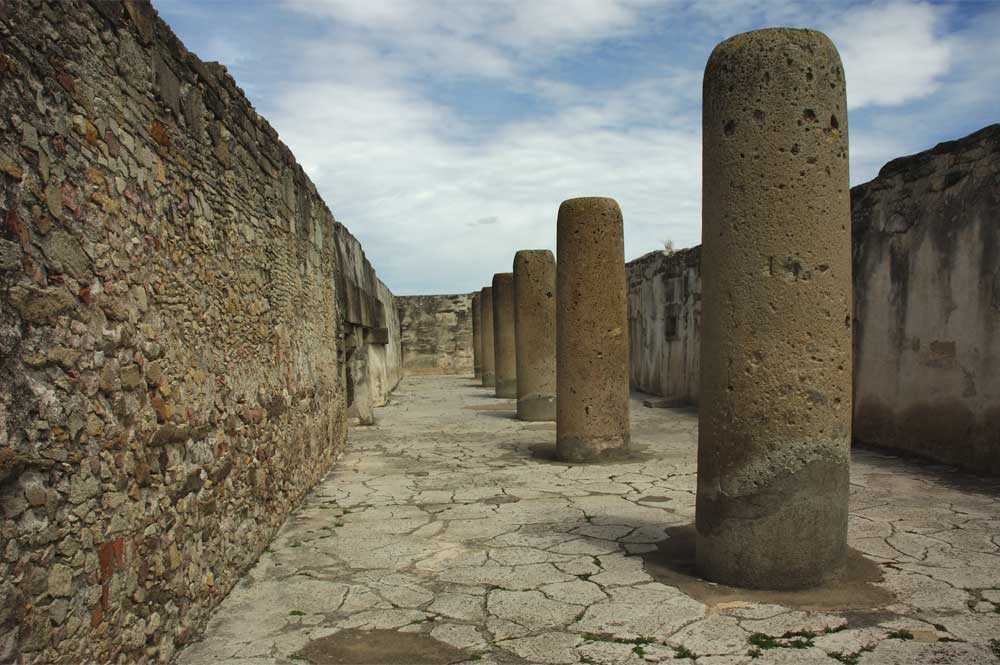
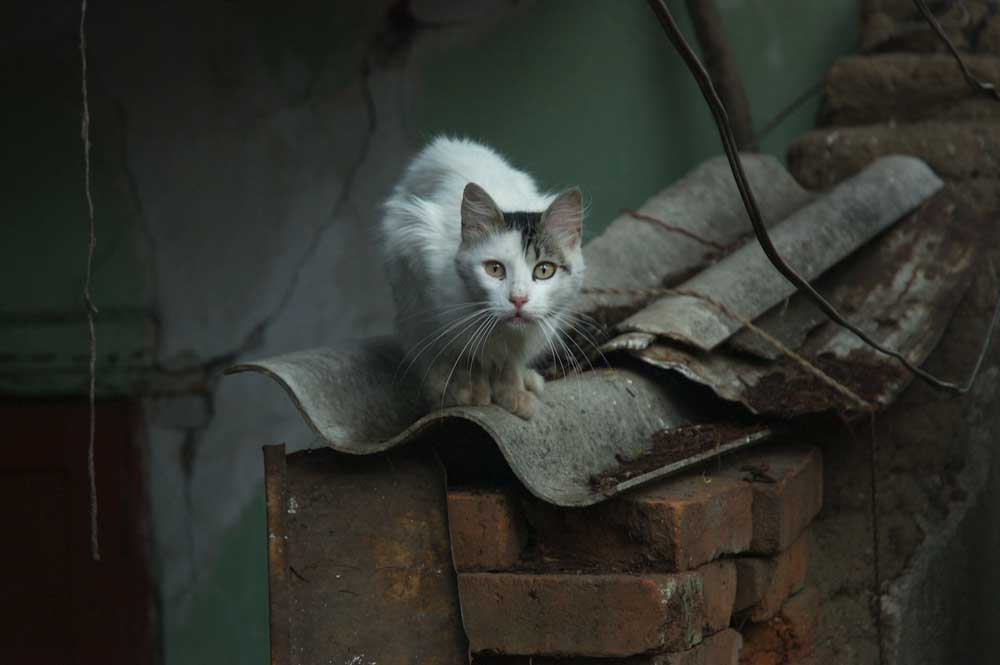
[Photos: Mitla Temple, Oaxacan Cat, Santa Domingo Church, 2006 - Click on the image to view a larger version]


My wife and I came to this Southern Mexico city so she could take Spanish classes. We rented a modest cinder-block apartment on the wrong side of the tracks. We had to dodge potholes and cars just to get to downtown Oaxaca.

The downtown Zocalo was packed during our visit, not with tourists but demonstrating teachers. I had to carefully step around these protesters who were sleeping on the ground. To avoid decapitation, I had to duck under hundreds of guy wires supporting make-shift homes.

It was more tranquil a few short blocks away near Santa Domingo Church. The church sits in the middle of the colonial and trendy part of town. Here, there were plenty of great restaurants, galleries and shops. Because of the artistic Mixtec and Zapotec Indians, the streets were very colorful. Yes, I brought home a few of mementos; they ranged from ceramic vases to colorful painted wood sculptures.

The weather in Oaxaca was predictable. Most days the rain would wash the streets around 6 p.m. Definitely, bring an umbrella during the summer. The weather is too humid for a jacket.

Would I come back to Oaxaca? I'd rather not. I suggested to my wife that we opt for less culture and more beach next time. However, my requests are often ignored. You see, my wife is an art historian specializing in Latin America and she loves this stuff. Frankly, I'd rather go fishing.

I hope you like the photos. Click on them for a larger view. Go to my web site for more: http://www.jmmgarza.com.


-30-

Upcoming Exhibit: Come On Down!

  I'll have several photographs on display  @ the Cheech Exhibition: February 7 – September 6, 2026 Chicano Camera Culture: A Photograph...