Showing posts with label gallery. Show all posts

Wednesday, November 18, 2015

Syrian Refugees Photography Exhibition?

As I write, an ambitious photographer or two is probably organizing an exhibit. A series of photographs of the ravaged faces of Syrian refugees. Images of destroyed Syrian buildings will give context. The collected images offer a stark contrast to our reality.

Wandering the streets, the photographer will pick and choose who to immortalize. Feeling almost guilty, the photographer snaps the shutter. The more desperate and suffering the refugee, the better. They can see the picture framed in a sterile gallery as the photo is captured.

What do you think?

Friday, September 30, 2011

An LA Chicano artist's best friend: Chon Noriega

[Photo is the cover of the October 2011 issue of Artforum Magazine]

Having lived in SoCal for several years now, I have gained a respect for UCLA professor Chon Noriega. Along with his minions, he has done an incredible job of promoting Southern California Chicano artists. Here are a few examples:

1) Helped gain exhibitions at major galleries including LACMA, the Autry, UCLA and the Getty (at the biggies not just the small barrio galleries)

2) Coordinated or created compelling articles and books on local artists (quite a few... not just a couple)

3) Promoted artists in important publications like the SF Chronicle, LA Times, Artforum, NY Times, etc. (he is a promoter)

4) Held panels and events that highlighted Chicano artists (rarely a Northern California Chicano or Chicana in sight)

5) Apparently, promoted the work of Chicano artists to international galleries and publications (Mexico, Europe, Asia... nice)

Chon's Los Angeles artistic and academic collaboration is groundbreaking. In San Jose, San Francisco, Berkeley, Austin, etc., Chicanos are typically relegated to smaller galleries even though their work is just as good if not better than their peers in Southern California. These communities don't have a hard-working academic like Chon making waves and news.

Typically scholars are sequestered in their ivory tower writing books and participating on the occasional panel. These tired academics are the norm, but Chon has broken out of this paradigm. This is great for LA artists and definitely bad news for other communities who lack an articulate and passionate person who is promoting Chicano and Chicana art "con ganas". Makes me wish I was born in Los Angeles... almost.

=30-

Monday, September 28, 2009

About Landscape Photography


[Photo copyright 2009 Jesús Manuel Mena Garza. All rights reserved. Click image to enlarge.]

Some photographers like to take landscape photos. I do too. But the simple fact remains, any landscape image won't even come close to actually being there. No camera can capture the subtle tones and textures resplendent in the natural world. Even the nature in your backyard (if you have a nice one) can be more vibrant than any print by Ansel Adams, Edward Weston or Imogen Cunningham.

That is why I don't take many landscapes. Obviously the seasons at Yosemite, Yellowstone and other natural venues repeat annually. If you go at the right time of year you can enjoy the real thing. The snowy river, the bright blue sky and the eroded canyons have not moved anywhere, yet.

Sometimes I will take a picture during a trip to remember the moment. But nature has to be seen smelled, touched, etc., up close and personal. Not experienced flat and impersonal. Photos of nature are just hollow remembrances, mementos. When you are in a gallery inspecting the desiccated remains of a landscape hanging on a sterile wall, do you ask yourself, I would rather be there than here?

When I walk (not drive) down the street, I am in awe (yes, I get giddy) of nature and architecture. I see art and sometimes history in subtle cracks, textures, shapes and hues.

What do I like

Having grown up in the San Francisco Bay Area I became familiar with the works of photographic legends Adams, Weston and Cunningham. If you are going to a gallery, I would suggest also investigating the work of Hiroshi Sugimoto and Minor White (earlier). They offer unique abstract images of the ocean. I consider their work more valuable and entertaining.

-30-

Tuesday, September 15, 2009

40 Years of the Chicano Movement


[Photo of César E. Chávez in San José (1970) by Jesús Manuel Mena Garza. Click to enlarge. Copyright 2009 Jesús Manuel Mena Garza. All rights reserved.]

On Wednesday September 16, 6-8 pm in San José, California there will be the discussion, "Organizing en el Movimiento". The first of a series of discussions that seek to honor the contributions of (some of) those involved in San José's Chicano Movement.

Invited guests will be Sofia Mendoza (United People Arriba), Sal Alvarez (UFW), Adriana Cabrera-Garcia (MAIZ), and David Madrid (DeBug). Moderated by Maribel Martinez of the Cesar Chavez Community Action Center at SJSU.

Featuring music by Conjunto Libertad and the exhibiting of rare photos and art of the movimiento from Jorge Gonzalez.

Organizers

MAIZ (Movimiento de Accion Inspirando Servicio)
Cesar Chavez Community Action Center
Teatro Vision
Sponsoring Organizations

-30-

Friday, April 04, 2008

Chicano art, beyond rebellion

'Phantom Sightings: Art After the Chicano Movement' provides a rare showcase at the Los Angeles County Museum of Art.
By Agustin Gurza, Los Angeles Times Staff Writer

Visitors to the sprawling Chicano art show opening today at the Los Angeles County Museum of Art are greeted by a display of photos depicting a group of daring guerrilla street artists known as ASCO, Spanish for "nausea." The photographs are from the early 1970s -- which seems to defy the show's title, "Phantom Sightings: Art After the Chicano Movement."

In one famous photo from 1972, in the midst of the movement, the museum itself was the target of these Dadaesque subversives protesting the exclusion of Chicano art from its galleries. In "Spray Paint LACMA," ASCO member Patssi Valdez is seen posing outside the museum's walls, which had been tagged overnight by her rebellious cohorts, Gronk, Willie Herron III and Harry Gamboa Jr. This act of creative defiance -- turning the building into a Chicano canvas -- is now enshrined in the very place that sparked the protest by treating Chicanos as the phantoms of the art world. So does this mean that Chicano artists have finally found the acceptance they sought? That they can now put down their spray cans and pursue careers as equals in a harmonious "post-ethnic" art world?

"I have a feeling if I was a young person today, I don't think I would spray paint the museum," Gamboa, 56, an author and college lecturer, answers slyly. "Because now, [tagging] has been felonized, and to put three signatures on a county building might result in three strikes. Who knows if we would all wind up in prison for life and never have the chance to pursue careers as artists?"

Half the artists in the current exhibition weren't even born when Gamboa and company tagged the museum, but they carry on the ASCO conceptual tradition by expressing their own set of social concerns in bold, albeit at times oblique, ways. Thus, the choice of ASCO as preamble is an intriguing invitation to rethink Chicano art, past and present.

"Phantom Sightings" (a phrase adapted from Gamboa's writings) features more than 120 works, including 10 commissioned specifically for the occasion, by 31 artists from across the country, some of whom don't call themselves Chicano. Most came of age in the 1990s and several have just recently started to draw international attention. Three -- Ruben Ochoa, Eduardo Sarabia and Mario Ybarra Jr. -- are currently represented in the sometimes reputation-making Whitney Biennial in New York.

Curated by Rita Gonzalez, Howard Fox and Chon Noriega, this is the first major Chicano group exhibition presented at LACMA since 1987's "Hispanic Art in the United States," which was organized by the Houston Museum of Fine Arts. And it is the first such show organized for LACMA itself in more than three decades, since its ground-breaking "Chicanismo en el Arte" in 1975 and "Los Four" the year before.

Unlike past Chicano art shows that focused heavily on paintings, the new collection highlights work in an array of styles and formats, including sculpture, mixed-media installations, photo-based pieces and so-called interventions, art that interjects itself in public spaces or social settings. Since much of the work is conceptual, "Phantom Sightings" is likely to leave some viewers scratching their heads, needing help deciphering what artists had in mind with animated blobs that change shape (Rubén Ortiz Torres) or droopy replicas of kitchen appliances made of vinyl (Margarita Cabrera). Essays and artist bios are included in a 240-page companion catalog that is bound to become a reference work.

Variety, not ethnicity, is the show's hallmark. Artist Ken Gonzales-Day deals with the lynching of Mexican Americans in California by digitally erasing the victims from historic photos. Sandra de la Loza, meanwhile, fills in the gaps that history erased by placing plaques (that are quickly removed) in places such as the whitewashed Siqueiros mural at Olvera Street. And Julio Cesar Morales reveals the resourcefulness of immigrants trying to cross the border illegally by exposing them in their hiding places, such as the little girl inside a piñata, through transparent water-color illustrations based on real cases.

The art is by turns provocative, fanciful, stunning, strange and even noisy, in the case of one audio installation titled "Migrant Dubs." Fox calls the show "a visually cacophonous and unruly thing." To some extent, it reflects the hardscrabble barrios where some of these artists were nurtured. That street aesthetic is reflected in the design for the exhibition, with rough-hewn plywood structures, and in signage and promotions using old-fashioned wheat paste posters.

Big expectations

The show is generating intense expectations, partly due to how rarely the museum turns its attention to Chicano art in its own backyard, as opposed to Mexican or Latin American art. Galleries from Santa Monica to East L.A. are staging shows to ride the coattails of "Phantom Sightings."

Even for the few midcareer artists in the show, participation can mean validation. "It's wonderful that I'm showing with a lot of up-and-coming or emerging artists," says Delilah Montoya, 52, a Texas-based photographer. "It makes me feel as though I've been going down the right track."

But the show is also stirring debate, starting with the subtitle, which draws its own line of partition: "Art After the Chicano Movement." It suggests not only a generational but an aesthetic break with Chicano artists who emerged during the civil rights struggle, known for illustrative paintings and murals, political content and traditional iconography, such as revolutionaries, lowriders and the Virgin of Guadalupe.

With its emphasis on younger artists who don't wear their ethnicities on their canvases, "Phantom Sightings" seems to be inaugurating a "post-ethnic" Chicano era. Coming at the height of a presidential campaign in which some hail Sen. Barack Obama as the first "post racial" candidate, the timing seems propitious.

Yet some worry that implication is demeaning. "The inherited plight and struggle and history of the Chicano art movement is not one you can toy with, not without expecting any sort of questioning," says Reyes Rodriguez, director of Tropico de Nopal, a gallery near downtown that has exhibited several of the artists in the show. "Do we just keep quiet and allow LACMA to declare that Chicano art is dead? What does that really mean? That you want to be more European or more a part of, let's call it the Anglo world, or whatever it is that validates you? Is that really success? Do we not have a voice of our own?"

The notion of ethnic identity as passé is pervasive in contemporary American society, not only in the arts but in pop music, politics, journalism and literature. At some art schools, being post-ethnic is almost an admission requirement. Yet some young artists still question the burden that the post-racial ethos places exclusively on racial minorities.

"People say multiculturalism is dead and we're, like, 'OK, when's the post-white show?' " says Eamon Ore-Giron, who holds an MFA from UCLA and collaborated on the "Migrant Dubs" exhibit. "Nowadays, it's almost as if your identity is erased, in a lot of ways. But at the same time, you are who you are, and that's what you're going to represent."

"Phantom Sightings" emerged from LACMA's Latino Arts Initiative, launched in 2004 under former director Andrea Rich and designed as a collaboration between the museum and UCLA's Chicano Studies Research Center. Noriega was named an adjunct curator and put in charge of the five-year plan to develop exhibitions, publications and other projects.

One of the projects already on the books then was a plan to exhibit highlights from the Chicano art collection of actor and comedian Cheech Marin. That show, a spinoff of Marin's larger exhibition called "Chicano Visions," is now scheduled to open at LACMA in June under the title "Los Angelenos/Chicano Painters of L.A.: Selections From the Cheech Marin Collection."

What the news release about the initiative did not mention was the contentious, behind-the-scenes negotiations between Marin and the museum, which originally turned down his show outright. The actor threatened to go public with the issue before museum officials agreed to the scaled-down version of "Chicano Visions," which has since toured the country to sold-out and sometimes record crowds.

The museum's initial resistance, explains Noriega, was based on its reluctance to showcase private collections.

But Marin scoffs at the rationale, pointing to LACMA's gleaming new wing named after billionaire developer Eli Broad, who lent his collection for display. "It was ironic to me," says Marin. "You would think L.A. would be the first museum to sign up for the show. But, in fact, it was the last."

The very timing of these back-to-back shows raises some questions. Is the museum again signaling a generational split? Is it drawing a line between the young artists of "Phantom Sightings" and the older ones in the "Marin Collection"?

"I would hope not," says Noriega. "I would hope that people would attend both shows and come out and go, 'Wow, these are some pretty big bookends for a category called Chicano art! I would like to see some of the stuff that comes in between.' "

"Phantom Sightings" does not attempt to present a survey of Chicano art from the last show to the present, as if the museum were trying to pick up where it left off in 1975. "We thought it would be a disservice to the field to do that kind of show because in some ways it would sanction the idea that institutions can kind of catch up every one to three decades," says Noriega. "Besides, it's an impossible task, in many ways doomed to failure like the Whitney Biennial. No, we do much better if we accept the institution's commitment to ongoing activity in this area."

Changing times

Contemporary Chicano artists are working in a social environment vastly different from the days of the Chicano movement. In Los Angeles, to begin with, the Latino population has boomed, putting demographic pressure on cultural institutions to respond. Recurrent waves of immigrants constantly revive the issues of marginalization and social acceptance, even as the offspring of previous generations progress up the social ladder, taking leadership roles as politicians, academics and curators, which were practically nonexistent 30 years ago.

Most of the artists in "Phantom Sightings" were born in the 1970s and live and work in Los Angeles. The oldest is 52 (not counting ASCO); the youngest 27. All have advanced degrees, 20 with masters of fine arts, most from California schools. Only two were born in Mexico.

Whether they call themselves Chicano or not, several artists explore issues of class and culture inherent in their backgrounds. In many cases, artists transform mundane objects from their everyday experience to make imaginative or pointed statements with the byproduct.

El Paso artist Adrian Esparza, for example, unspools the threads of a multicolored Mexican serape to create an abstract geometric pattern, thereby "taking artisanal traditions and using them in a postmodern way," as Fox puts it. Margarita Cabrera, also from El Paso, uses fabric from U.S. Border Patrol uniforms to create realistic cactus sculptures that conjures "a conceptual link between an unforgiving landscape and the relatively recent criminalization of border crossing," as Noriega explains in the catalog.

Perhaps the most obvious example of the mundane exalted as art is Ochoa's use of his family's tortilla delivery truck as a mobile art gallery. The L.A.-based artist emptied the interior of the slab-sided 1985 Chevy van and "just tricked it out" with white walls, track lighting and linoleum flooring and invited his friends to create projects for the road.

He called it "Class C," for the DMV's commercial license category, and did 75 shows from 2001 to 2005, "bringing contemporary art to the neighborhood and not dumbing it down." "I was the collaborator, curator, driver, installer and mechanic," says Ochoa, one of five artists in the exhibition who attended Otis College of Art and Design and one of six with MFAs from UC Irvine. "I'd move it around as far as my Triple-A miles would take me because it would break down and I had to tow it back."

Ochoa, born in Oceanside to Mexican immigrants, was practically raised inside that van, recruited like so many of his first-generation peers to work in their parents' business. Yet he represents a new generation of Chicanos who want to be identified primarily by their work, not their background, even though their barrio shapes their art.

"It's laid in the work, but it doesn't have to be highlighted," he says. "A lot of my work deals with different class tensions, boundaries and barriers, but it doesn't have to be solely the Mexican American experience."

For Gamboa, the former ASCO tagger, it doesn't matter what you call it as long as you give it a chance. "It's always been my contention that Chicanos are a co-equal culture and capable of participating and sharing and contributing," he says. "At some level, [the show] just gives people hope that it's possible to actually create work and have it recognized as being art."

-30-

Friday, January 25, 2008

San Bernardino Valley College Presents Chicano Photographer Exhibition

I would like to thank everyone who came to opening of the Chicano Photographer exhibition at San Bernardino Valley College. I enjoyed meeting everyone and it was an honor to the opening of the exhibition at Valley Coleges's Gresham Art Gallery on Jan. 24.

On display were my documentary photographic series. The traveling exhibition, Chicano Photographer, explores the Chicano community and activism during the dynamic 70s. Ann Marie Leimer, Ph.D., gave a lecture on the political climate during the decade. Her presentation added context to the black and white photographs. Leimer and I later answered questions from the audience. Usually your lucky to get one or two questions, but I was asked quite a few.

The exhibition continues to Feb. 7, 2008. Anyone having questions about the series can contact Dr. Leimer at (909) 748-8505.


[Click on photos to enlarge. Copyright 2008 Jesús Manuel Mena Garza. All rights reserved.]


I enjoyed talking to the audience individually and as a group. I had the opportunity to discuss future projects including documentary photographs of the Navajo Nation and Oaxaca, Mexico artisans. During these lengthy discussions I enjoyed explaining photographic composition, darkroom techniques and my new business interest in real estate. All in all, the audience was very receptive. Many in the audience asked for my autograph and to pose with them for pictures. Now I now how Eric Estrada feels. I hope their pictures come out.

Some gave the exhibition a two thumbs up. Thanks!

If your museum or gallery is interested in presenting this show, please feel free to contact me at (909) 557-7151.

-30-

Monday, September 24, 2007

Chicano Photographer Speech - St. Mary's College of Maryland


[Photo: Chicano Education Pilgrimage, 1971. Click on image to enlarge. Copyright 2007 Jesús Manuel Mena Garza. All rights reserved.]

Chicano Photographer Exhibition Speech, October 17, 2007

Intro

Good afternoon. Before I begin my remarks, I would like to acknowledge the many people that have helped make this exhibition possible. I would first like to thank Professor Cristin Cash and the members of the Art and Art History department faculty for extending the invitation to myself and Dr. Ann Marie Leimer and bringing us the beautiful St. Mary’s campus.

I was born and raised in San José, California and this is my first visit to the East Coast. I am grateful for this tremendous opportunity to share my work with St. Mary’s students and the University community. I must also especially acknowledge Gallery Director Catherine Dunn for her coordination of the show. I also want to thank students from Professor Cash’s Curatorial course for their assistance in mounting the exhibition.

I will be talking for about fifteen minutes how I came to be an artist, my process as a photographer, and the images. I would welcome any questions you might have at the conclusion of my presentation.

Becoming a Chicano Photographer

When I was eight years old, I remember shuffling through a drawer where I found 35mm negatives my sister Dolores had hidden. I pulled them out and held them to the light. They looked like film strips used in elementary school projectors during the late 1950s and early 1960s. The celluloid miniatures held a certain mystery. I wondered how you could make a print from such a small negative. What made this transformation possible?

From this raw beginning, I pursued the many skills necessary to be a professional photographer. I advanced from first taking simple snapshots to eventually exhibiting in galleries. My role as critical observer empowered me, but developing technically and aesthetically as an artist required a great deal of effort and continual experimentation. It also required coursework, taking countless pictures and endless discovery. Over the years, I learned how to effectively previsualize, capture, store and distribute my art.

During the 1970s, I explored and documented Chicano culture through photography. this time, Chicanos struggled to enter the American mainstream while retaining their identity. Previously, Chicanos and Chicanas, Mexican-Americans or Hispanics were known as the silent minority. In the 1970s, I became part of a new, loud and proud chorus.

I consider myself a Chicano photographer. But what does it mean to use the term “Chicano photographer”? Is it someone who only specializes in photographing Chicano subjects? What is Chicano subject matter anyway?

Should I be limiting my photographic work to only include stereotypical Chicano imagery, such as the Virgin of Guadalupe or a desert landscape complete with thorny cactus? I have gone to exhibits by Chicano and Chicana artists. They can often be divided into two categories. One large group consists of the Frida Kahlo imitators. The second category is resplendent with independent thinkers. Both are valid.

Frida’s legacy is manifest in the work of many contemporary artists. Frida will never die as long as dozens emulate her. This genre contains at least one of the following cultural clichés: the maguey, the Sacred Heart, the Virgen de Guadalupe, a struggling woman, roses. When I enter an exhibition and discover examples of such formulaic work, I always have the refreshments to look forward to.

I consider myself in the latter category — an independent thinker. I am not limited to preconceived or politically dictated notions of Chicano art. Chicano art is a hybrid of the Mexican and American experience. That experience is constantly evolving. It is also nuanced by region, gender and other variables. Personally, I have used my camera to explore the Chicano Movement, Americana, fashion models, and much more. And yes, I have also photographed representations of the Virgen de Guadalupe.

The Photograph

What makes a great photograph? There is no single path to achieve this goal and there is plenty of room for creative interpretation. Fine art photography requires two distinct skills — technical and aesthetic. To be a great photographer, you must combine the two.

The works of Ansel Adams, Edward Weston and Richard Avedon have influenced me in this regard. Warhol is another favorite. His audacity and marketing shrewdness have inspired me and made me laugh. Warhol was truly a master marketer. He was at his best when he not only mocked his project, but himself, the art world and tradition.

Another artist who influenced me was Diane Arbus. Her photographs of so-called “freaks” published in the 1960s opened my eyes. She exposed beautiful people and common people as well. Her lens was uncompromising.

Texas, California, Y Mi Familia

My story, at least in the beginning, is similar to many other Chicanos and Chicanas. My parents were modest farm workers. I was born in beautiful San José, California in 1952, the seventh of eight children born to Eusebio and Guadalupe Mena Garza. Guadalupe was born in 1914 in Carrizo Springs, Texas, and grew up in nearby Crystal City. My father, Eusebio, was born in 1907. He hailed from Coahuila in Northern Mexico and came to Texas as a child in 1916. The Garza family settled in Crystal City where Eusebio later met and married my mother.

My parents worked their entire lives as farm laborers. Like many campesinos, meaning migrant farmworkers, in Crystal City, our entire family migrated throughout the Midwest and West during the harvest season. Each winter, they would return home to Texas.

In the late 1940s, my father’s eldest brother Manuel led the extended Garza family to San José in search of increased opportunities. Again the entire Garza family worked in the fields while living in migrant labor camps. We picked fruit and vegetables at orchards and farms that later became prized locations for Silicon Valley’s computer industry's chip manufacturing plants.

Growing up in San José during the 1950s and 60s, I saw my hometown evolve from an agricultural oasis south of San Francisco to the capital of Silicon Valley. During this period, my parents bought a house in a racially diverse, working-class neighborhood in the city’s Northside.

My mother Guadalupe eventually began working at local canneries, although she also continued laboring in the fields. I worked in the fields during summers, on weekends throughout my middle and high school years, and occasionally in college. Manual labor is always a valuable commodity.

My parents were quite humble. I do not remember having any long conversations with either of them. My father usually sat in the corner reading the Spanish language newspaper. He also loved listening to Spanish language radio. Eusebio was very proud of his Mexican heritage and South Texas culture. I shared his love of Tejano music, dancing and spicy cuisine. To this day, I share this aspect of his South Texas soul.

My mother could neither read nor write, but she had a keen mind and a great creative spirit. She knitted, crocheted, made quilts and clothing as did many women of her generation. She enjoyed gardening and especially tending to her roses. I share her passion for flowers.

My mother and I returned to Crystal City several times to see members of the familia, family, that remained behind. In 1962, when I was ten years old, I traveled with my mother, my brother David and my sister Dolores’ in-laws. We stuffed eight people into a car. The trip lasted more than 24 hours. The trip took 24 hours and we did not stop once? or rarely stopped OR drove continuously

During this trip, I distinctly remember that I saw a sign posted on a dusty rural Texas saloon stating, "No Mexicans or Dogs Allowed." Although the adults ignored the sign and entered the saloon without incident, this experience revealed to me another side of the South.

I returned to Crystal City in 1969, during the historic high-school walkout. Chicano/as Chicana and Chicano high school students walked out of scheduled classes to protest racist policies that denied them opportunities typically afforded Anglo students. In this small Texas town, I witnessed the impact of poverty, segregation and activism, an encounter that shaped my future political and community involvement. This event galvanized high school and college students throughout the country.

The Birth Of A Photographer

My parents could not afford a camera or record player. So, at age eleven, I bought myself my first camera at La Pulga, the San José Flea Market. I used this simple twin-lens box camera to capture my initial portraits of close friends and neighborhood buildings, subjects I would continue to record throughout my career.

I processed my first exposed rolls of film at Arena’s Photography on Thirteenth Street in San José. There, Gaetano Arena magically transformed my negatives into prints. At least then, I thought it was magic.

From the beginning, my images had as their source my migrant farmworker heritage and my immersion in the dynamic political and artistic culture of El Movimiento, the political movement that emerged during the mid-1960s seeking social justice for Chicanos and Chicanas.

San José High

My artistic vision was shaped and nurtured at Roosevelt Junior High, San José High, San José State University (SJSU), the San Francisco Art Institute, and the Academy of Art College (now University). Drawn to the role of outside observer, the documentation of people and events formed the primary focus of my early photographic work. I served as photographer for both the junior and senior school newspaper and yearbook and discovered documentary photography and photojournalism as my calling.

In high school, I also learned basic serigraphy, or silk-screen printing, an important skill that helped financially support me through college. At various screen shops, I did everything from constructing screens to printing. It was great training for making Chicano Movement posters and flyers.

Growing Up Chicano

My parents let me to do my own thing when I turned 18. They weren’t strict; in fact, they were generally oblivious. I converted their old garage into a hippie palace. I had all the necessities of life including a king-size waterbed, stereo, sofa, and dozens of political posters. Covering a large window with the then ubiquitous upside-down American flag was my not so subtle protest against the war in Viet Nam.

My parents never understood the value of an education. I believed that they were not on my side. I had to make life-changing decisions on my own. My father stated on many occasions that being a laborer was good enough for me. He never went to college (nor elementary school) — why should I?

Just this year (2007), I learned from my eldest sister, Carmen, that I had been offered a full scholarship to a private school when I was in the first grade. Apparently, I did very well on a test. But my parents declined the offer saying that their son didn’t need to go to any fancy school. I wonder what my life would have been like had I been able to take advantage of this opportunity.

Another story about my parents: my father Eusebio did what he was told. In 1975, the police were looking for someone in the neighborhood. Rather than saying no, he let them search my garage bedroom. That day I lay ill with the flu. My girlfriend was visiting and had brought me a bowl of hot soup.

One officer caught a glimpse of me and said, “You disgust me.” I do not remember asking for his opinion. From his expression, I could tell that he didn’t like the lefty posters, waterbed and upside-down flag. He could tell I wasn’t a member of the Young Republicans.

The Chicano Film Institute

Immediately after high school, I worked as a photographer and cinematographer at the Chicano Film Institute (CFI) of San José. It was an excellent opportunity to document Chicano/as in Santa Clara Valley. I shot 16mm film of Teatro Campesino, the Farmworkers’ theatre founded by Luis Valdez, as well as slides for a presentation on de jure and de facto housing patterns in Santa Clara County, and many other projects. It was at this time that I began to identify myself as a “Chicano Photographer.”

I have many stories from the 70s that can shed light on the conditions Chicanos and Chicanas faced at that time. For example, I used to walk around the neighborhood of San José State University with a 16mm film camera. I had no film, but practiced zooming, panning and composing. One day, a San José police officer saw me and quickly grabbed my arm demanding, “Where did you get that camera?” I noted that I was a cinematographer and that I worked around the block. He responded harshly and continued to interrogate me for several minutes. Such was life for a longhaired lefty. This was not the first time I was hassled, and it would not be the last.

La Vida Suave - College Life

At an early age, I knew I would attend San José State College, now University. I had investigated their Journalism Department, knew the school had an excellent reputation, and that Dr. Joe Swan would be an excellent teacher. For me and many others, college was an opportunity for personal growth. I felt that there were no boundaries. This was the early 70s. There were hippies, be-ins, demonstrations, marijuana, miniskirts, free love and college classes, too.

As a photographer, I found plenty of creative opportunities. My camera was an excellent tool for personal expression. I had my first photo exhibit at SJSU the summer before I entered college. There would be many to follow. By the way, it took me eight years to finish college. I was the first and only one in my family to go to a university, and I did not have anyone to guide me through the process. I probably took too many esoteric classes. In retrospect, I should have finished in four years.

Not many Chicanos of my generation had the opportunity to take classes, join clubs and investigate new cultures. At SJSU, I served as president of three campus organizations and was a member of the United Farm Workers Support Committee and the Community Alert Patrol, or CAP. As part of CAP, I monitored and documented police activities. Through my political involvement, I met César Chávez, Corky Gonzáles, José Angel Gutiérrez and many other Chicano/a leaders.

El Centro Cultural de la Gente

Concurrently with my involvement in the university and broadcast communities, I served as Treasurer, Gallery Director, and Resident Photographer at El Centro Cultural de la Gente of San José, where I helped produce various exhibits of my work and that of other San José and Bay Area artists. El Centro Cultural de la Gente was a community based arts organization. El Centro was one of the epicenters of the Chicano Movement in San José during the 70s. Most of the photographs in this exhibit are from this period.

Conclusion

That concludes my talk. I appreciate your interest in my photographs. If you have any questions, I will try my best to answer them now.


-30-

Tuesday, April 10, 2007

Comment About Documentary Photography

[Photo: Old Man From Juarez, Mexico, 1975. Click on image to enlarge. Copyright 2007 Jesús Manuel Mena Garza. All rights reserved.]


Some documentary photographers treat their subjects like quarry in the jungle. They stalk them, take their shot and then hang their desiccated representation on a distant sterile wall. The jungle can be the Amazon or the streets of a barrio, it is all the same to them.

As outsiders, their images lack any humanity and show a disdain for their subjects. At the photography reception, the shooter can be seen prancing around, weaving fanciful tales of his adventures to the spellbound audience.

The assembled, saturated by the stench of privilege, sip on wine. Esoteric rhythms waft in the background. The photographs remain mute. Surrounded, the captured photographs witness the decadence.

Jesús Manuel Mena Garza

-30-

Sunday, June 25, 2006

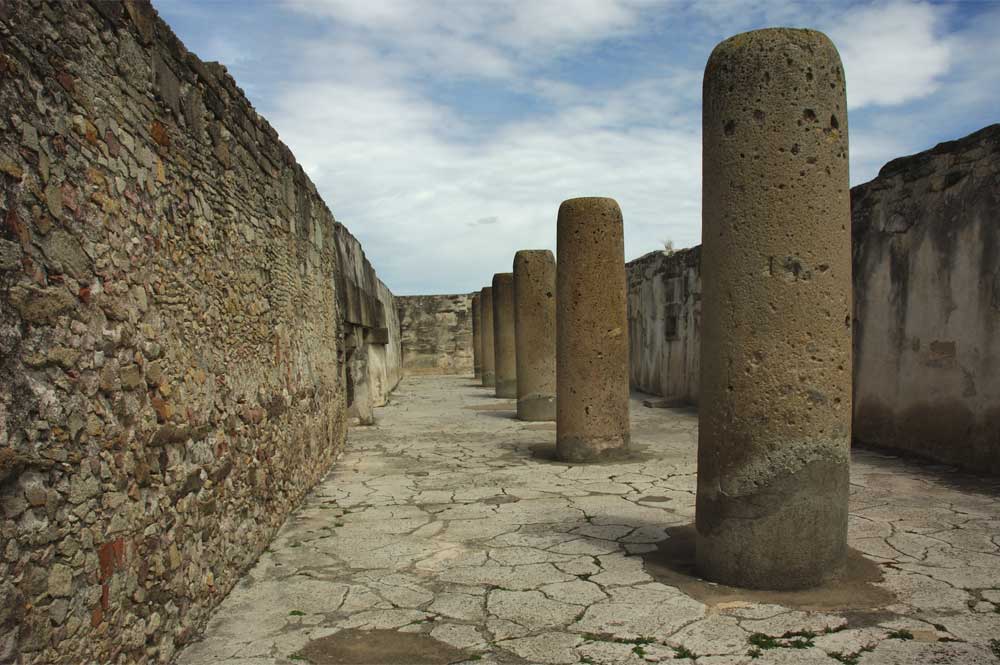
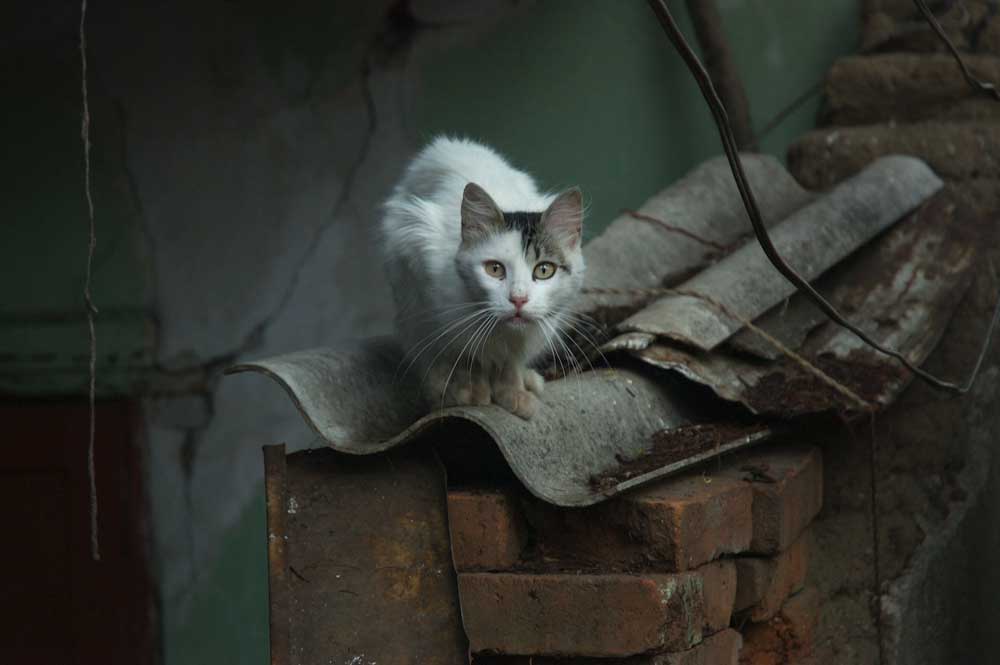
June Oaxaca Trip - Where is the Beach?


[Photos: Mitla Temple, Oaxacan Cat, Santa Domingo Church, 2006 - Click on the image to view a larger version]


My wife and I came to this Southern Mexico city so she could take Spanish classes. We rented a modest cinder-block apartment on the wrong side of the tracks. We had to dodge potholes and cars just to get to downtown Oaxaca.

The downtown Zocalo was packed during our visit, not with tourists but demonstrating teachers. I had to carefully step around these protesters who were sleeping on the ground. To avoid decapitation, I had to duck under hundreds of guy wires supporting make-shift homes.

It was more tranquil a few short blocks away near Santa Domingo Church. The church sits in the middle of the colonial and trendy part of town. Here, there were plenty of great restaurants, galleries and shops. Because of the artistic Mixtec and Zapotec Indians, the streets were very colorful. Yes, I brought home a few of mementos; they ranged from ceramic vases to colorful painted wood sculptures.

The weather in Oaxaca was predictable. Most days the rain would wash the streets around 6 p.m. Definitely, bring an umbrella during the summer. The weather is too humid for a jacket.

Would I come back to Oaxaca? I'd rather not. I suggested to my wife that we opt for less culture and more beach next time. However, my requests are often ignored. You see, my wife is an art historian specializing in Latin America and she loves this stuff. Frankly, I'd rather go fishing.

I hope you like the photos. Click on them for a larger view. Go to my web site for more: http://www.jmmgarza.com.


-30-

Best Fishing Combo For Oregon Coast Striped Bass

 I ASKED GOOGLE Ai: Suggest a rod and real combo for catching 20 pound striped bass off the coast of Oregon? PHOTO: August 2026 fishing in C...