Showing posts with label radio. Show all posts

Friday, January 13, 2012

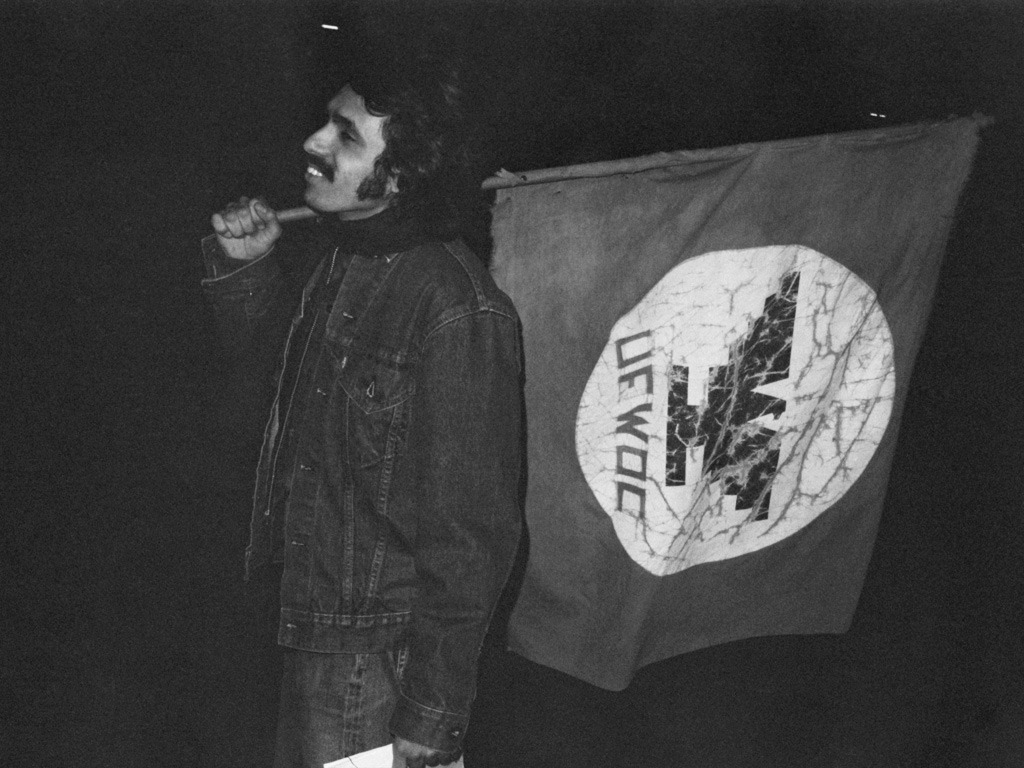
Daniel del Solar: Latino Media Activist Passes


Daniel at Congressman Honda's Washington D.C. office
June 13, 1940 - January 13, 2012

Daniel del Solar, Latino media activist, documentarian, videographer, photographer, and poet died today in Oakland, California, at the age of 71, after a long, valiant battle with metastatic prostate cancer. 

Daniel was born in Chile and grew up in Mexico, New York, Mill Valley and Santa Monica. After graduating from Santa Monica High he attended Harvard University. Daniel went on to a varied career in public media, from the KPFA-FM Comunicación Aztlán programming collective in the early 1970s to National Director of Training and Development at the Corporation for Public Broadcasting (CPB) in Washington D.C. in the mid-1970s. 


As a leader in innovative multicultural public broadcast programming, he also worked with KQED-TV’s “Open Studio,” served as General Manager of KALW-FM, San Francisco, from 1985–1992, and as General Manager of WYBE-TV, Philadelphia from 1992–1995, with TV programs he produced broadcast by PBS stations in many cities, including Boston, Los Angeles, Detroit, Chicago, and San Francisco. 
He was on the national board of Citizens for Independent Public Broadcasting (CIPB). He also served as Development Director of the Mission Cultural Center for Latino Arts. His lifelong involvement with and contributions to Latino/a equality and culture include his work as co-producer of a weekly KPFA radio magazine, “Reflecciónes de la Raza,” contributions to the current KPFA weekly program “La Raza Chronicles,” and many other radio and video productions. 

With leading Bay Area poets, he was a founding co-editor of Tin Tan (a now legendary San Francisco Chicano/Latino cultural magazine). Many of his photographs have appeared in books, exhibits, and online, and will be featured in an upcoming book about the stepwells of India. 
He was a co-producer of “Chile: Promise of Freedom,” an audio CD distributed on worldwide radio by the Freedom Archives. He often reported on events in Cuba, Chile, Nicaragua, and Venezuela and was active in many Latin American social justice and solidarity movements. 

Daniel comes from a prominent Chilean family that can trace their roots to the original conquistadores of Venezuela and Chile. His father was the editor of a major Santiago, Chile newspaper. His mother Luchita Hurtado currently resides in Santa Monica, California and Taos, New Mexico. Daniel's mother later married noted Austrian and Mexican surrealist painter 
Wolfgang Paalen and UCLA professor and artist Lee Mullican.

At high school he met his long time friend musician Ry Cooder. Danny explained to me that he introduced Cooder to traditional Cuban Music. Apparently there is a scene in the Buena Vista Social Club movie where he receives a cassette. Danny gave it to him. On one of the later CDs Daniel is mentioned and thanked.


 Jesús Manuel Mena Garza notes: 


I remember Daniel for being a world traveler. He was always off to places I could never afford to visit. Daniel was a fervent supporter of Fidel Castro and Hugo Morales. Though I didn't care much for leaders for life, Daniel was unashamedly a supporter. 
I met Daniel in the early 1970s at KPFA radio. He was a vocal advocate for public broadcasting and was saddened by the increased commercialization of public media. I am hopeful that his media collection finds a home at a university archive. 

Daniel while on his many journeys always found a place to stay at my home in Southern California. We would talk about politics and technology, edit photos and videos. By the way, many years ago, Daniel and his late wife Susan Miriam Castelan married Annie and I on a cold-wintery morning in San Francisco. We wouldn't have had it any other way. 

-30-

Friday, March 13, 2009

Just Another Repeater Radio Station


[Photo: Opie Taylor of the Andy Griffith TV Show... not radio]

Radio For the Rest Of Us?

I’ll keep this article brief. Most NPR stations are just repeater stations. They focus on programming that I consider East Coast highbrow. They rarely offer any local programming.

Here is how the NPR monolith works. Most NPR programming is produced at their flagship station, WGBH Boston. Before we get news and information, it is filtered (they have to make sure it isn't too progressive or contaminated by minorities) through a "sophisticated" Boston and New York filter. That is why NPR affiliates often blast the same material over the airwaves and dominate the left side of the radio dial. It gets awfully redundant.

Again, this bleached material has a definite East Coast bias. After listening to this corporate yammering (programming) you learn that East Coasters wouldn’t know a Chicano from a hole in the ground. This is not good news for us West Coast Chicanos. Changing NPR’s focus from YUPPIE news and features to more diverse fare is practically impossible. This is where the dinero (money) is and they are sticking to their network guns. But there is hope. The corporations don't own the future because Internet radio is on the rise.

Why is Internet radio so great? Apparently, production costs are relatively low, corporate donors aren't quite as important and you don’t have to own a big-fat production facility. In the interim, local repeater stations present vacuous programming like Boston Pops and A Prairie Home Companion. My wife loves this show.

Acculturated and somewhat assimilated, I also occasionally enjoy what the repeater stations offer, but I am not yet a clone of the famoso (famous) Opie Taylor - see photo above. I still like Tejano (American) music and an occasional story about people of color. The confluence of Chicanos and Internet radio will take place. Maybe the new paradigm shift has already taken place. It just isn't as obvious and as easy to access as the NPR stuff on the left side of the dial.

-30-

Wednesday, September 24, 2008

La Cosa Nueva Radio KSJS FM 90.5


Download this 8.5 x 11 inch 300 dpi JPG photo of La Cosa Nueva (C/N) Radio Collective. 

Yes, we dressed like that in the mid-70s. You can make this photo your own by following these simple instructions. First, click on the photo of C/N to enlarge. Drag the letter-size photo to your desktop or a folder. Now you are ready to print. Share the photo with your prof, cousins and friends.

During the 70s, C/N offered unique music, news and views. C/N programming was featured not only on San José's KSJS but Cupertino's KKUP and Berkeley's KPFA. Shows were created by a cadre of more than a dozen members.

Music ranged from Latin-rockers Santana, Azteca, Malo and El Chicano. Salseros Tito Puente, El Gran Combo, Grupo Folklorico Y Experimental Nueva Yorkino and Willie Colon. Mexican and Tejano stars that included Little Joe, Beto Villa, Cornelio Reyna and Javier Solis.

The Chicano and Rican members of C/N produced conferences, dances, events and much more. These unique programs were created at a time when San José's Latino community was hungry for programming that reflected their culture and experience.

From left to right: Antonio Lopez Jr. is now a photographer at SJSU. My favorite salsa fan, Walter "Chico" Irizarry has passed away. Michael Mercado currently resides in beautiful Livermore, California. Ramon Pinero has moved back to the East Coast. This time he lives in Florida. I, Jesús Garza live and turn to toast in the desert community of Redlands, California.

###

Monday, September 08, 2008

Legendary Tortilla Factory Releases CD "All That Jazz"

First CD from Tortilla Factory after 23-year hiatus.

The legendary Tortilla Factory, the Texas Chicano supergroup, has released a new CD "All that Jazz" 23 years after their last release, and Bobby Butler's voice is as rich as ever. Known as "El Charro Negro" to his fans, he has the distinction of being the only African American who sings the "Homeland Texas Chicano" a term coined by the band's leader, Tony "Ham" Guerrero.

Joining the band is Tony's son Alfredo Guerrero, infusing a new note into the band's repertoire by singing songs with an urban flavor as well as the ballad "Hasta Que Te Conoci." Jerry Lopez (Ricky Martin, Marc Anthony) from Santa Fe and the Fat City Horns lends guitar and vocals to that track.

Lopez said, "I was honored and very flattered to work on this project. Tony has worked with some of the greats in our business, and I wanted to give back a little of what the Tortilla Factory gave me in my formative years. Just by being on their CD I have earned a 'badge' that I wanted for a long time."

Tony sings a particularly poignant standard, "What a Wonderful World," a song filled with the emotion of a man who has fought a battle for his health in the last two years, including dying twice on the operating table.

The recent submission of "All That Jazz" to the National Recording Academy for Grammy consideration was quite an arduous process, made difficult by the fact that the music is so hard to pigeonhole. For example, tracks from the CD fall into categories as diverse as Acid Jazz, to Spanish Ballads, to Jazz Standards, to Urban Contemporary, to traditional Tejano. About the closest description can be American World Music, a genre-defying melting pot of sound. There is a unique tone that weaves through all the songs, a definite sound that identifies it as true as Texas.

Bandleader Tony Guerrero, known as "Ham" to his audience, winces at the word "Tejano" and the stereotype it invokes. In 1963, when he was traveling the country with Johnny Long & His Orchestra, the other musicians (Italians and Jews from New York who were much older than the young Tony) were intrigued by the sound he was playing during a break in practice, and asked him to describe it. "They liked it and wanted to know what it was. About the only thing I could think to say was that it was Texas Chicano Homeland. That's when I came up with that description. "

Along the way, Tony has met and played with some of the legends of music. He went to San Francisco in 1964 and landed right in the middle of the flower-power scene. Tony relates "it was the start of the Haight-Ashbury flower power era, and we were all just a bunch of broke musicians living in the Mission District of San Francisco...it was more like the hood...Carlos Santana, Jerry Garcia, and Greg Rollie (Journey), we were all there at that time. "

Tony Guerrero was part of a very popular act called Little Joe Y Familia in the early '70s, they played rock three nights a week at the Orphanage Night Club in San Francisco. They recorded a Latin rock album called "La Familia Inc. Finally." Essentially, the "Familia" seceded to become "The Tortilla Factory." Tony, a gifted musician who was granted a scholarship to the Berkley College of Music, wanted to develop in a different direction. Now, Tortilla Factory's music is analyzed and study in music theory classes at Berkley, bringing events full circle.

The Tortilla Factory was "indie" before the term was coined. Drawing over a million dollars a year in the '70s without a record label, and subequently getting in trouble with the IRS because of it, the band was a successful touring act all over the United States, drawing crowds of thousands. That fan base is still there. "In only two performances we've done in the last two years our attendance was over 1,500 people both times," Guerrero said.

Tejano Music" is a much misused umbrella term that actually incorporates a lot of different types of music. "That's unfortunate, many of us don't fall into this stereotype because we don't all play accordions and wear cowboy hats." The genre has all but been ignored by the major record labels and even the spanish-speaking radio stations. Recently the hundreds of thousands of Tejano fans have been very active. The Austin Tejano Music Coalition, with the support of Senator Barrientos (D), Texas announced on August 28, 2008 the start of two new stations, one FM and one AM, that will play this music exclusively.

Arnold Garcia, Editor of the Austin American Statesman, said, "Guerrero and other Tejano troubadours were the connecting tissue of Chicano culture in their heyday. They provided the bilingual sound track of our lives not to mention all those memories of Saturday night dances that provided rhythmic relief from drab lives. Sociology aside, it was and is just damn good music."

For information and media contact email Christine Thompson, Publicist at christine@amfmstudios.com.

http://www.youtube.com/watch?v=YazEHGqhflU
www.tonyhamguerrero.com

# # #

Trackback URL: http://www.prweb.com/pingpr.php/RW1wdC1TdW1tLUhvcnItU3VtbS1QaWdnLVNpbmctWmVybw==

Saturday, March 01, 2008

Porky Pig Pundits


The pigs are wallowing in the mud again. Oink oink! It is election season and the right-wing are up to their usual dirty tricks. Then, what would you expect from a pig? Are you tired of these rude and obnoxious personalities? I feel they have a monopoly on the airwaves. Again, what do you think?

Pundits more often than not have guests that reflect their narrow agenda. Nothing makes these conservative right-wing hate mongers happier than to be on the boob tube spouting their vitriolic message. They are pros at spreading half-truths and slinging mud (they are pigs after all).

What can we do to decrease the influence of these misinformation miscreants? Well, to start off, we should not watch their programs. Instead we should choose fare that is more diverse. America needs to recognize the difference between the self-absorbed right and mainstream America. Lets make the "right" choices, if you know what I mean.

-30-

Tuesday, August 08, 2006

Don't Listen To Those Conservative Wackos


[Photo: Spyder Sanchez picketing in front of a 7-11 in San Jose, California, 1973 - Click the image to view a larger version]


I am proud to be left of center. Some network pundits (those bobosos at FOX come to mind) babble that people of my persuasion are nuts. They spew from their electronic pulpit that anyone who does not support right-wing disasters like the Iraq war, wiretaps and oil drilling in wildlife refuges are extremist or worse... liberals.

It is distressing to view these Bush-pandering idiots on television as they spread their confusing message. All the while, they rant about left-wing media bias. It is obvious when you turn on the radio or television that conservative tirades dominate the airwaves.

These rabid TV monkeys could make the yellow journalists of the late 1800s blush. They stealthily use innuendo like cowardly criminals a knife. They slyly stab their progressive enemies in the back while grinning like Cheshire cats. Later they slink back to their comfortable haunts and dream-up more sharp fallacies to share.

Many of these media clowns believe in this axiom; if you emphasize the same lie repeatedly, the gullible public will think it's fact. I believe in getting my news from as many diverse radio, television and print sources as possible. This reduces the odds of being fed garbage. Where do you get your news? I hope not from FOX and some of those other right-wing bozos that seem to dominate the airwaves.

-30-

Upcoming Exhibit: Come On Down!

  I'll have several photographs on display  @ the Cheech Exhibition: February 7 – September 6, 2026 Chicano Camera Culture: A Photograph...