[Photo: My father, picking cotton in Texas circa 1925]
Photographer, artist, and audiovisual producer, Jesús Garza's artistic vision was shaped by his boyhood in San José, California, and later nurtured at Roosevelt Junior High, San José High, San José State University, the San Francisco Art Institute, and the Academy of Art College.From the beginning, Garza's images have their source in his migrant farm worker heritage and his immersion in the dynamic political and artistic culture of El Movimiento, the political movement that emerged during the mid-60s seeking social justice for Chicano/as.
Jesús was born in 1952 to Eusebio and Guadalupe Mena Garza in San José, California. Guadalupe grew up in Crystal City, Texas, although she was born in nearby Carrizo Springs. Eusebio hailed from Coahuila in Northern Mexico and came to Texas as a child with his parents. The Garza family settled in Crystal City where Eusebio later met and married Guadalupe.
Jesús' parents worked their entire lives as farm laborers migrating through the central and western regions of the United States during the picking season and returning each winter to Crystal City. In the mid-40s, Manuel, Eusebio's eldest brother, led the extended Garza family to San José in search of increased opportunities.
Jesus' parents and siblings worked in the fields of Santa Clara Valley while living in various migrant labor camps. Growing up in San José during the 1960s, Jesús saw his city change from an agricultural oasis south of San Francisco to the capital of Silicon Valley. During the 50s and 60s, the Garza family's eight children picked fruit and vegetables at orchards and farms that later became prized locations for the computer industries chip manufacturing plants.
During this period, Jesus' parents bought a house in a racially diverse, working-class neighborhood. Guadalupe began working at local canneries, although she continued in the fields at various times of the year. Jesús worked in the fields during summers, on weekends throughout his school years, and during college.
Garza notes, "My parents were very modest. I don't remember having any long conversations with either of them. My father usually sat in the corner reading the Spanish language newspaper. My mother could not read or write, but she definitely had a keen mind. She knitted, crocheted, made quilts and clothing like most mothers of the period. She enjoyed gardening and especially tending to her roses. Today I grow roses in her memory."
Throughout Jesús' childhood, the Garza family returned to Crystal City several times to see members of the familia that had remained behind. During one trip when he was ten years old, with his mother, brother David, and several members of his brother-in laws family all stuffed in the car, he saw a sign posted on a rural Texas saloon stating, "No Mexicans or Dogs Allowed." Although the adults ignored the sign and entered the saloon without incident, the experience made a deep impression on Jesús.
Later in 1969, Jesús happened to be in Crystal City during the historic high school walkout when young Chicano/as angrily protested racist policies that denied them opportunities afforded Anglo students. In this small South Texas town, he witnessed the impact of poverty, segregation, and activism, an encounter that shaped his future political and community involvement.
Jesús' family could not afford a camera or record player. At age eleven, he bought himself his first camera at la pulga, the San José Flea Market. This simple twin lens box camera captured his initial portraits of close friends and neighborhood buildings, subjects he would record throughout his career. A few years later at Roosevelt Junior High, Garza witnessed the magic of the darkroom and its photographic processes for the first time. Under the supportive tutelage of instructors Prospero Anaya and Ron Root at San José High, Garza began to craft his photographic style and technique.
Drawn to the position of outside observer, the documentation of events and people formed the primary initial focus of Jesús' photographic work. He served as photographer for both the school newspaper and yearbook and discovered photojournalism as his calling. Mentors Anaya and Root closely guided him in course work every semester during high school and exposed him to the artistic environment of Bay Area galleries and museums during field trips with the Photo Club. As a result, when he graduated in 1970, Garza had a thorough understanding of photographic processes, techniques, and equipment.
Immediately out of high school, Garza worked for the summer as a cinematographer at the Chicano Film Institute of San José. Here he also established himself as a photographer, documenting the struggles of Chicano/as in the Santa Clara Valley. When he entered San José State University in the fall of 1970, he studied Photojournalism under Dr. Joe Swan and participated in the progressive causes of the time including antiwar demonstrations and protests that sought increased access for Chicano/as to education and media.
At SJSU Garza served as president of three campus organizations, as a member of the UFW Support Committee, and as a member of the Community Alert Patrol, or CAP, where he took photographs of police in the field to monitor and document police brutality. Through his participation in these events and organizations, Jesús met Cesar Chavez, Corky Gonzales, José Angel Gutiérrez and other Chicano/a leaders.
In 1973, the artist/activist expanded his creative endeavors from photography to broadcasting by producing radio programs with the Chicano/Puerto Rican Radio Collective, known simply as La Cosa Nueva. As member and later president of C/N, he developed unique bilingual radio programs for several Bay Area stations including KSJS, KPFA-B and KKUP. These Chicano/a-centric programs featured news, public affairs, and music from popular groups such as Malo, Azteca, Sapo, and Santana.
During the 70s, La Cosa Nueva's programs could be heard throughout the San Joaquin Valley and the Bay Area. Garza said, "The early 70s was a great time to socialize (party). I was very shy in high school, but after a couple of years in college, I was definitely into the swing of things. We had a great time working in radio. It was not uncommon to mix drinks and party at KSJS. It is my firm belief that some people participated in the political struggles of the period because of a deep-felt commitment to the cause. Others participated because they wanted to party. Both were valid reasons."
Concurrently with his involvement in the university and broadcast communities, Garza served as Treasurer, Gallery Director, and Resident Photographer at El Centro Cultural de La Gente of San José where he produced various exhibits of his work and other San José and Bay Area artists. In addition, he continued to exhibit his work in galleries throughout the Bay Area and Mexico. Then in 1974, he curated the first major retrospective show of Chicano/a art produced at the San José Museum of Art.
Later that year, he toured Mexico as resident photographer with Teatro de La Gente, Teatro Campesino, Teatro Quetzal and others as part of the Quinto Festival de Teatro Chicano, to document this historic event. This theater conference and series of performances, organized by Adrian Vargas and members of Teatro Nacional de Aztlán, was the first major conference in Mexico City to bring together theater workers from the United States, Mexico, and Latin America.
After seeing Jesús' work increasingly include fine art photography, close friend Antonio Perales Fierro, who had previously attended the San Francisco Art Institute, suggested that Jesús consider expanding his artistic training. After reviewing his portfolio, the prestigious Institute offered him a full tuition scholarship that he accepted in the fall of 1974. While he enjoyed the short respite from San José's more traditional art scene, criticism of his "Mexican" subject matter prompted Jesús to return to San José by mid-semester where he finished his degree at San José State by 1978.
In 1975 he met his first wife Esperanza Molina Maldonado. They were married in 1976. She was a bight student at DeAnza Community College and performed in local Chicano theater. They were married for three years and produced two children, Estrella and Esperanza. My now ex-wife lives in Lathrop, California and we see each other at our children's parties. My daughter Esperanza married José Santa Cruz in 1996 and they have two children, Marissa and Antonio. My eldest daughter Estrella married Jimmy Dodge in 2004 and they have one daughter named Ava Juliet. Esperanza works in Marketing, Estrella works in sales, José works in the Sheriff’s Department and Jimmy works for UPS. They all live in San José, California.
Now back to the past (1976) ... while completing his journalism degree, Jesús worked for one year at San José's KXRX/KEZR radio and later moved to Salinas to serve as a sports anchor and reporter for KSBW Television. Six months later he took over as News Director at KOMY, a bilingual radio station in Watsonville, where he produced programs for four years. These experiences left an indelible mark, making the artist keenly aware of the power of electronic media and technology in our society.
After his divorce in 1980, Garza moved back to San José and renewed his photography career by opening FotoMedia in downtown San José. In addition to offering photography and producing photography workshops, he provided a range of media services including advertising, graphics, and public relations. Several years later Jesús moved his business to a larger studio in his old neighborhood on North 13th Street where he served a diverse clientele ranging from the modest nuns at Holy Cross Catholic Church, to neighborhood families, to the strippers at Maria's Night Club. Commercial clients included Intel Corporation, Altera Corporation, Vallco Fashion Park, San José State University and various magazines and newspapers.
Resuming the exhibition of his work in 1987, Garza produced several photographic series employing both traditional and alternative processes. These projects ranged from two public slide presentations viewed both by traffic and pedestrians to silver and alternative process prints. One of the most notable of his exhibitions was produced by the Mission Cultural Center in San Francisco in 1992. They selected him to participate in a group show of eight photographers. Later that year, unfortunately, he closed his studio and moved to a safer neighborhood because gangs and drug dealers made parts of his old "barrio" increasingly dangerous.
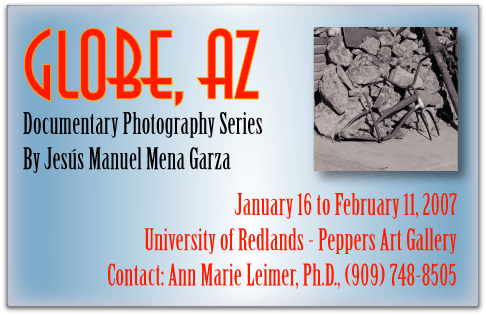
In 1994 Jesús met his wife to be, Ann Marie Leimer at a San Francisco coffee shop, but first the radio world claimed him (once again) in 1995. He traveled to Globe, Arizona, to serve as the News Director at KJAA Radio located next to the San Carlos Apache Indian Reservation. He found himself immediately at odds with station management when he chose to broadcast news from all communities, not just the conservative groups supported by the station's owner. As a result, Garza returned in the fall of 1995 to San Francisco, a more progressive city. A year later, he married his girlfriend Ann.
In the Bay Area, Jesús became a faculty member for the Motion Picture and Video Department at the Academy of Art College in San Francisco for the next several years. At the Academy, he taught and presented workshops on photography and film while exhibiting in San Francisco galleries including El Balazo and the Luggage Gallery. During the mid-90s he also produced and hosted, "The Barrio Experience." This Saturday afternoon radio show was broadcast by Stanford University's KZSU-FM. The program featured Latin music, bands, and interviews. Garza notes, "I really enjoyed working with Stanford students. It was amazing to gain insight into their privileged world."
While in San Francisco, Jesús and Ann shared an avid interest in art and diverse cultures. Together they embarked on a journey that would take them to Texas. On May 15, 1999, Jesús moved to the Lone Star state so Ann could pursue her dream of a Ph.D. in Latin American Art at the University of Texas at Austin. Garza noted, "I have now come full circle and returned to Texas, the state my parents left for a better life in California." In 2000, Jesús and Ann bought a 1927 bungalow-style home in Lockhart. Here Jesús and Ann grew roses, just as Jesús’ mother did in San José. They served as a daily reminder of her creativity. The couple share Lupe's love of flowers.
Lockhart, known as the "Barbecue Capital of Texas," is 25 miles south of Austin, 15 miles east of San Marcos, and 60 miles northeast of San Antonio. Jesús' waistline was proof of the great comida (food) here! Jesús and Ann enjoyed fishing and camping at Padre Island. They both enjoyed dancing to Tejano music at various church jamaicas and visiting familia in Crystal City.
Garza paid the mortgage and his wife's tuition by working full-time at Pedernales Electric. Lyndon B. Johnson and Hill Country ranchers founded the electric cooperative in 1938. Today, the folks at PEC know that they are sitting on a gold mine. Like many utility companies, PEC likes to milk their customers for all they were worth. Garza worked for the co-op for more than five years doing public relations. In press releases, magazine articles, television and radio commercials he would tell the co-op's members to please conserve electricity; all the while the co-op was spending their money like drunken sailors.
Garza kept his hand in radio by working at KLBJ-AM in Austin. At this news station, he worked part-time as a news anchor and reporter. Attempting to be objective at this conservative station planted firmly in a liberal bastion like Austin was quite a challenge. But he enjoyed it.
In retrospect, if Garza only new what Texas was like, he would of never of left his beloved Bay Area. Happily, Garza is back in beautiful California and his wife has her Ph.D. Was going to Texas worth it? Only time will tell.
Garza currently resides in Redlands, California with his wife (now) Dr. Ann Marie Leimer. In the fall of 2005 she was awarded a professorship in the Art and Art History Department at the University of Redlands. Ann and Jesús plan to make this area their home.
On the publishing front, Garza's photographs were published in Cesar Chavez, Amazing Americans, McGraw-Hill. The Fight in The Fields, Susan Ferriss, Harcourt Brace & Company. The Devil in Silicon Valley: Race and Mexicans in Northern California, Dr. Stephen Pitti, Assistant Professor of History and American Studies at Yale University, Princeton University Press. In 2003, Jesús’ documentary photographs were included in the exhibition Chicano Now/Visions that toured the US.
Garza has developed an extensive archive during his thirty years as a photographer. His collection includes Imágenes Xicano, a series of documentary photographs from the 70s that provide a unique history of the Chicano/a movement and form a primary core of his photographic production. These photographs continue to be used in books, articles, and exhibits. These images are also the foundation of his new book, Chicano Photographer. Garza also has produced a PowerPoint presentation entitled Chicano Photographer. It is available free to qualified schools and nonprofits. Go to www.jmmgarza.com for more information.
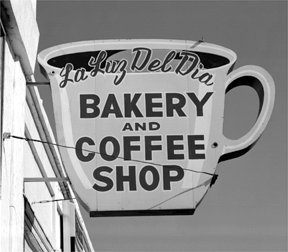
Other photographic series include his images of Chicano Theater (another book project) during the 70s, Mexico, Arizona, and New Mexico. While in Texas, Jesús documented the character of the region, especially the unique architecture and other features of communities like Lockhart, Gruene, and Crystal City. Jesús currently operates JMM Garza Media Services, and his website at www.jmmgarza.com.
-30-