Showing posts with label serigraphy. Show all posts
Friday, January 10, 2014
Monday, October 17, 2011
Visual language of Malaquias Montoya
[To see more photos by Sandy Thomas click the header]
By Trina Drotar for the Sacramento Press
It was standing room-only for the people who came to hear Malaquías Montoya speak about art, life, protest and language Wednesday evening at the Center for Contemporary Art, Sacramento. The crowd spilled out the door onto 19th Street and included UC Davis students, CCAS members, artists and activists.
An electricity filled the room as voices rose and fell. Current and former students proclaimed they are all fans of Montoya.
Curator served as the evening’s host, leading the audience in a welcome applause before speaking about Montoya, under whom he had studied.
Montoya stepped up, without a microphone, and asked, “Why do we do the things that we do daily?”
He answered that question through sharing stories from his life. Montoya’s stories resonated with the audience, who sometimes laughed, sometimes remained silent, and always listened.
The artist begins to surface
Montoya recalled reading about Dick, Jane and Spot in elementary school readers, and he said the stories and their lives made no sense to him.
“The dog in my neighborhood didn’t look like Spot,” he said.
While that elicited some laughter from the group, when he spoke about being placed in a special class, the audience became quiet. Montoya spoke about labels placed on children, sometimes because of their names, accents, or clothes. His mother said the class would be best because he would receive attention.
“All we did was use glue, scissors, paper, and once a week the teacher wrote on the blackboard. The rest of the time, we’d draw or color,” Montoya said.
In that class, Montoya’s “artistic self began to surface.”
“I realized that I was someone people looked to. I gained pride, self-esteem.”
Earth, crepe paper, inner tubes, and tires
In the early ’60s, Montoya began working with silkscreen, cutting stencils and doing design. He recalls asking his mother about the family home and where, if they had no money, she found the money to transform the home with stencils, decals and paint.
“My mother married at 13, and when my father was working, she’d play. She went to the arroyos, scraped layers of earth, collected berries and brought back some white rock. From these, she’d create (paints) and gesso. She’d collect all of the crepe paper from celebrations, bring it home and put it in water. The crepe paper bleeds, and she’d use that to tint the earth colors.”
The decals and stencils were created from inner tubes from which Montoya’s mother cut designs and placed on thick cardboard.
“She made little printing blocks,” he said.
She cut apart old tires, dipped those in paint and printed on the walls.
“We’re born creative. We’re little geniuses,” Montoya said, adding that outside influences try to take that away from us.
A new way of learning
Two years after beginning work with a printer, Montoya enrolled in a commercial art class and found the education more positive than his earlier college experience. He already knew a great deal about silkscreen printing, and he knew that the professor had not given students all the information available, so Montoya supplemented the instructions.
“The students were excited. The teacher was angry,” he said.
Montoya was told he was not good as a writer and that he was not good at drawing. He was referred to Professor Joseph Zirker at San Jose City College, who told Montoya there was nothing wrong with his drawing. Zirker became Montoya’s mentor and friend, and Montoya recalls that Zirker was compassionate and sensitive, traits Montoya had applied to artists in his early years.
Montoya continually dropped his English classes when the first assignments were handed out. He enrolled in what was then termed “bonehead English” and was told that his work was fine.
“I’d buy new pencils, binders, a dictionary. I thought they would make a difference,” Montoya said.
He pursued self-hypnosis
“I am going to do it,” is what he said.
Montoya would not simply try. Determined to succeed, he wrote his paper, turned it in, then waited. He wanted a grade, wanted to read the comments, wanted not to fold the paper and put it in his pocket. On the day the papers were returned, Montoya’s was read (aloud) by the teacher.
“It was the beginning of a different way of learning. We all have different ways of learning.”
Montoya entered UC Berkeley in 1968, against Zirker’s recommendation, who feared the university would change Montoya’s work.
“I found school very difficult,” he said. “The type of work I did – didn’t call it Chicano, political – was of cotton pickers who looked Mexicano. Some called it outdated, archaic. I visited studios of the professors. One was drawing squares of color in the manner of Rothko.”
That type of drawing did not offer the means to express what Montoya wanted to say.
Toward a Mexican identity collectively
Montoya spoke about José Clemente Orozco, a Mexican socialist painter; Diego Rivera, known for his murals focusing on history and humanity’s future; and David Alfaro Siqueiros, a social realist painter whose works were about redefining Mexico.
“(These works) gave Mexico a new face, pushed the revolution that had happened,” he said. “(The artists) worked collectively to give us a Mexican identity. Collectives were geared toward workers to develop a strong working class. Younger artists wanted to be more individualistic.”
CIA as curator
The U.S. Information Agency, the CIA and multinational corporations were interested in the changes in mid-twentieth century Mexico.
“Rockefeller and others went to Mexico to change the artwork,” Montoya said.
Jose Luis Cuevas was invited to show his art in New York, which caused a rumble in Mexico, Montoya said.
“The U.S. wanted to push the school of muralism back,” said Montoya.
The murals of Orozco, Rivera, and Siqueiros raised the consciousness of the Mexican people, and that meant it was difficult to make business deals in Mexico.
In this way, art becomes a commodity, and artists create in order to sell their product.
“Art is a language for people to feel and understand,” he said. “When that is taken away, you lose.”
Chicano art today, validation, and memory
A question-and-answer session followed Montoya’s lecture.
To a question posed about Chicano art today, Montoya responded that there is much “so-called Chicano art,” that the corporations have bought into it, but the Chicano artists have lost their edge and have become good grant writers.
“For a lot of people, it’s even worse today than back then. We believe it.”
When asked if there is organizing to do, Montoya said, “It has to be done. Artists have to remember.”
Montoya spoke about the piece that attracted the attention of many attendees, “Memories,” created with two other pieces in 1992 on the quincentennial of the arrival of Columbus to this continent. The three-piece set denounces the atrocities committed against the indigenous people by Columbus and invading Europeans.
“It talks about how many died,” Montoya said.
He read the words printed across the top: “My memory will retain what is worthwhile. My memory knows more, about me than I do; it doesn’t lose what deserves to be saved,” from Eduardo Galeano, a Uruguayan journalist and novelist.
“What is it like to not be validated for your work?” another attendee asked. “Where do you seek your validation from?”
Montoya told a story of walking into a class one day and seeing his name written across the board. The teacher brought him to the board and, erasing the letters of his name from back to front until only three letters remained, asked “What if we call you Mal?”
His validation came from Zirker, and it came from César Chávez, and it came from the Chicano movement, out of which came newspapers.
“We were reading about ourselves. That validated our own bilingualism. It was power. I was validated by my community. We wanted to stop the war in Vietnam. It’s hard to instill in students today because of the diversions,” Montoya said, referring to iPod earbuds and shopping malls.
“They are allowed to wear raggedy clothes, to shave their heads, in a sense of freedom, instead of looking at what’s around (them),” he said.
The audience remained throughout the entire lecture.
“That is just what I needed to hear,” said Jen Cimaglio, Sacramento artist and activist, “I have work to do.”
-30-
Monday, January 31, 2011
Chicano Arts Pioneer Takes On Globalization and War: Malaquias Montoya’s Show at Centro Cultural (San Diego, CA) Looks Forward and Back
http://zengersmag.blogspot.com/
Pioneering Chicano artist Malaquias Montoya is still doing political art. That comes through loud and clear from the title of his show, “Globalization and War: The Aftermath,” through March 4 at the Centro Cultural de la Raza, 2004 Park Boulevard in Balboa Park, San Diego, CA. But when he appeared for the opening reception January 22 and was invited to speak for 45 minutes, he talked as much about the past — the heady days of the late 1960’s and early 1970’s when Hispanics first started calling themselves Chicanos and the Chicano art movement that gave rise to the Centro Cultural was getting under way — as about Guantánamo, Abu Ghraib and the other modern-day inspirations for the art he was showing.
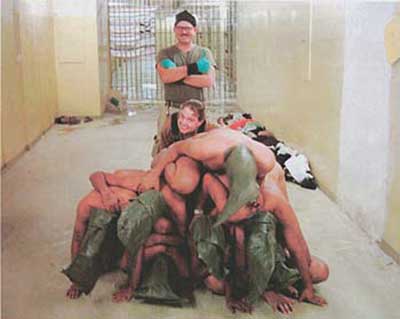
Montoya’s art blends a brutal toughness and a desperate compassion in dealing directly with political themes — torture as an instrument of U.S. foreign policy (plus the denials that we engage in torture — one piece uses the actual words of someone accused of torturing detainees at Abu Ghraib who said “we’re just softening them up for interrogation”), the growing gap between rich and poor in the U.S. itself and the brutality and viciousness with which Americans, especially the military, throw their weight around the world and demand other countries bend to their will. Among the influences he cited were Mexican muralists José Clemente Orozco and David Alfaro Siquieros (two of the three great painters of the Mexican revolution who were called Los Tres Grandes — the third was Diego Rivera), along with newer artists Elizabeth Catlett and Kathe Kollwitz.
One name he didn’t mention as an influence, but whose stylistic footprints were obvious in Montoya’s work, was Ben Shahn, who in the 1930’s and 1940’s pioneered a style of political art relying on bold, often deliberately ugly imagery, rendered in stark monochromes. The monochrome pieces in Montoya’s show especially resemble Shahn’s work, and he acknowledged the influence when he took audience questions. “Ben Shahn is someone I’ve always admired,” said Montoya, who studied him towards the end of his career in the 1960’s and read his 1960 art book, The Shape of Content.
Montoya was introduced by the pioneering Chicano poet Alurista, who paid tribute to the RCAF — “Radical Chicano Artists’ Front” — a group of radical Chicano artists which started in Sacramento and San Francisco, and which Montoya helped organize. In 1970 Alurista and some of his fellow activists staged the takeover of the small strip of land under the freeway in Barrio Logan that is today known as Chicano Park. He was also instrumental in starting the Centro Cultural. In his introduction, Alurista recalled that the inspiration for the Chicano Park takeover came from, of all sources, the California Highway Patrol.
“They wanted to put a station in the middle of the barrio, where Chicano Park is now,” Alurista recalled. “We took over Chicano Park, but had it not been for the RCAF and Los Elas Dunstas of Los Angeles, Chicano Park would not be what it is today.” He paid tribute not only to Montoya but to Victor Ochoa and Mario Torero, local San Diego artists who were part of the original Chicano movement and helped paint the famous murals on the pillars holding up the freeways over Chicano Park. At first the authorities wanted to whitewash the murals; today San Diego regularly promotes them as a tourist attraction.
Pioneering Chicano artist Malaquias Montoya is still doing political art. That comes through loud and clear from the title of his show, “Globalization and War: The Aftermath,” through March 4 at the Centro Cultural de la Raza, 2004 Park Boulevard in Balboa Park, San Diego, CA. But when he appeared for the opening reception January 22 and was invited to speak for 45 minutes, he talked as much about the past — the heady days of the late 1960’s and early 1970’s when Hispanics first started calling themselves Chicanos and the Chicano art movement that gave rise to the Centro Cultural was getting under way — as about Guantánamo, Abu Ghraib and the other modern-day inspirations for the art he was showing.
Montoya’s art blends a brutal toughness and a desperate compassion in dealing directly with political themes — torture as an instrument of U.S. foreign policy (plus the denials that we engage in torture — one piece uses the actual words of someone accused of torturing detainees at Abu Ghraib who said “we’re just softening them up for interrogation”), the growing gap between rich and poor in the U.S. itself and the brutality and viciousness with which Americans, especially the military, throw their weight around the world and demand other countries bend to their will. Among the influences he cited were Mexican muralists José Clemente Orozco and David Alfaro Siquieros (two of the three great painters of the Mexican revolution who were called Los Tres Grandes — the third was Diego Rivera), along with newer artists Elizabeth Catlett and Kathe Kollwitz.
One name he didn’t mention as an influence, but whose stylistic footprints were obvious in Montoya’s work, was Ben Shahn, who in the 1930’s and 1940’s pioneered a style of political art relying on bold, often deliberately ugly imagery, rendered in stark monochromes. The monochrome pieces in Montoya’s show especially resemble Shahn’s work, and he acknowledged the influence when he took audience questions. “Ben Shahn is someone I’ve always admired,” said Montoya, who studied him towards the end of his career in the 1960’s and read his 1960 art book, The Shape of Content.
Montoya was introduced by the pioneering Chicano poet Alurista, who paid tribute to the RCAF — “Radical Chicano Artists’ Front” — a group of radical Chicano artists which started in Sacramento and San Francisco, and which Montoya helped organize. In 1970 Alurista and some of his fellow activists staged the takeover of the small strip of land under the freeway in Barrio Logan that is today known as Chicano Park. He was also instrumental in starting the Centro Cultural. In his introduction, Alurista recalled that the inspiration for the Chicano Park takeover came from, of all sources, the California Highway Patrol.
“They wanted to put a station in the middle of the barrio, where Chicano Park is now,” Alurista recalled. “We took over Chicano Park, but had it not been for the RCAF and Los Elas Dunstas of Los Angeles, Chicano Park would not be what it is today.” He paid tribute not only to Montoya but to Victor Ochoa and Mario Torero, local San Diego artists who were part of the original Chicano movement and helped paint the famous murals on the pillars holding up the freeways over Chicano Park. At first the authorities wanted to whitewash the murals; today San Diego regularly promotes them as a tourist attraction.
“I was here many years ago in the 1970’s and met several people, including Victor Ochoa and Alurista,” Montoya recalled. Though he was committed to the RCAF because his brother held the title of “general” in it, Montoya explained, his principal affiliation back then was with an Oakland-based group called MALAF. The initials stood for “Mexican-American Liberation Art Front,” Montoya said, but when he pronounced them it sounded like the Spanish words “mala jefe” — “bad chief.” According to Montoya, most of the members of MALAF had grown up as farmworkers but had moved to the urban barrios and had ultimately put themselves through college.
Montoya said MALAF organized one major exhibition, called “A New Symbol for La Nueva Raza,” but its major influence was through the long dialogues and rap sessions its members had with each other. “We would talk about ourselves, how we grew up, how we weren’t allowed to speak Spanish, and how we hated ourselves for looking ‘different’,” Montoya recalled. “But in this fellowship we talked and found the humor in our situation.” He recalled that MALAF’s members weren’t immune to their own internal racism; one member was “castigated for looking ‘too Indian,’” he said.
“We were proud of who we were, the food we ate, our work in the fields and how our parents contributed to the wealth of the country,” Montoya said. “We started to take pride in who we were. We were looking for something we could use as a symbol, and [we took it from] Miguel Gomez, a young man with a brown beret and a bomber jacket, someone who a few years before that we would have called ‘cabrón Indio.’ He had a face that looked like it could have been the subject of a Mayan sculpture. We looked at him and he became the symbol. All five of us in MALAF went and did portraits of him for ‘A New Symbol for La Nueva Raza.’ It was a successful show.”
Today Montoya teaches at the University of California at Davis, near Sacramento. It’s a career he fell into almost by accident. “In 1970, when I started teaching at UC Berkeley, I had no idea I’d end up teaching,” he acknowledged. He had come to Oakland from San José in 1968 and found that his reputation and some of his work had preceded him when he started organizing on the Berkeley campus in support of the boycott against grapes called by César Chávez and the United Farm Workers union. Berkeley hired him, he recalled, “because they wanted to develop a Chicano arts program,” and he launched an oral history project in which he interviewed Chicano and Latino artists not only in the Southwestern U.S. but in Mexico as well.
Alas, Montoya said in response to a question from the audience, many of the tapes of his interviews and the slides he shot of the artists’ works disappeared into the maw of academe. “Professor Juan Martinez was an historian who got interested in art and wanted to do a book about it, and ended up with the tapes and the slides,” Montoya recalled. “Some of the tapes and slides were eventually returned, but others were lost, and I had to write the people I’d interviewed that the material had been taken out of my hands. Fortunately, no one sued.” Montoya said that one of the people he interviewed, Nino Padilla, had just returned from Viet Nam and had done a series called The People of Viet Nam in Black and White, which he recalled as “very powerful work,” but he hasn’t heard of it since and doesn’t know what happened to it.
One audience member asked Montoya how he felt about UC Berkeley, where he started his academic career and which still has a reputation as a progressive institution, hiring John Yoo from the George W. Bush administration as a law professor. Yoo’s memos to Bush, outlining a theory of executive power that basically said that during a time of war the President is above the law and can order virtually anything, including torture, that he feels is needed to save the country or win the war, made his name a flash point for the controversy over the harsh interrogation methods used at Guantánamo and Abu Ghraib. “I know about him,” said Montoya, “but I look at my work as a collaboration with the people of the community and people who influenced me. I pretty much work in my studio alone. That’s what gives me solitude and allows me to think beyond what I hear in the news.”
Not that Montoya is — or would ever want to be — an ivory-tower artist living and working in lordly isolation from political and social movements and events. “We live in a society that on a daily basis for the things we will commit later, without realizing that’s the direction we are being taken in,” he said in a statement that sums up the theme of his show. “Without an understanding of the progressive side, we will participate in that training and even be involved in that slaughter. That’s how young men can join the military and do those horrible things.” Referring to the assault on Congressmember Gabrielle Giffords and the murder of Judge John Roll and five others in Tucson January 8, Montoya added, “The Right says they can’t have caused what happened in Tucson, but when you say those things often enough — when you call your political adversaries ‘enemies’ and say they should be ‘eliminated’ — crimes like that will happen.”
-30-
Tuesday, September 22, 2009
Serie Project

Fall is finally on its way to Austin (Tejas), and with it we have some exciting news to share. Beginning this month, the Serie Project website now features a new and improved image gallery which will display higher quality images of our limited edition prints, along with current pricing and the opportunity to order our artists' work.
We were also lucky enough to have our work featured at 3 galleries this month, including a newly opened exhibit at the University of Texas at Brownsville. Also, if you're going to be in the Chicago area this week, be sure to visit our founder and director, Sam Coronado, at the Siglo XXI conference. This will also be a good opportunity to meet with the other members of Consejo Grafico, so we at the Serie recommend that you check it out! Several newer prints will also be available for sale at an art fair on the 25th and 26th.
Finally, this week is the last chance to snag a spot in one of Coronado Studio's successful workshop sessions for the month of September. The workshop will take place this Saturday, the 26th, and has a tuition of $200. Contact James to reserve your spot today.
Website
-30-
Thursday, December 04, 2008
Save Self Help Graphics
Subscribe to:
Posts (Atom)
Best Fishing Combo For Oregon Coast Striped Bass
I ASKED GOOGLE Ai: Suggest a rod and real combo for catching 20 pound striped bass off the coast of Oregon? PHOTO: August 2026 fishing in C...
-
By Ben Cadena Where do you start to talk about an old friend compatriot and fellow musician? He left us too early but had been faring poorl...
-
[Photo: My father, picking cotton in Texas circa 1925] Photographer, artist, and audiovisual producer, Jesús Garza's artistic vision was...