Showing posts with label chicano. Show all posts

Wednesday, December 31, 2025

Upcoming Exhibit: Come On Down!


I'll have several photographs on display @ the Cheech

Exhibition: February 7 – September 6, 2026

Chicano Camera Culture: A Photographic History, 1966 to 2026 is the first major survey to examine the depth and evolution of Chicana/o/x lens-based image-making over the past 60 years. Featuring some 150 works by nearly 50 U.S. Chicana/o/x artists, the exhibition moves thematically and intergenerationally, spanning early activist photographers with contemporary artists whose work builds upon this powerful legacy. 

Organized with a dynamic mix of traditional and experimental photography—including silver gelatin and digital prints, manipulated imagery, constructed scenes, photographic installations, and conceptual approaches—the exhibition invites viewers to consider the camera’s enduring role in shaping self-representation, cultural identity, and political expression.


Tuesday, February 08, 2022

Corporate Friendly Museum of the American Latino?

(ArtWeek) The forthcoming National Museum of the American Latino in Washington, D.C., has named Jorge Zamanillo as its inaugural director, beginning May 2. He will take over for Eduardo Díaz, director of the Smithsonian’s Latino Center, who has served as the institution’s interim director while the search for a permanent director was underway.

Managed by the Smithsonian Institution, the new museum was established by Congress in December, along with the American Women’s History Museum, “to illuminate the story of the United States for the benefit of all by featuring Latino contributions to the art, history and culture of the nation since its early history.”

Zamanillo is currently the executive director of the HistoryMiami Museum in Florida, which is a Smithsonian Affiliate institution. During his tenure, he organized numerous exhibitions, including “Operation Pedro Pan: The Cuban Children’s Exodus” in 2015 and a rehang of the museum’s permanent collection galleries, titled “Tropical Dreams: A People’s History of Southern Florida,” and helped establish its Center for Photography. He started at the institution as a curator of object collections in 2000 and was promoted to senior curator and then deputy director before becoming executive director. In addition to managing the HistoryMiami Museum’s $6.2 million budget, Zamanillo spearheaded a $45 million expansion project that was completed in 2016.

In a statement, Smithsonian Secretary Lonnie G. Bunch III, who was founding director of National Museum of African American History and Culture when it opened in 2016, said, “Jorge’s accomplishments at HistoryMiami Museum highlight his commitment to exploring the full sweep of the American story by bringing to life the complex and profound narratives of Latinos in the United States. His transformational leadership will be invaluable as we build this necessary museum from the ground up, helping us create a robust, dynamic, responsive museum that exemplifies what a 21st-century cultural institution should be.”

Zamanillo was selected from a 10-person committee that included Díaz; Anthea Hartig, director of the National Museum of American History; Kevin Young, director of the National Museum of African American History and Culture; Taína Caragol, curator for Latino art and history at the National Portrait Gallery; and Kevin Gover, Under Secretary for Museums and Culture, who served as chair.

In a statement, Zamanillo said, “The Latino experience is American history, and I want to make sure our story will be preserved for future generations. This museum will celebrate Latino accomplishments and resiliency through powerful stories that capture the adversity faced over centuries by Latinos in the U.S. and their perseverance to move forward and create a legacy.”

Wednesday, October 27, 2021

Download FREE PowerPoint and PDF: Teatro Chicano 1974


 Keeping it super simple. I created an easy to use FREE PowerPoint presentation and PDF. Just go to my website to download. It's that simple. The project is called, Teatro Chicano 1974. Here's the link: https://chicanophotographer.myportfolio.com/teatro-chicano-powerpoint-presentation

#Chicano #Chicana #Chicanx #TeatroChicano #CentroCultural #JMMGarza

 I've lived in many college towns. Both in Texas and California. Universities have varying degrees of civic interaction. From insular to interactive. 

Let me detail my experiences. I started life in the San Francisco Bay Area near SJSU and I currently reside in Fort Worth near TCU. 


I'm going to subjectively rate these schools from 1 to 5. Five being "very involved" in the community.


UCLA photography lecture. 2011


SJSU -3

Stanford -2

UC Berkeley - 2

UCLA - 5

CSULA - 4

UT Austin - 4

Midwestern State - 4

TCU - 1


TCU wants you to go to their football, baseball and basketball games. That's where they make money. Sadly, their primary community art gallery is located in a tiny strip mall off campus. Not much there.


UC Berkeley and Stanford are the proverbial ivory towers. It's all about academics and they don't offer much programming for the public. But they do much better than TCU.


UCLA is heavily involved in the Los Angeles arts and culture scene. When I lived in Southern California, it seemed every week there was either a lecture, an exhibition or an event my wife and I would find interesting. Same with CSULA.


So there you are. These are my impressions of various universities I've experienced. I loved going to UCLA and UT Austin. Too bad conservative TCU, just 10 minutes away, is a stick in the mud. I'd rather be in Austin or LA. Or in the Bay Area near my familia.


Wednesday, July 28, 2021

A Chicano Visits the Rez

A few years back I was the News Director at a radio station near the Arizona San Carlos Apache Rez. During my time there I met many of the local Apache leaders.

One of my favorite discussions was with Ola Cassadore Davis. She was quite vocal on Apache issues and traveled internationally. In one conversation I was elaborating about border issue between Mexico and the USA. She responded, "You are both theives!"

I covered many meetings and events in Arizona during my tenure at the radio station. When I tried to cover a Rez council meeting, the leadership would immediately cancel the session. My experience dealing with Rez NDNs was confrontational to say the least. 

I met several San Carlos Apache Rez leaders who had large ranches and all the material trappings. Others who were just on the dole. My time in the region taught me a lot. One is that being a Chicano doesn't gain me entre into the nations. Many prefer that you stay far away. That you stay apart. #apache #SanCarlosApache #rezlife

Monday, April 12, 2021

My Chicanocentric Photography Website

For more than half a century, I (Jesús Manuel Mena Garza) have captured photos and shot film (now video) for clients and exhibition. Today, I am still busy creating art. I have attached a link to my Chicanocentric website where you can download photographs. My general website is JMMGarza.com. Feel free to contact me should you have questions, suggestions or comments. Here is the link to my new Chicanocentric website: https://chicanophotographer.myportfolio.com

Tuesday, April 06, 2021

Flor del Pueblo Zoom Event


A conversation with San Jose's
Flor del Pueblo.

A Zoom Facilitated Event


Thursday, April 22, 2021

8:00 PM to 10:00 PM CDT

Link to registering for the Zoom event:

https://www.eventbrite.com/e/sjsu-luis-valdez-speakers-series-flor-del-pueblo-tickets-148840575167

The Luis “El Machete” Valdez Annual Speakers Series honors the work and accomplishments of people of Mexican ancestry in the areas of social justice, community involvement, culture, politics, and the arts. Past speakers have included Luis Valdez, Blanca Alvarado, and Dr. José Carrasco.

This year’s guest speakers will be the members of the San José-based Flor del Pueblo, one of the most influential musical ensembles of the Chicana/o Movement whose music inspired activism for social justice with local roots and intergenerational reach.

Formed in the 1970’s through their participation with different South Bay Teatro Chicano groups. Including El Teatro Campesino. The members of Flor del Pueblo, (Ed Robledo, Deborah Rodríguez, Felipe Rodríguez, Francisco Rodríguez, Ben Cadena, Yolanda Pérez, Ramiro Pérez, Enrique Castillo, Clay Shanrock, and Richard Garcia) found a meaningful avenue of engagement through the arts with the ideals of the Movimiento Chicano. 

Members of the group were active at numerous events, including being on stage at the Chicano Moratorium on August 29, 1970, when police violence broke a peaceful demonstration. Their 1977 recorded album, Música de Nuestra América, established a new sound of Movimiento music with the incorporation of Latin American protest music influences on Chicana/o Movement music as well as the group's unique vocal style.

Featured speakers:

Deborah Rodríguez-Garcia, Yolanda Pérez, Ed Robledo, Francisco Rodríguez, Enrique Castillo, and Ben Cadena

About the Department of Chicana and Chicano Studies at San José State University

The mission of the Chicana and Chicano Studies Department is to serve SJSU students and diverse communities through an interdisciplinary Chicana/o Studies Program that is based on principles of education for Social Justice. The program prepares students to critically examine and address intellectual traditions and contemporary issues resulting from race, ethnicity, class, and gender intersections in Chicana/o-Latina/o and other communities.

Co-sponsored by SJSU Chicana and Chicano Studies Department, Aspire/McNair Trio Programs, La Raza Historical Society of Santa Clara Valley, SJSU School of Music and Dance, the Department of Anthropology and the Department of Sociology & Interdisciplinary Social Sciences at SJSU.

Event link will be sent via Eventbrite and updated on Eventpage for livestream closer to the event date.

Friday, June 29, 2018

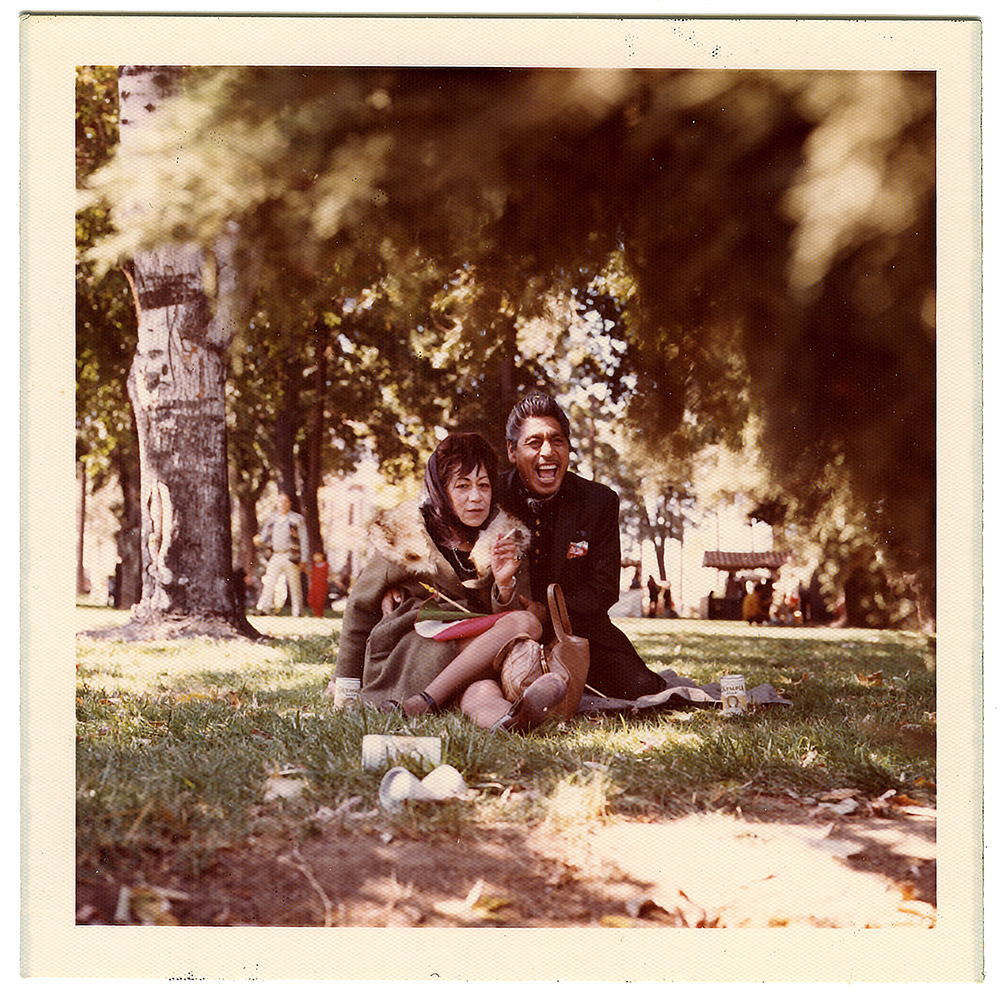
Vintage Photo: Couple Celebrating at the Park

In this photo, I go retro. I didn't scan the negative, but the old faded print. The paper is ivory in color and has a stipple texture that was popular in the 80s. I like it. I hope you like it too. I've had this 4x4 inch print on display at my home for several decades. Now you get to view this couple having a couple beers and celebrating Cinco de Mayo at a Downtown San José, California park.
Copyright 2018 Jesús Manuel Mena Garza · All rights reserved

Monday, May 01, 2017

Updated Website, Portfolio and More


If you have the time or inclination, please check out my updated website and photography portfolio. You will see plenty of photographs and articles on my photography and the Chicano experience.

While you are at it, this year I started a new YouTube Channel ... Texas Moto Foto. There, I have coalesced a melange of mainstream to esoteric videos. It's all fun! Subjects explored range from photography to technology to recreational vehicles. An unusual mix indeed.

Oh, I almost forgot! I have a Patreon Page. If you are able and willing, support my photography by donating on my page. You can be the first!

Here are the links:

Website: http:www.jmmgarza.com
Online photography portfolio: https://jmmgarza.myportfolio.com/
Texas Moto Foto YouTube Channel: https://www.youtube.com/channel/UCMCtI2P70RhJr6Z1kNcSKBA
Patreon Page: https://www.patreon.com/jmmgarza

Friday, January 27, 2017

Photos of Oaxaca, Alebrijes and More


If you have the time or the inclination please check out my photographs of Oaxaca Mexico in a UHD … 4k YouTube video. In 2005, I captured the original pix using a Nikon D70s … a 6-megapixel camera. Today, I use a 36-megapixel camera. Yes, in photography bigger sensors are typically better.

I haven't gone to Europe, Africa, Asia or even Hawaii, but I have traveled a bit. Primarily throughout the American Southwest and Mexico. I have enjoyed the amazing diversity and photography opportunities this region has to offer. 

In Oaxaca, I photographed the communities, artists and workshops. Along with photographs of Oaxaca, I have several images of Mexican artists creating wood sculptures called Alebrijes. These fantastical and colorful creatures are popular in Mexico City and Oaxaca. My photographs explore the artistic transformation from roughly hewn pieces of wood, to sculpting fine details to painstakingly adding colorful lines, dots and textures. 

If you like my YouTube video ... don't forget to like, subscribe and share my video. Support my photography and video efforts by visiting my Patreon page. Your professional comments and questions are always appreciated. 


Thanks!

Si se puede! Hablo español.

Thursday, January 05, 2017

I am a photographer

"I photograph to satiate the primal urge to hunt, capture and possess." - Jesús Manuel Mena Garza, 01/04/17

Tuesday, January 03, 2017

Jesús Manuel Mena Garza's New Patreon Page

I am not getting any younger or richer. Currently, I am able to complete a few projects despite monetary obstacles, but your donation to Patreon can help me realize more and better projects. 

Feel free to contact me about any of my past, current and planned projects. Be one of the first to donate to my Patreon page. Thank you for your financial support!

http://www.patreon.com/jmmgarza


Tuesday, November 29, 2016

Santiago Jimenez Jr.: San Antonio, TX


At a modest taco shop in a working class neighborhood in San Antonio, Texas, iconic Tejano accordion maestro Santiago Jimenez Jr. performs for the assembled. The pix were taken November 20, 2016 and are copyright 2016 Jesús Manuel Mena Garza · All rights reserved. Click photos to enlarge!


Jesús Manuel Mena Garza is a documentary photographer currently existing in Fort Worth, TX. You can Contact Jesús by calling (682)365-8702 or via email at garza@jmmgarza.com. His website is www.jmmgarza.com.

Monday, September 26, 2016

San José: Don't Park Here (True)

Uniforms marching towards the party
Dogs coming fast
I ran
Racist cops point their shotguns
Ran faster
Got inside
Back door bashed
15 year old girl crushed
Made it out, barely
Quinceñeras suck
Pendejo parked his car in the neighbor's driveway
Bringing out the riot squad
Meskins need to learn to follow the rules

- Jesús Manuel Mena Garza, Sept. 26, 2016


Thursday, September 15, 2016

Chicano author speaks about importance of connection to roots

By Brittany Harborth, The Shorthorn Staff
The University Of Texas at Arlington

There were only two books Richard Gonzales knew of that were written by and about Mexican-American history in North Texas, so he decided to write his own.

The author of Raza Rising: Chicanos in North Texas delivered a speech on the importance of rising up and knowing personal history as part of the Center for Mexican American Studies’s speaker series.

“Who’s telling our story? Where is the Chicano voice?” Gonzales said. “You can see, then, my predicament. I had to take the challenge, so I wrote and wrote and wrote.”

Gonzales was a third-generation Mexican immigrant growing up in Chicago with a strong connection to his roots.

At 15 years old, Gonzales had a moment of self-reflection when he noticed he was the only person of color in the downtown library.

“I said, ‘I will learn to read, I will learn to write,’” he said. “I will be able to stand up against anybody.”

From 2001 to 2007, Gonzales wrote weekly columns for the Star-Telegramfocusing on Chicano, Latino and Mexican themes.

It was important to show the community Latinos could read and write just as well, he said.

When Gonzales attended UTA, he called Hispanic students together and formed the Association of Mexican American Students in 1970.

Veronica Lopez, social work graduate student, attended the event to learn more about Latinos in the political climate. Social work in many ways is tied to social justice, Lopez said.

Social work junior Sanjuana Gonzalez liked Gonzales’s words of encouragement to the community and his words about being proud about their roots, she said.

He called for the audience to stand up, and the room got on their feet.

“Please rise, raza,” Gonzales said. “Si se puede.”

@Its_brittany101

news-editor.shorthorn@uta.edu

-30-

Wednesday, May 18, 2016

Sneak Preview: Songs of Hope & Struggle by Agustín Lira and Alma (out 6/24/16)

A powerhouse of the farmworker and Chicano civil rights movements, social activist Agustín Lira spun out songs that fueled the pioneering political theater group Teatro Campesino. From the United Farmworkers grape strike in 1965 through the next half-century of his original music with a message, Lira tenaciously tells the truth as he sees it. On Songs of Struggle and Hope, he and his trio Alma treat us to signature songs of La Causa as well as to new creations that speak of homelessness, child obesity, personal loss, and hope for the future. 61 minutes, 40-pages of bilingual notes and photos.
Un proponente del movimiento de los trabajadores campesinos y por los derechos civiles chicanos, el activista social Agustín Lira produjo canciones que alentaron al Teatro Campesino, grupo pionero del teatro político.  Desde la huelga de las uvas de los trabajadores del campo unidos (United Farmworkers) en 1965 a través de la siguiente mitad de siglo por medio de su música original con mensaje, Lira tenazmente cuenta la verdad como la ve.  En Cantos de Lucha y Esperanza (Songs of Struggle and Hope), él y su Trio Alma nos brindan tanto canciones de La Causa como creaciones nuevas que hablan del desamparo, la obesidad juvenil, la pérdida personal, y la esperanza para el futuro.
Links
Music Sampler

Tuesday, May 17, 2016

The 66 Percent: Erasing Mexican Americans in the United States

by Dagoberto Gilb

If you’re from Texas, or the American Southwest for that matter, and a fan of its music, your ears surely perked up when the popular National Public Radio program Fresh Air focused an episode on the accordion.

Many would say that the “squeeze box” is the region’s sound, and thus its most original contribution to America’s musical heritage. Yet that’s not what Fresh Air’s host had heard or knew anything about. Instead, she’d thought the instrument was about as exciting as the 1950s TV show with Lawrence Welk — which was for an already dated, slow waltz crowd in the years it was being produced. She considered accordions, therefore, corny and annoying, valuable only, maybe, for bar mitzvahs. But times changed, her ears were re-tuned, and with her show’s guest, we were to learn that the accordion was a surprisingly not dull instrument, loved in Cajun, avant garde, folk, indie pop, even something called klezmer, and that its sound’s reach was not just Eastern Europe, but Argentina, Madagascar and especially in a new French Musette “explosion.”

Out in the boonies of America’s West, where these national shows are well-heard, there lives a loud, boisterous tradition of music that dates from the turn of the last century that goes by the name “conjunto.” It is true that it belongs to a native people of the West, a peoples whose history can be traced back at least two centuries to what is American soil — born and raised within the geographical and historical boundaries of the United States — and this music, which at its big stage center is the accordion, has been its magnetic draw. Not only in the legendary sound of South Texas’s Narciso Martínez, or San Antonio’s Don Santiago Jiménez, but especially through his two sons, Santiago Jr., and Leonardo, better known as “skinny”: Flaco Jiménez’s fame, in particular, is so grand and wide that in 2015 he received a Lifetime Achievement Grammy Award for his accordion virtuosity and preeminence. And it was the Mexican American music — not South American, African, or European — that didn’t get a mention on Fresh Air’s one-hour episode.

Really there is nothing surprising or new about most of the country being unaware of the culture and community of MexAmerica. On the other hand, it is such a strange form of ignorance — let me hyphenate to adjust the connotation, make it ignore-ance — that one might want to call it utterly fascinating in that unique quality. It requires omitting consciousness that so much of the western landmass of continental United States has rivers, valleys, mountain ranges, states, cities, streets and people with Spanish-language names. Over the years (and by years I mean at least 50) historians and scholars are inclined to attribute that unawareness to an “invisibility” of the community.

But the implication of this becomes that it must be something of a quaint, natural character inside the MexAm people, and not the effect of poverty or consequence of a lack of political power. I’d suggest that it’s more a visual degeneration in the center of the dominant culture’s eyes. No faces, only hands serving enchilada plates and then busing away what’s left of the spicy yum yum. Beds are made after a fun vacation day, floors swept and waxed for the bright, bustling morning in the office, lawns mowed and edged, healthy veggies are in the grocery store: People are not seen, neighborhoods go unknown, songs unheard, deaths not mourned… no cries of birth, sighs of first love, screams of sports joy; no bandages for knees, catechisms for church, homework for teacher, pink socks or baseballs or first cars or skateboards or bad boyfriends or off to war or diplomas or retirement dinners or college or family potlucks or ’buelita turned 99. And though I believe most of the ignorance about MexAms is not conscious or willful, it is equally true that enough is, be it forced by racist politicians in Arizona, or an ongoing blow of American history that began with President James K. Polk’s want of the land by any means necessary.

Even now, too many media stories that do attach are about immigration from the border, inferring that the entire community is recent and, worse, invasive — which, ironically, would be more appropriately descriptive of the Anglo migration from the South in Texas and the Midwest in California. More ironic — bizarre? — is how much it loves, besides the food, everything about the region’s Mexican culture, art and architecture, yet is shocked that these “other” people live here. “Invisible” is not the best word, that is certain. The culture is everywhere, is highly accepted, as mainstream American as the taco has become. But just as the Spanish rejected the corn tortilla of the conquered indios, the essence of the MexAm culture is regarded as too “lesser” to be taken seriously.

Accustomed as its own nation is to treating Mexican Americans as negligible or dismissible, times are changing as demographics do. It is said that this century will be about the power of the Latino. Latino? Take away the 66 percent of this population, the MexAm proportion, that one so hidden away in its western homeland, and what national power then? With the other third divided into several single percentage groups, MexAms ought to receive a landslide of attention. Yet, already and again, the raw facts haven’t created any gain, let alone advantage. Money and political pull are on the East Coast, and the national media’s stories are about those who are there; Puerto Ricans, Cubans and Dominicans are more the voice of The Latino, following the last century’s big city paradigm of Italian, Irish and Jewish immigrants. MexAms don’t fly from New York to Mexico City, Los Angeles to Chihuahua. Instead, they are home in a poor city like El Paso or Ysleta or Eagle Pass, McAllen, San Antonio, Santa Ana, Riverside, Fresno, Chula Vista, Tucson, Nogales, Albuquerque, Denver, or Boyle Heights, El Monte, La Puente, Lynwood, South Gate. Though everybody’s house has family allá, most have never been farther across — across, meaning the “other side,” Mexico — than Matamoros, Juárez or Tijuana to look for cheaper prescription drugs or dentistry.

And so it goes with literature. The “national” scene knows the very least about Mexican American literature, historically or currently. Though it may not always be as clear as an Arizona school board banning material for ambitious, college-bound young Mexican American students who notice their culture’s absence in their curriculum, the offense, sadly, is the same, only larger in scale, when written voices and stories are passively ignored by all school districts, even when their student body is predominantly of Mexican American descent. Or even more: Why aren’t we going past wanting to educate MexAm children, in their own neighborhoods, to have ordinary pride in who they are and where they’ve come from, and asking how long all of our country can ignore a huge American region and heritage? How can it not want to understand or appreciate its people beyond enchilada or child-care talents, but as craftsmen, business owners, artisans and artists, thinkers, as purposeful voters, as the country’s future leaders? Too much to say as friends? As those who work alongside so many and have children who are in the same classes as their own? Is it possible to ignore and dismiss, to undervalue, an entire people without consequence? How should we educate all our own to each other?

[This essay is adapted from the recently published Mexican American Literature: A Portable Anthology. The featured image is via Flaco Jimenez/Facebook.]

by Dagoberto Gilb

Tuesday, April 26, 2016

Documenting the Chicana and Chicano Experience

Jesús Manuel Mena Garza Photography


One exciting project Jesús Garza has undertaken is photographing Chicana and Chicano artists and academics. Since 1967, Jesús Garza has made it his mission to photograph the Chicana and Chicano experience. He focuses his camera on activists, workers, academics and artists in communities as diverse as Los Angeles, San Antonio, Tucson, Albuquerque, Fort Worth and San José. 

From experience Garza understands that the incredible accomplishments of Latinos are often dismissed by the dominant culture. So for 50 years, he has taken on the role of outside observer and chronicler of Chicana/o history. 

Feel free to contact Jesús Garza. Send your suggestions, questions or comments by calling or texting (682) 365-8702. Please understand that these are documentary photographs. Not glamour shots. The photographs have not been retouched. 


Click photos to enlarge


The President


The Academic


The Poet


The Sculptor


The Painter


The Academic


The Photographer

-30-

Thursday, February 04, 2016

Chicano or Indian?


To be a native, Indian, you have to live the life. Every day (or at least try?). I admit, I am not a native (Mayan, Yaqui, Apache, etc.) but a concoction of European, Native, Middle Eastern, African and who knows what else. Claiming to be an Indian would be quite presumptuous. Hell, I don't speak any Indian languages, don't participate in any sacred rituals and I have only an elemental understanding of the many indigenous cultures. 

In the end, all I or any Chicana or Chicano can do is give our brothers and sisters their due respect, honor their culture and support their uniqueness. Same goes for Italians, Jews, Africans, Muslims, Irish, Chinese, etc. This old Chicano respects all cultures and admits he is a Mestizo with no pretense of being an Indian.


Yes, some Raza have strong ties to Indian nations. They work tirelessly with and for them. These Chicanas and Chicanos have been reabsorbed into that community. Every day, they talk the talk and walk the walk. They aren't Indians when it's convenient.


I had a conversation with Ola Cassadore-Davis, the daughter of Apache spiritual leader Phillip Cassadore. I asked her what she felt about Chicano land grievances. She explained to me, "White people and Mexicans stole our land. They are all thieves. This is Indian land." At that pivotal moment, in Globe, Arizona, in 1995, I learned that in certain communities I can be viewed as a historical enemy. 


I have met some Chicanos who pretend to be Indians, making a mockery of indigeneity. They are desperate to identify with the oppressed and not as colonizers - the enemy. As for me, I admit that my identity is complicated. That does not diminish my support for Indian nations. That continues to remain strong. 


– Jesús Manuel Mena Garza, February 4, 2016 

Best Fishing Combo For Oregon Coast Striped Bass

 I ASKED GOOGLE Ai: Suggest a rod and real combo for catching 20 pound striped bass off the coast of Oregon? PHOTO: August 2026 fishing in C...