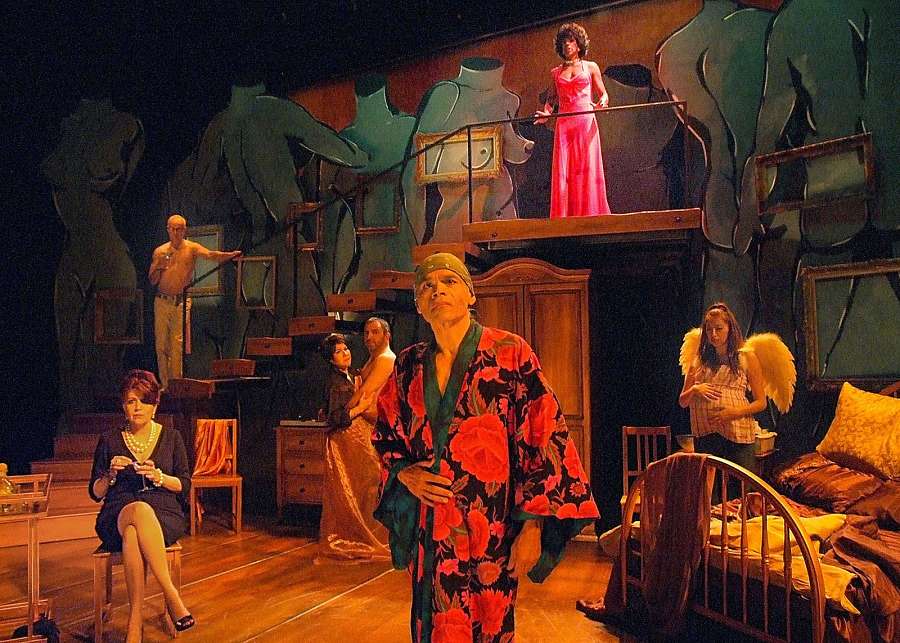
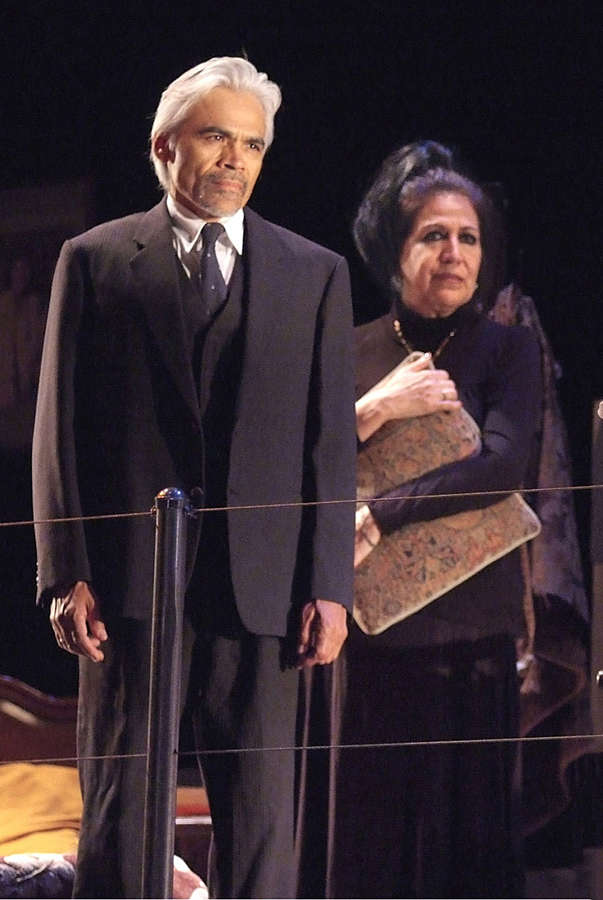
"I photograph to satiate the primal urge to hunt, capture and possess." - Jesús Manuel Mena Garza, 01/04/17
Thursday, January 05, 2017
Tuesday, January 03, 2017
Jesús Manuel Mena Garza's New Patreon Page
Feel free to contact me about any of my past, current and planned projects. Be one of the first to donate to my Patreon page. Thank you for your financial support!
http://www.patreon.com/jmmgarza
Friday, December 30, 2016
California Beaches and Types Part 3 of 3 (UHD 4k)
Thanks for checking out my UHD-4k video on the Best California Beaches and Types. I lived in California for more than 55 years and I have been to beaches up and down the coast. In this short video I am going to give you an intro into what to expect when you’re visiting the California Coast.
I shot most of the the pix in this video. They were captured using my Google Smartphone and my Nikon D800. I would like to divide this video into three segments. First are Urban Beaches, second are Casual Beaches and finally Secluded Beaches or off-the-beaten-path beaches. I will detail at least one example of each and suggest others to visit. Yes, I have been to these beaches.
This is Part 3 ... my favorite ... Secluded Beaches. Here is a YouTube link: https://youtu.be/Q4SDEdhijsY
Please like, subscribe and share. Thank you.
----
Contact Information:
Jesús Manuel Mena Garza
JMMGarza2@GMail.com
www.JMMGarza.com
My website has my phone and other contact info.
Tuesday, November 29, 2016
Santiago Jimenez Jr.: San Antonio, TX
At a modest taco shop in a working class neighborhood in San Antonio, Texas, iconic Tejano accordion maestro Santiago Jimenez Jr. performs for the assembled. The pix were taken November 20, 2016 and are copyright 2016 Jesús Manuel Mena Garza · All rights reserved. Click photos to enlarge!
Friday, November 11, 2016
President Donald Trump ... oh my!
By Jesús Manuel Mena Garza
Barack Obama and the DNC supported streamlining the process of making Hillary Clinton the Democratic standard bearer. Essentially anointing the seriously flawed corporate candidate. Now Donald Trump is in position to dismantle Obama's legacy. Yes, the chickens have come home to roost.
In retrospect Hillary attracted few crowds on the campaign trail (unless Beyonce or Bruce Springsteen were performing). Bernie Sanders on the other hand spoke to gigantic crowds, over and over again.
In the end, the energetic Bernie campaign was systematically derailed by a DNC hell bent on getting Hillary into the White House. In retrospect, Trump didn't become our president in a vacuum. The DNC and Obama in their blind obsession to get Hillary the job ... screwed up ... big time.
Out of office, Obama and the Clinton will continue to receive millions in Wall Street and Foreign largesse. They have and will continue to speak to the assembled, about the greatness of America. Corporate mercenaries, Obama and Clinton are flush with cash. It is the middle and working class who will suffer under Trump's misogynistic and racist regime. I pray the next four years won't be as bad as I imagine.
Photo courtesy of the Business Insider
Monday, September 26, 2016
San José: Don't Park Here (True)
Dogs coming fast
I ran
Racist cops point their shotguns
Ran faster
Got inside
Back door bashed
15 year old girl crushed
Made it out, barely
Quinceñeras suck
Pendejo parked his car in the neighbor's driveway
Bringing out the riot squad
Meskins need to learn to follow the rules
Thursday, September 15, 2016
Chicano author speaks about importance of connection to roots
By Brittany Harborth, The Shorthorn Staff
The University Of Texas at Arlington
There were only two books Richard Gonzales knew of that were written by and about Mexican-American history in North Texas, so he decided to write his own.
The author of Raza Rising: Chicanos in North Texas delivered a speech on the importance of rising up and knowing personal history as part of the Center for Mexican American Studies’s speaker series.
“Who’s telling our story? Where is the Chicano voice?” Gonzales said. “You can see, then, my predicament. I had to take the challenge, so I wrote and wrote and wrote.”
Gonzales was a third-generation Mexican immigrant growing up in Chicago with a strong connection to his roots.
At 15 years old, Gonzales had a moment of self-reflection when he noticed he was the only person of color in the downtown library.
“I said, ‘I will learn to read, I will learn to write,’” he said. “I will be able to stand up against anybody.”
From 2001 to 2007, Gonzales wrote weekly columns for the Star-Telegramfocusing on Chicano, Latino and Mexican themes.
It was important to show the community Latinos could read and write just as well, he said.
When Gonzales attended UTA, he called Hispanic students together and formed the Association of Mexican American Students in 1970.
Veronica Lopez, social work graduate student, attended the event to learn more about Latinos in the political climate. Social work in many ways is tied to social justice, Lopez said.
Social work junior Sanjuana Gonzalez liked Gonzales’s words of encouragement to the community and his words about being proud about their roots, she said.
He called for the audience to stand up, and the room got on their feet.
“Please rise, raza,” Gonzales said. “Si se puede.”
@Its_brittany101
-30-
Wednesday, September 07, 2016
Evelina Fernandez’s Chicano Century Cycle
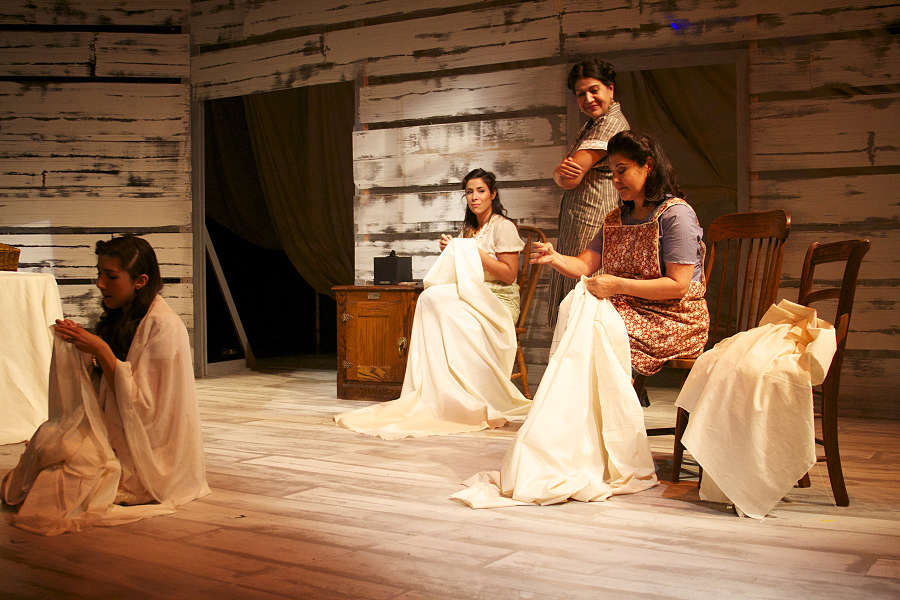
In ‘A Mexican Trilogy,’ the actor/playwright tells the story of a family, and a people, with her own creative family, the Latino Theater Company.

I know, it’s huge—it’s too much. We’re in rehearsal right now, and I’m realizing: My God, it’s massive. But it’s exciting. I don’t think anything has been done like this, following Mexican-American history through multiple generations.
I am. We’re a theatre company, so we all wear lots of hats. Originally I was not in Part 2 when we first staged it, but it was too hard to sit out there and watch—I hate being in the audience. I was like, “Get me back on the stage!”
I wrote Part 3, Charity, first, and then I thought: There is more to say, not just by me personally but on the part of our company. It was a time—and it continues to this day—where we were hearing lot of anti-immigrant rhetoric. We get so frustrated, because there’s no acknowledgement of the long history of Latinos. We’ve been here for many generations, but we’re always portrayed as people who want to cross the border. So I thought, let’s do our part here and tell this story that hasn’t been told in its entirety. We take this family all the way from fleeing the Mexican Revolution to losing their son in the Iraq War.
Actually we began in 2011 with Hope, the second part. When we did readings, the 1960s story really resonated with our audience, so we decided to do that play first because it was in better shape. Then we did Faith, the first one, then Charity, the third. It’s kind of like Star Wars—everything was done out of order.

A scene from “Faith,” Part 1 of “A Mexican Trilogy” at Los Angeles Theatre Center. (Photo by Pablo Santiago)
Yeah, we’re doing it both ways: You can come on Thursday and see Part A, on Friday see Part B, or you can come on Saturday and Sunday and see the whole thing with a dinner break.
We split the middle play in half; it was the only way we could do it. People can’t come more than two nights. If you only see Part A, you end at the Cuban Missile Crisis.
I can’t really say that I did. I wrote the three plays never thinking that we were going to do them all together. When we decided we were, we started to figure it out. But I’ve seen durational theatre; I sat throughThe Iceman Cometh with Jason Robards when I was 9 months pregnant. I certainly remember that! And we saw GATZ at REDCAT and just loved the whole experience. But our audiences so rarely get to experience something like this—I’m specifically talking about the Latino audience. Some of our board members were actually worried, like, “Do you think anyone will want to do this?” Interestingly, we haven’t sold many one-nighters; more people have bought the whole-day experience. Everyone’s interested in seeing the whole story in one big sweep.
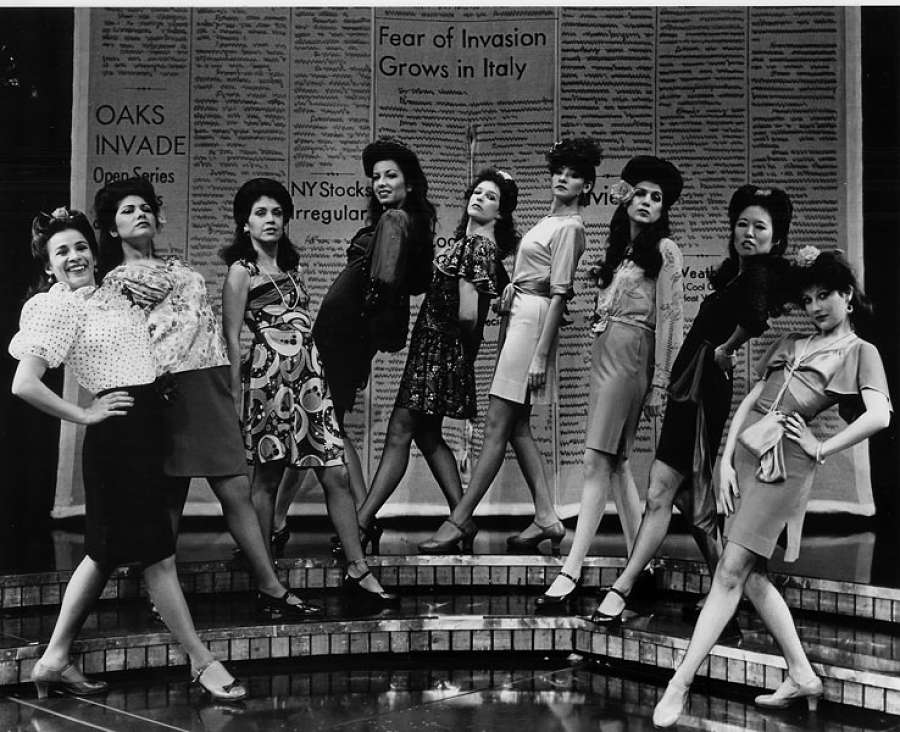
I’m from East L.A. I got involved with the Chicano movement, and my first professional theatre credit was in Zoot Suit. Luis Valdez basically took me and put me on the stage without any real formal training; I think he was taken by my authenticity. So I found myself as a female lead at the Mark Taper Forum at a young age, and that changed my life. I always thank Luis for giving me that opportunity and pointing me in a whole new direction.

Alma Martinez, Rachael Levario, Anne Betancourt, Becky Gonzalez, Laura Owens, Bel Herandez, Evelina Fernandez, Susie Inyoue, and Dyana Ortelli in “Zoot Suit,” 1979.
I know Chicano and Latino theatre from roughly the late ’80s on, and I know a bit about El Teatro Campesino. What was Chicano theatre in L.A. like before that?
There was a big Chicano movement that grew out of the Civil Rights movement. During the Vietnam War there was a disproportionate number of Chicanos and African Americans being killed in Vietnam. There was a rise in protests against the war and against police brutality, and in favor of bilingual education and our history being taught in the schools. And because of El Teatro Campesino, there was a swell of Chicano theatres in the Southwest and even the Midwest. We used to have theatre festivals every year. There were maestros who came from Mexico and Latin America to train us in different kinds of theatre, and from that came our training, which is based in collective creation.
It was. There was the Latino lab, the Asian lab, the African-American lab. It was an extraordinary time for diversity. When LATC closed, we originally went to the Taper, but then eventually we came back to LATC, and now we run it. It’s been close to 30 years. It’s unique to have a group of actors who have worked together for so long.
Right. We still consider ourselves independent; we run our own theatre and we create and produce our own work.
This trilogy is not as informed by our ensemble as some of our other pieces, like Solitude or Premeditation, which we developed together though workshops. With the trilogy, even though there’s always input from the ensemble, I went off and wrote the pieces then brought them in. But for example, when I wrote Dementia, I knew that Sal Lopez was going to play the lead. I know that Sal can sing and dance, I know he can speak English and Spanish; those are all the elements I have to work with when I’m creating a character for Sal. We have developed a style, a way of working together. It always includes movement, dance, singing. We joke that in all our shows we laugh, we cry, and we have tequila shots.
And we write for a certain audience. We know the stories that are important to them. We also push the envelope and open their minds to different points of view. When we did Dementia, not too many people were writing about a gay Latino dying of AIDS. And there we had the gay audience sitting with the hardcore Chicano audience; bringing those two audiences together in the theatre was a great accomplishment for us.
My mom was born in Jerome, and Part 1 and 2 are loosely based on the history of my family. I was born in East L.A., then my father took us to Phoenix and I lived there for the first 9 years of my life, then we moved back to Los Angeles. Part 2 is based on a lot of my memories of living in Phoenix in a very dysfunctional Mexican-American family.
Yeah, my relatives in Arizona are very different from my relatives in Los Angeles. Some of them are even Republicans in Arizona! I feel like it’s a slower development of social consciousness there—I’m just talking about my family, and just what I observed, but it develops and moves forward at a slower pace. L.A. is just so diverse in so many ways, not only culturally and ethnically; there are just so many different parts of the city, and the way people relate to each other is different.
My childhood was not very pleasant. I always say of Phoenix, “Oh, it’s so hot—the heat is so heavy.” I just remember us not having much and having electricity turned off, and having to sleep outside under the weeping willow tree because it was too hot to sleep inside. So I have an aversion to Phoenix. But I do love Northern Arizona.
Oh man, I’m so excited. It was such a big part of my life, and Luis was such a mentor to me. I heard somebody say, “Wow, I hope it’s successful,” and I said to them, “Are you kidding me?” I think it’s going to be a huge hit. It’s great that Luis is directing it again. When I was inZoot Suit, I was expecting my son, Fidel. Now both my children are actors. Wouldn’t it be amazing if they could audition for that?
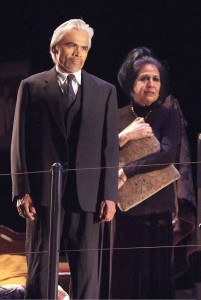
In Part 3, the granddaughter of Esperanza from Part 1 has just lost her son in Iraq, and they’re dealing with that loss. These are people who’ve gone through the Chicano movement. And then a young man arrives from Mexico with the dream of making it in the U.S., and he comes full of hope and full of questions; he wonders, “Why is there such pessimism? This is the best country in the world!” They have a conversation about the war. Rudy, the father, says, “I don’t want my son to go to war; I don’t believe in war.” And the young immigrant says, “Don’t you love your country? Don’t you believe you have to fight for your country?” I do see hope. As long as we keep coming, there’s always hope in the future.

Sal Lopez and Evelina Fernandez in “Charity,” Part 3 of “A Mexican Trilogy” at Los Angeles Theatre Center. (Photo by Ed Krieger)
The other day, José Luis and I had this event in our home. We have a circle of friends who support our work; most are successful Mexican Americans, some are Guatemalans, Ecuadorians. Everybody has a story. We went around and each one of them told their story. I was so moved: Some said, “I’m first generation American,” or, “I was raised in a foster home,” “I was on welfare”—everybody had different backgrounds. But they were all very successful. I’m a high school dropout, and my children graduated from UCLA and NYU. So many times the focus in the media is on the negative things that happen in our community—the gangs, the poverty—and not on the success we’ve had in this country. I think that definitely outweighs the struggle, and the things we still have to overcome.
I’ve gone back and forth on that so many times: Should it be A Mexican Trilogy or A Mexican American Trilogy? The full title is now A Mexican Trilogy: An American Story. It’s about claiming that ethnicity. This is the story of a people: You start with a people, and you end with the same people. They are Americans; they are also Mexicans.
-30-
Wednesday, July 13, 2016
U.S. was, is and always will be a white-supremacist country
Wednesday, May 18, 2016
Sneak Preview: Songs of Hope & Struggle by Agustín Lira and Alma (out 6/24/16)
Tuesday, May 17, 2016
The 66 Percent: Erasing Mexican Americans in the United States
by Dagoberto Gilb
If you’re from Texas, or the American Southwest for that matter, and a fan of its music, your ears surely perked up when the popular National Public Radio program Fresh Air focused an episode on the accordion.
Many would say that the “squeeze box” is the region’s sound, and thus its most original contribution to America’s musical heritage. Yet that’s not what Fresh Air’s host had heard or knew anything about. Instead, she’d thought the instrument was about as exciting as the 1950s TV show with Lawrence Welk — which was for an already dated, slow waltz crowd in the years it was being produced. She considered accordions, therefore, corny and annoying, valuable only, maybe, for bar mitzvahs. But times changed, her ears were re-tuned, and with her show’s guest, we were to learn that the accordion was a surprisingly not dull instrument, loved in Cajun, avant garde, folk, indie pop, even something called klezmer, and that its sound’s reach was not just Eastern Europe, but Argentina, Madagascar and especially in a new French Musette “explosion.”
Out in the boonies of America’s West, where these national shows are well-heard, there lives a loud, boisterous tradition of music that dates from the turn of the last century that goes by the name “conjunto.” It is true that it belongs to a native people of the West, a peoples whose history can be traced back at least two centuries to what is American soil — born and raised within the geographical and historical boundaries of the United States — and this music, which at its big stage center is the accordion, has been its magnetic draw. Not only in the legendary sound of South Texas’s Narciso Martínez, or San Antonio’s Don Santiago Jiménez, but especially through his two sons, Santiago Jr., and Leonardo, better known as “skinny”: Flaco Jiménez’s fame, in particular, is so grand and wide that in 2015 he received a Lifetime Achievement Grammy Award for his accordion virtuosity and preeminence. And it was the Mexican American music — not South American, African, or European — that didn’t get a mention on Fresh Air’s one-hour episode.
Really there is nothing surprising or new about most of the country being unaware of the culture and community of MexAmerica. On the other hand, it is such a strange form of ignorance — let me hyphenate to adjust the connotation, make it ignore-ance — that one might want to call it utterly fascinating in that unique quality. It requires omitting consciousness that so much of the western landmass of continental United States has rivers, valleys, mountain ranges, states, cities, streets and people with Spanish-language names. Over the years (and by years I mean at least 50) historians and scholars are inclined to attribute that unawareness to an “invisibility” of the community.
But the implication of this becomes that it must be something of a quaint, natural character inside the MexAm people, and not the effect of poverty or consequence of a lack of political power. I’d suggest that it’s more a visual degeneration in the center of the dominant culture’s eyes. No faces, only hands serving enchilada plates and then busing away what’s left of the spicy yum yum. Beds are made after a fun vacation day, floors swept and waxed for the bright, bustling morning in the office, lawns mowed and edged, healthy veggies are in the grocery store: People are not seen, neighborhoods go unknown, songs unheard, deaths not mourned… no cries of birth, sighs of first love, screams of sports joy; no bandages for knees, catechisms for church, homework for teacher, pink socks or baseballs or first cars or skateboards or bad boyfriends or off to war or diplomas or retirement dinners or college or family potlucks or ’buelita turned 99. And though I believe most of the ignorance about MexAms is not conscious or willful, it is equally true that enough is, be it forced by racist politicians in Arizona, or an ongoing blow of American history that began with President James K. Polk’s want of the land by any means necessary.
Even now, too many media stories that do attach are about immigration from the border, inferring that the entire community is recent and, worse, invasive — which, ironically, would be more appropriately descriptive of the Anglo migration from the South in Texas and the Midwest in California. More ironic — bizarre? — is how much it loves, besides the food, everything about the region’s Mexican culture, art and architecture, yet is shocked that these “other” people live here. “Invisible” is not the best word, that is certain. The culture is everywhere, is highly accepted, as mainstream American as the taco has become. But just as the Spanish rejected the corn tortilla of the conquered indios, the essence of the MexAm culture is regarded as too “lesser” to be taken seriously.
Accustomed as its own nation is to treating Mexican Americans as negligible or dismissible, times are changing as demographics do. It is said that this century will be about the power of the Latino. Latino? Take away the 66 percent of this population, the MexAm proportion, that one so hidden away in its western homeland, and what national power then? With the other third divided into several single percentage groups, MexAms ought to receive a landslide of attention. Yet, already and again, the raw facts haven’t created any gain, let alone advantage. Money and political pull are on the East Coast, and the national media’s stories are about those who are there; Puerto Ricans, Cubans and Dominicans are more the voice of The Latino, following the last century’s big city paradigm of Italian, Irish and Jewish immigrants. MexAms don’t fly from New York to Mexico City, Los Angeles to Chihuahua. Instead, they are home in a poor city like El Paso or Ysleta or Eagle Pass, McAllen, San Antonio, Santa Ana, Riverside, Fresno, Chula Vista, Tucson, Nogales, Albuquerque, Denver, or Boyle Heights, El Monte, La Puente, Lynwood, South Gate. Though everybody’s house has family allá, most have never been farther across — across, meaning the “other side,” Mexico — than Matamoros, Juárez or Tijuana to look for cheaper prescription drugs or dentistry.
And so it goes with literature. The “national” scene knows the very least about Mexican American literature, historically or currently. Though it may not always be as clear as an Arizona school board banning material for ambitious, college-bound young Mexican American students who notice their culture’s absence in their curriculum, the offense, sadly, is the same, only larger in scale, when written voices and stories are passively ignored by all school districts, even when their student body is predominantly of Mexican American descent. Or even more: Why aren’t we going past wanting to educate MexAm children, in their own neighborhoods, to have ordinary pride in who they are and where they’ve come from, and asking how long all of our country can ignore a huge American region and heritage? How can it not want to understand or appreciate its people beyond enchilada or child-care talents, but as craftsmen, business owners, artisans and artists, thinkers, as purposeful voters, as the country’s future leaders? Too much to say as friends? As those who work alongside so many and have children who are in the same classes as their own? Is it possible to ignore and dismiss, to undervalue, an entire people without consequence? How should we educate all our own to each other?
[This essay is adapted from the recently published Mexican American Literature: A Portable Anthology. The featured image is via Flaco Jimenez/Facebook.]
Upcoming Exhibit: Come On Down!
I'll have several photographs on display @ the Cheech Exhibition: February 7 – September 6, 2026 Chicano Camera Culture: A Photograph...
-
By Ben Cadena Where do you start to talk about an old friend compatriot and fellow musician? He left us too early but had been faring poorl...
-
In this photo, I go retro. I didn't scan the negative, but the old faded print. The paper is ivory in color and has a stipple texture t...