Thursday, May 24, 2012

What Is The Chicano Experience That Becomes Art?


Photograph courtesy of unidentified source

Another great article courtesy of the Huffington Post... Gracias.
This is the second article in a series by entertainer and art advocate Cheech Marin.
There are some Chicanos who don't want to be Chicanos - they want to be Mexican-American, Hispanic, or even Spanish. The same thing happened with art about the Mexican-American experience. No one wanted it to be called Chicano.
The first time I went to San Antonio, Texas in 1972, I realized right away that Chicanos were a dominant force. They ran the place; the Mayor, the Chief of Police, even the dogcatcher. But only the young dope-smoking hippies wanted to be called Chicano.
The establishment wanted stay Mexican-American or Hispanic. They worked hard for their place and recognition and didn't want to identify with the rebels.
You have to want to be Chicano to be Chicano. The hippies took the insult and turned it into a badge of pride. "Yeah, I'm a Chicano, y que?" They also thought they invented the word and that nobody had ever called themselves Chicanos before.
Chicanos and running water are endlessly fascinating. I can watch them all day.
The whole Chicano identity issue was the motivation for something that is now a major part of my life; the collection, promotion, and advocacy of Chicano art.
My interest in art must have started with my Catholic upbringing. Art was everywhere churches with its paintings, sculptures, stained glass, textiles, and fine metalwork. It was for me a portal into another world that was simultaneously soothing and scary. It held me in its thrall and still does.
I wasn't really good at doing it, however. As a kid, art meant drawing and I just didn't have a facility for it. I thought you were either good at it or not, like you could either run fast or not, or you were either tall or not. I didn't find out until later that it was something that you could learn and some people get better at it than others.
But as a kid I decided that if I couldn't do it, I would study art because I loved it. Beginning at 11 years old, I would go to the local library and check out all the art books. Page after page, I taught myself the history of art, especially painting, and kept doing it. By the time I was able to afford art, I knew what good art was because I was studying it all my life.
In 1985, I made the film "Born in East L.A." It was my first solo work after being a partner with Tommy Chong for 17 years and at the time, I wanted to learn who and what I was as an individual. It was a journey of self-discovery that led back to my Chicano roots. I started learning more Spanish and hung around with other Chicano actors and artists. Eventually, I was introduced to Chicano artists and painters, many who were around since the mid-sixties.
But they were relatively new to me, as was most contemporary art.
As soon as I saw those first paintings in person, I realized that these artists were good. Really good. I began collecting their work in earnest.
I had always been a collector of something ever since I was a kid, whether it be baseball cards or marbles or matchbook covers, whatever. I had a mania for collecting. One of the main attributes of a collector is an obsession that becomes an addiction, and I became an addict, for sure. I was in the perfect position - I knew what the art was and I had money to buy it.
What became quickly apparent was they were not getting any deserved recognition from museums and top-end galleries. They struggled and struggled for traction -- as most artists do -- but had no champion like other commercially successful artists. It doesn't just magically happen. Maybe with my celebrity and finances I could be that champion, so I started with putting together a touring Chicano art exhibition.
Ten years later, I was struggling like the artists to get the collection shown at a national level. I did my Chicano dog-and-pony show in just about every big corporate boardroom in America. I got close many times, but no cigar.
At one point, the Army was going to sponsor the show. After all, they were the number one employer of Chicanos in the country. (Wouldn't that just have frosted the cajones of all the political Chicanos? I almost did it for just that reason.) I was about to give up until Target Corporation and Hewlett-Packard Company stepped up to sponsor the show. In fact, Target stepped up for many years to support the show and connect to the Latino community, and for that, all Chicanos are obliged to shop at Target for the next ten years. Hey, it's a win-win. They have great stuff for reasonable prices. Shut up and consume.
When I finally came back to San Antonio to open my exhibit Chicano Visions: American Painters on the Verge, I came back as an elder statesman of "Chicano-hood". Things had loosened up quite a bit. Chicanos were still the Mayor, the Chief of Police, and the dogcatcher, but many of them were my age or younger and grew up being Chicanos with no stigma attached. There were still those old-line viejos who answered to Hispanic, but they were mostly Chamber-of- Commerce types doing out of convenience to keep from confusing the old-line white people.
We threw the best art opening party in years. Los Lobos played and there was free beer, tequila, and food. There were many Chicano converts that opening night.
But, in true Chicano fashion, there was also controversy and it all centered on the use of the word "Chicano." Many museums were averse to using "Chicano" because of its political implication and history. It was like inviting the crazy cousins to the party. To them, Chicanos were fist-waving, placard-carrying, headband-wearing, dope-smoking protesters picketing anything with the word "Chicano" that they didn't inaugurate. They especially didn't like sponsorship, which they felt co-opted their identity to serve corporate America and enslave them to beer or whatever. There was a Chicano-wide protest against Coors, which they felt discriminated against Chicanos in their hiring practices. Now we couldn't eat grapes or drink Coors beer. Was life even worth living now?
They demonstrated against any and all events that had a cactus, an eagle or an image of Our
Lady of Guadalupe that they didn't originate or approve. Fair enough. I didn't want to be defined by somebody else outside my group, especially some establishment type and end up being lard-less "Hispanic." (Besides, a Chicano event was not considered a success unless it was picketed and protested by other Chicanos.)
So the end result was Chicanos were excluded from mainstream museums. Who needed the headache? The museums labeled Chicano art as "Agitprop folk art" and dismissed it into a handmade art ghetto that had its time and "see you later."
Then a funny thing happened. The artists kept evolving, which goes to the heart and soul of what a Chicano is.
Like its art, "Chicano" is an evolutionary term. Each generation has as much right to define what a Chicano is as any generation that came before them. One of the main aesthetic characteristics of Chicano is traditional Mexican meets contemporary America. It's where they meet, influence each other, and create something totally new. That's where Chicano identity is born. As soon as a Mexican crosses the border and establishes a home in the U.S., they are a Mexican tadpole on their way to becoming a Chicano frog.
So can a Mexican become a Chicano? Sure! I think that as soon as his or her experience and length of residence in this country outweighs his or her Mexican experience, then upon declaration: "Sas que", you're a Chicano. For example, is Carlos Santana, born in Mexico but the majority of his life here, a Mexican or a Chicano? It can be argued that he is a citizen of the world - a true Chicano expression.
In Los Angeles, inner-city Latino youths have been calling themselves "Chicanos" no matter what Latin American country they come from - Nicaragua, Honduras, El Salvador, Costa Rica, wherever. They have redefined Chicano as being engaged with American culture while still retaining Latino roots. They recognize it as an evolutionary step in an immigration process. Either that or they got tired of explaining that "Honduras is not part of Mexico, homes".
The academic world has a mania for codification. They would like the official "Chicano Period" to be from 1964 to around 1978, and then break it up into when the "Post-Chicano Period" and then the "Neo-Post Chicano Period" would begin.
I take a much larger view of the Chicano experience. It's still in its infancy and we still don't know what form it will take. The important development in Chicano history will be the next generation. This current wave of immigration is different than all other previous migration patterns in that it is happening in all states simultaneously. It is longer confined to the West and Southwest. There are large Latino communities everywhere - New Hampshire, Mississippi, Ohio. It doesn't matter. They are everywhere and 80% of them are under the age of 25.
The question is what are these new Chicanos going to look like, act like, and be like? When a Mexican also lives as a Kentuckian, what is that going to produce, y'all? If they are raised in the Hamptons, will they wear white or turquoise after Labor Day?
The country is about to undergo a fundamental change and it will be for the good. Latinos are bringing in a much-needed new wave of fresh energy that will propel the country forward in the years to come. They came here to work, so stop hating on them. Like those Mexican-American youth in the '60s and '70s used Chicano to revisit Mexican culture, today's Mexicano youth are using Chicano to become part of American-Mexican culture. That keeps Chicano experience and Chicano art an evolving concept.
 
Follow Cheech Marin on Twitter: www.twitter.com/@CheechMarin
-30-

Tuesday, May 08, 2012

What Is A Chicano?


From the Huffington Post
This is the first article in the Huffington Post a series by actor, director, and art advocate Cheech Marin.
Who the hell knows?
To me, you have to declare yourself a Chicano in order to be a Chicano. That makes a Chicano a Mexican-American with a defiant political attitude that centers on his or her right to self-definition. I'm a Chicano because I say I am.


Click photo to enlarge

But no Chicano will agree with me because one of the characteristics of being Chicano is you don't agree with anybody, or anything. And certainly not another Chicano. We are the only tribe that has all chiefs and no Indians. But don't ever insult a Chicano about being a Chicano because then all the other Chicanos will be on you with a vengeance. They will even fight each to be first in line to support you.
It's not a category that appears on any U.S. Census survey. You can check White, African-American, Native-American, Asian, Pacific Islander and even Hispanic (which Chicanos hate). But there is no little box you can check that says Chicano. However, you can get a Ph.D. in Chicano Studies from Harvard and a multitude of other universities. You can cash retirement checks from those same prestigious universities after having taught Chicano Studies for 20 years, but there still no official recognition from the government.
No wonder Chicanos are confused.
So where did the word Chicano come from? Again, no two Chicanos can agree, so here is my definition what I think. In true Chicano fashion, this should be the official version.
The word "Chicano" was originally a derisive term from Mexicans to other Mexicans living in the United States. The concept was that those Mexicans living in the U.S. were no longer truly Mexicanos because they had given up their country by living in Houston, Los Angeles, "Guada La Habra," or some other city. They were now something else and something less. Little satellite Mexicans living in a foreign country. They were something small. They were chicos. They were now Chicanos.
If you lived near the U.S.-Mexican border, the term was more or less an insult, but always some kind of insult. In the early days, the connotation of calling someone a Chicano was that they were poor, illiterate, destitute people living in tin shacks along the border. As soon as they could get a car loan and could move farther away from the border, the term became less of an insult over the years. But the resentment still lingered.
Some ask "Why can't you people just all be Hispanic?" Same reason that all white people can't just be called English. Just because you speak English or Spanish does not mean that you are one group. Hispanic is a census term that some dildo in a government office made up to include all Spanish-speaking brown people. It is especially annoying to Chicanos because it is a catch-all term that includes the Spanish conqueror. By definition, it favors European cultural invasion, not indigenous roots. It also includes all Latino groups, which brings us together because Hispanic annoys all Latino groups.
Why? Because they're Latino and it's part of their nature. (Aren't you glad you asked?)
So what is a "Latino?" (It's like opening Pandora's box, huh?) "Latino" is refers to all Spanish-speaking people in the "New World" - South Americans, Central Americans, Mexicans, and Brazilians (even though they speak Portuguese). All those groups and their descendents living in the United States want to be called Latinos to recognize their Indian roots.
Mexicans call it having the "Nopal" in their face, that prickly pear cactus with big flat leaves that Mexicans eat, revere, and think they look like. When you go to Mexico and walk down the street in Mexico City, it's like walking through a Nopal cactus garden. Nopal is everywhere.
For Latinos who don't want to be so "Nopalese," there's always "Mexican-American." Or the dreaded "Hispanic" that should only be used when faced with complete befuddlement from the person asking what you are.
Because I am the only official version of what being Chicano is, I say Mexican-American is the politically correct middle ground between Hispanic and Chicano. Like in the song I wrote to be sung by a Chicano trying to be P.C. "Mexican-Americans; don't like to just get into gang fights; they like flowers and music; and white girls named Debbie too."
All those names made it confusing for me growing up. I lived in an all-black neighborhood, followed by an all-white one, and other kids in the always called me Mexican in both neighborhoods.
It never bothered me until one day I thought to myself "Hey, wait a minute, I'm not Mexican." I've never even been to Mexico and I don't speak Spanish. Sure, I eat Mexican food at family gatherings where all of the adults speak Spanish, but I eat Cheerios and pizza and hamburgers more. No, I'm definitely not a "Mexican." Maybe I was "Mexican-ish," just like some people were "Jew-ish."
These thoughts all ran through my mind when I chased down an alley by five young African-American kids. "Yo, Messican!" they called out in their patois. I stopped in my tracks and spun around. "I'm not a Mexican!" I shouted defiantly. They stopped too, then stared at me. The leader spoke, "Fool! What you talking 'bout? You Mexican as a taco. Look at you."
"No,", I said. "To be a Mexican, you have to be from Mexico. You're African-American. Are you from Africa?"
"N--. You crazy. I'm from South-Central, just like you."
"That's exactly what I'm talking about!" I said. "Did anybody knock on your door and ask you did you want to be African-American?"
"Hell no! The social workers don't even knock on our door, they too scared," he said, cracking everyone up.
"Then why you letting people call you whatever they want? What do you want to be called?" I asked.
He looked at the others, thought about it for a few seconds and then said proudly, "I'm a Blood."
"Ooo-kay," I said making it up as I went along. "Then you're a Blood-American."
That seemed to go over well. They all nodded. "Yeah, we Blood-American."
"Well, then go out and be the best Blood-Americans that you can be. Peace, brothers, I got to blow." I walked away and so did they. Self-identification saved the day. Yet, I still was dissatisfied with what I wanted to call myself.
When I got home, there was a party going on. A bunch of relatives had come over for dinner and everybody was sitting around gabbing and drinking beer. My Uncle Rudy was in the middle of a story: "So, I took the car into the dealer and he said, 'Yeah, the repairs gonna run you about $250.' Two-fifty? Estas loco? Hell, just give me a pair of pliers and some tin foil. I'll fix it - I'm a Chicano mechanic. Two-fifty, mis nalgas."
And that was the defining epiphany. A Chicano was someone who could do anything. A Chicano was someone who wasn't going to get ripped off. He was Uncle Rudy. He was industrious, inventive, and he wants another beer. So I got my Uncle Rudy another beer because, on that day, he showed me that I was a Chicano. Hispanic my ass, I've been a Chicano ever since.
 
Follow Cheech Marin on Twitter: www.twitter.com/@CheechMarin
-30-

Wednesday, April 18, 2012

The Manuel Rivera-Ortiz Foundation Announces Photography Grant Call for Entries

The Manuel Rivera-Ortiz Foundation for International Photography announced today that it is again seeking entries for outstanding work in social documentary photo reportage. Photographers around the world are encouraged to submit entries focusing on lives and populations ravaged by war, famine, poverty, religious persecution, political oppression, forced migration and other social injustices. The winning submission will be awarded a grant of US$5000 to be utilized for the production or completion of a social documentary project.
"This year's call follows an incredible first season. We received nearly 200 entries representing some 45 countries including, surprisingly Iran and Myanmar, as well as Sub-Saharan Africa and Saudi Arabia," said Manuel Rivera-Ortiz, himself a recognized documentary photographer and the Founder and President of the foundation. "Our ultimate goal is to support both emerging photographers and the causes they cover. This annual grant will be awarded to the photographer whose body of work and vision and heart best exemplifies humanity on the move."
Last year's judging took place at the Swiss Reinsurance Company offices in London at the Gherkin. The 2012 submissions will be evaluated in two rounds with finalists being judged in Paris by a renowned international panel of photographers and foundation trustees. The grant winner will be announced in July 2012. Submission details and entry rules can be found at www.mrofoundation.org under "Grant 2012." Entries must be submitted no later than May 31, 2012.
About the Foundation The Manuel Rivera-Ortiz Foundation for International Photography is a 501(c)(3) Not-for-Profit Organization committed to positive social discourse in underrepresented communities throughout the world by encouraging emerging and established photographers working in developing nations to keep their lenses fixed on the plight of the poor and disenfranchised. Headquartered in New York, with a presence in Paris and Zurich, the foundation is a charitable trust serving the international photographic community through exhibitions, publishing, grants, education and other curatorial projects.
Established in 2010, the foundation aims to encourage a new generation of photographers, armed with only a camera and a vision of a better world, to take to the streets every day and document humanity on the move. For additional information, please visit www.mrofoundation.org.
Press Contact: Michael Palmieri, 917.720.5769

-30-

Tuesday, April 10, 2012

UCR professor Juan Felipe Herrera sworn in as California Poet Laureate


Written by  for the University of California Riverside Highlander

Click photo to enlarge. Click header to go to original article.

University of California Riverside Professor Juan Felipe Herrera will be California’s first Chicano Poet Laureate, upon senate confirmation. On March 21, California Governor Jerry Brown appointed Herrera, whose work focuses on the Chicano experience—a subject that holds special significance to Herrera since he was the son of migrant farm workers. “No one is more worthy than Juan Felipe Herrera, both for this distinctive honor and for the task at hand as the California Poet Laureate,” proclaimed UC Riverside Chancellor Tim White in his weekly email. Within a week of the appointment, Herrera traveled to Sacramento where the governor swore him in.
Herrera currently serves as the Tomás Rivera Endowed Chair at UC Riverside’s Creative Writing Department. “I want to thank UC Riverside for such a great community of support. All the students here inspire me greatly. This award is for all the young writers who want to put kindness inside every word throughout the state, because kindness is the heart of creativity,” stated Herrera in an article by UCR Today.
According to Herrera’s personal website, the renowned poet has published 24 volumes of work including theater, children’s books and young adult novels. Herrera, a graduate of UC Los Angeles and Stanford University, has received dozens of highly prestigious awards and has seen much of his work been turned into plays and musicals. “Many poets since the 1960s have dreamed of a new hybrid art, part oral, part written, part English, part something else: an art grounded in ethnic identity, fueled by collective pride, yet irreducibly individual too. Many poets have tried to create such an art: Herrera is one of the first to succeed,” noted a New York Times review of Herrera’s work, as quoted in the governor’s press release.
The position of California Poet Laureate was created in 2001 and is primarily shaped by the California Arts Council. The council, which consists of 11 experts in fields such as the arts, education, and community development, are tasked with selecting candidates who would best promote and serve as an advocate of poetry in the state of California. Following his senate confirmation, Herrera will begin his two-year term and his tasks will include providing six public readings and completing a cultural project with the goal of exposing poetry to individuals of all backgrounds.
According to the California Arts Council website, the criteria for selecting the Poet Laureate depend on the achievement of scholarly excellence, the size of published work, the reputation of the poet and the willingness to partake in the cultural project. The Poet Laureate position has been vacant since September 2011 and was last held by University of Southern California Professor Carol Muske-Dukes.
“This honor reflects what we have had the privilege of seeing up close ever since he joined our distinguished faculty: namely, this remarkably gifted poet’s unique ability to connect—through his art and teaching—with everyone, regardless of their cultural or educational background,” stated Andrew Winer, chair of the Department of Creative Writing, in the UCR Today article.
Herrera’s recent accomplishments include being elected to the Academy of American Poets’ Board of Chancellors and receiving the 2010 Guggenheim Fellowship in Poetry.
-30-

Sunday, April 01, 2012

MEChA organizes march in Chico, California for César Chávez Day


Article courtesy of ChicoER.com
 Photo of César Estrada Chávez by Jesús Manuel Mena Garza

The memory of farm labor activist César Estrada Chávez was honored Saturday with a march through downtown and neighborhoods near the Chico State University campus.

About 40 members of Movimiento Estudiantil Chicano de Aztlán gathered at City Plaza during a break in the rain. Some used whistles to raise awareness as the group traveled down Main Street, chanting, "What do we want? Justice."

Student Stacy Rios said the march for César Chávez Day was to honor the hard work of the man who formed the National Farm Workers Association with Dolores Huerta. The group later became the United Farm Workers union.

Rios said it's unfortunate that some students in the community misunderstand the holiday, or even believe it is a Mexican holiday. Some students have used the day off from classes to dress up in Mexican costumes and attend theme parties.

Juan Guzman, director of MEChA, said he believe it's more ignorance than disrespect for the work of Chávez, who worked for farm laborers of all countries of origin.

"It's more for people as a whole," he said.

Letters were sent to bars and student groups to help educate people about the meaning of the holiday.
Saturday afternoon in the student neighborhood, there were a few groups of young people walking and wearing sombreros. At one point during the march, the MEChA students were chanting "Long Live César Chávez," alternating between English and Spanish. One man yelled, "English, please," as the group marched by.

-30-

Tuesday, March 27, 2012

UTEP community remembers civil rights leader Cesar Chavez


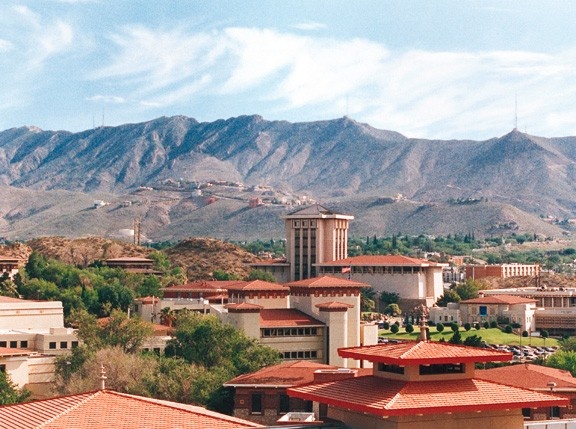
Being one of the largest Hispanic-majority universities in the United States in one of the largest border cities in the country, celebrating Cesar Chavez is a major event for the University of Texas El Paso’s Chicano Studies program, as shown by their three-month series of events dedicated to the occasion.
“The goals of the event are to raise consciousness about the status and condition of the agricultural workers that put food on our table,” said Dennis Bixler-Marquez, professor and director of the Chicano Studies program. “Also to instill in our university, community and the greater El Paso area, an appreciation of the legacy of Cesar Chavez as a civil rights leader and an advocate for human rights.”
Chavez, a Mexican-American farm worker, labor leader and civil rights activist, co-founded the National Farm Workers Association, now known as the United Farm Workers (UFW) in 1966. Chavez and his unionist non-violent methods were popular with American labor activists. After his death in 1993, he became an icon for union laborers. Chavez’s birthday, March 31, has been made a state holiday in Texas and California, and is an optional holiday in Arizona and Colorado.
“I do think Cesar Chavez Day is an important event for our culture so we know who we are and where we came from,” said Sergio Seley, sophomore history major. “It’s not just a day off. I think it’s important for younger generations to know who he was, what he did and how we should help him with his dream of giving rights to immigrant workers and help with their families who went through all that.”
To celebrate Chavez, the Chicano Studies program has helped in organizing a series of events that will run until May.Bixler-Marquez organizes the UTEP portion of the calendar. Various student organizations such as MEChA and multiple community organizations such as the Centro de Trabajadores Agrícolas FronterizosMercado Mayapan, St. Pius X Parish and a variety of local public and private schools are hosting events and fundraisers.
Events that have already occurred include a car show at Riverside High School, a lecture from Carlos M. Montes of the Southern California Immigration Coalition, a screening of the documentary “Precious Knowledge,” which addresses current civil rights tensions in Arizona, and a farm workers mass at St. Pius, among others.
“The Librotraficante stop in El Paso was most successful and it placed El Paso in the national spotlight,” said Bixler-Marquez. “It featured a caravan of authors and students delivering banned books to Tucson, and it featured local authors, like UTEP’s Ben Saenz, and it involved several UTEP students and alumni at the evening reading at CaféMayapán.”
On March 26, Amnesty International screened the Frontline special “Lost in Detention,” which explores the Obama administration’s controversial choices when it comes to immigration policy. After the film screening, a panel consisting of members from the American Civil Liberties Union, the Border Network of Human Rights, MEChA and former city council member and congressional candidate Beto O’Rourke, answered questions and discussed immigration myths, facts and potential solutions.
“It was a panel where we had an opportunity, and I think the operative word is opportunity, to meet Beto O’Rourke and ask questions in an open environment in a university setting,” said Patrick Rabb, senior double major in Chicano studies and political science. “There were also student organizations represented like MEChA, Los Americas, theLGBT organizations as well, and so it seemed like something you’d want to be a part of because you had more opportunities than you would in a class where you’re just listening to a lecture.”
Rabb, who came to El Paso a year ago from South Carolina, said he walked away from the event with a clearer picture of both O’Rourke and border issues. Rabb came to study in El Paso because he believes that all the issues the country has to confront in the near future can be found here in El Paso.
Upcoming events to continue the celebration include the screening of the program “Celebrating Cesar Chavez: Its Message and Impact” March 30 on the monitors of the Liberal Arts and Union East buildings, a march for Chavez March 31 at the Centro de Trabajadores Agrícolas Fronterizos as well as a rally for the International Peasant’s Day of Struggle April 17.
-30-

Wednesday, February 29, 2012

Can You Afford To Go To College?


By Jesús Manuel Mena Garza

Today, after listening to several conservative politicians complain about colleges, I learned that they want to change the way they are run. They blast that colleges need to be more cost effective (not necessarily affordable) and of course less liberal.

Here are the facts. It costs more today to go to college than just a decade ago. Students are now incurring tremendous debt to attend school. Full-time professors are being replaced by adjuncts. Colleges want to attract more foreign students because they pay higher tuitions and fees.

During the heated conservative discussion, they complained that colleges force students to take classes that are not going to them land a job (aka: Ethnic Studies, Philosophy, Art, Art History, Poetry, etc.) These politicians desperately want to micromanage colleges, eliminating courses that don’t meet their conservative agenda.

The panel felt colleges were liberal bastions that spread propaganda promoting Marx, Castro and Obama. They wanted to give the boot to liberal professors and ethnic studies. Yes, they have a very-long list of classes they would like to excise. Maybe your favorite college subject is on their list?

These right-wing politicians also advocate long-distance learning as a way to save money. They proclaim that Internet courses are the wave of the future and that this new student body would be international. Again, it would be more profitable.

Some Historical Context

Those of you under forty probably don't know this, but California back in the 1960s and 70s had what was once considered the finest public university system in the world. It was also affordable. Back in the good old' days, when I went to college, I paid less than $100 a semester to attend San Jose State University. Now, a quality education is exponentially more expensive. What used to be the best university system is now just average. Despite all the fiscal attacks several of the UC's still compete at a high level despite their shrinking budgets.

With less money, colleges have had to make drastic cuts. Today, universities are scrambling to find new sources of funding (like the aforementioned foreign students). Many Californians who want to go to college can’t because they can’t afford it. In the end, maybe only the rich from America and abroad will be able to go to school. Once these select few are accepted, they may find themselves in over-crowded classrooms or staring at a lonely computer screen from home. At least that is the plan if many conservative politicians had their way. What do you think?

-30-

Wednesday, February 22, 2012

MOMA: Diego Rivera Murals


Inspect Diego Rivera murals up close. Click here!
In December 1931, The Museum of Modern Art mounted a major exhibition of work by the Mexican artist Diego Rivera. It was only the second retrospective at the Museum, and it was wildly popular, breaking attendance records in its five-week run.

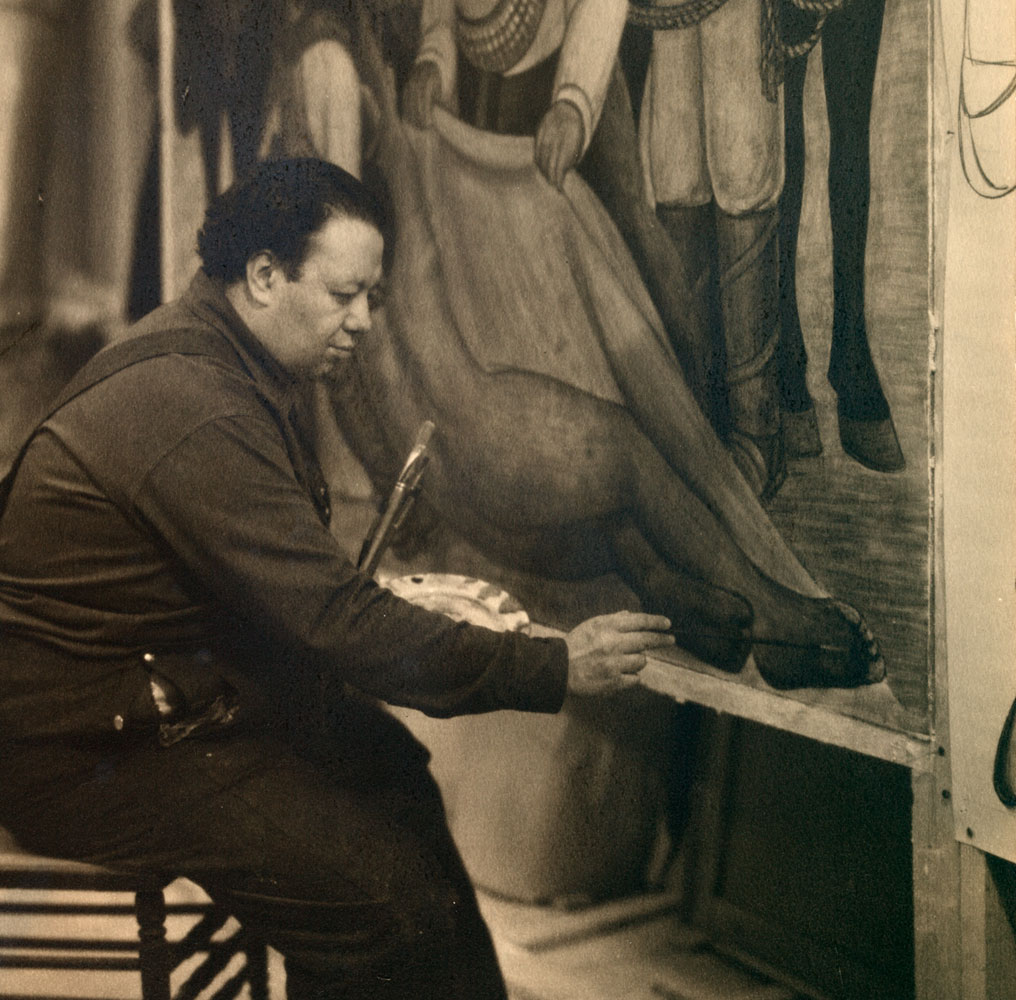
Diego Rivera at work

Rivera was already an international celebrity. He was the most visible figure in Mexican muralism, a large-scale public-art initiative that emerged in the 1920s in the wake of the Mexican Revolution. But his murals—by definition fixed on a single site—were impossible to transport for exhibition. 

To solve this problem, the Museum brought Rivera to New York six weeks before the show opened and provided him with a makeshift studio in an empty gallery. There, Rivera produced five "portable murals"—freestanding frescoes commemorating events in Mexican history—which were prominently featured in the show. 

After the opening, to great publicity, Rivera made three more murals, taking on contemporary New York subjects through monumental images of the city during the Great Depression. The story of this extraordinary commission elucidates Rivera's pivotal role in shaping debates about the social and political value of public art during a period of economic crisis.
-30-

Chicano studies prof wins National Humanities Medal


Ramon Saldivar and President Obama


By Elaine Ayala for My San Antonio [Click header to go to original article and additional information.]


Stanford professor and Brownsville native Ramón Saldívar was among the nine winners of the National Humanities Medal last week. It’s an award given to “individuals or groups whose work has deepened the nation’s understanding of the humanities, broadened our citizens’ engagement with the humanities, or helped preserve and expand Americans’ access to important resources in the humanities.”


The selection of a Chicano studies scholar is timely, as Chicano and Mexican American studies are under attack in Arizona and as anti-immigrant, anti-Latino tones continue to be struck across the country. Saldívar’s scholarship is around globalization, transnationalism and Chicano studies.


President Obama called his exploration of identity along the border “bold.”


“In his studies of Chicano literature and the development of the novel in Europe and America, Dr. Saldívar highlights the cultural and literary markings that divide and unite us,” the president said.


The director of Stanford University’s Center for Comparative Studies in Race and Ethnicity, Saldívar is a graduate of the University of Texas at Austin. He earned his master and doctorate degrees in comparative literature from Yale University. For Brownsville natives it’s probably just as important that he’s a graduate of Brownsville High School.


He’s the author of “The Borderlands of Culture: Américo Paredes and the Transnational Imaginary,” “Chicano Narrative: The Dialectics of Difference” and “Figural Language in the Novel: The Flowers of Speech from Cervantes to Joyce. He’s at work on a fourth book about the perspectives of ethnic writers born after the civil rights era.


In a piece on the National Endowment for the Humanities web site, he said:


“From downtown Brownsville, you can literally look across the river and, a hundred yards away or so, there’s Mexico. To me, growing up, that was always normal life, that was the way the world worked: bilingual, bi-national, transcultural in all sorts of ways.”


Saldívar comes of a large family that birthed two other scholars. One is San Antonio resident Sonia Saldívar Hull, a professor of English and American literature at the University of Texas at San Antonio. She’s director of the Women’s Studies Department at UTSA. Another sibling, José Saldívar, is professor of comparative literature at Stanford.


One other Latino scholar received the medal this year. Professor Teofilo Ruiz teaches at UCLA.


-30-

Upcoming Exhibit: Come On Down!

  I'll have several photographs on display  @ the Cheech Exhibition: February 7 – September 6, 2026 Chicano Camera Culture: A Photograph...