Tuesday, October 05, 2010

'Galeria 4.0': Retrospective, Galeria de la Raza

[Click image by SFGate to enlarge]

Galeria de la Raza may have been born out of the 1960s Chicano movement, but it has managed to remain relevant for 40 years.

The art studio in San Francisco's Mission District has served Latino artists since it was founded in 1970. Its 40-year retrospective exhibition, "Galeria 4.0," is designed around concepts that encapsulate Latino art over the years.

Those concepts derive from the Chicano civil rights movement, during which artists reclaimed their Mexican American ethnicity and culture via art.

"Basically we looked at the Chicano art movement and the Galeria's place in that movement," said Raquel de Anda, the Galeria's associate curator. "What's beautiful about it is it's very porous and the concepts bleed from one to another."

In the past four decades, Latino artists the world over have been embraced here through a common thread of passionate work steeped in community pride and cultural activism.

"Galeria 4.0" boasts acclaimed artists such as José Antonio Burciaga, whose work is juxtaposed with that of young talent such as Mitsy Avila Ovalles and Rio Yañez.

Yañez essentially comes from Chicano art royalty - his parents are Yolanda Lopez and Rene Yañez, one of the gallery's founding members - yet he's crafted his own techniques and style while remaining true to an art movement his parents helped create.

Work from Rio Yañez's "Ghetto Frida: Mission Memories" series is featured in the show, where he reinterpreted Frida Kahlo as a modern-day chola, replete with distinctive tattoos of teardrops falling from her right eye and "Diego" tattooed on her neck. The series is set in the Mission against such symbolic landmarks as the New Mission movie theater.

Many of the outdoor billboard mock-ups, like Rio Yañez's, that have graced the Galeria are being showcased, along with other emblems of the studio's past, like tear sheets from calendars that local artists used to produce.

"There's so much history, so it's difficult to meld 40 years of Latino artwork, but hopefully it'll start conversations about the Mission," de Anda said of the exhibition. "Something the Galeria has always tended to do is educate. There's going to be a lot of history here and vignettes and lessons about Chicano art and how it's broken out of its framework in a lot of ways."

Other portions of the show offer a Día de los Muertos display and other installations involving video and photo. What it comes down to, de Anda said, is an exhibition that reinforces the studio's roots.

"The Galeria has always been about voicing and creating a space for people who have been stifled or ignored," de Anda said. "The times have changed, but there's still a need for that."

Through Jan. 29. 1-7 p.m. Tues., noon-6 p.m. Wed.-Sat. Galeria de la Raza, 2857 24th St., S.F. www.galeriadelaraza.org.

- Danielle Samaniego, 96hours@sfchronicle.com

This article appeared on page G - 14 of the San Francisco Chronicle

Wednesday, September 29, 2010

The State of Latin American Art


Dr Mari Carmen Ramirez, Wortham Curator of Latin American Art and Director, International Center for the Arts of the Americas at the Museum of Fine Arts Houston, discusses Latin American Art at the Aspen Ideas Festival


What follows are my notes based on a talk given by Dr. Mari Carmen Ramirez at the Aspen Ideas Festival, July 10, 2010:

The ICAA:
The International Center for Arts of the Americas (ICAA) at the Museum of Fine Arts Houston is a unique resource center for the study of 20th Century Latin American and Latino Art. Established in 2001, its mission is to transform perceptions of Latin American and Latino Art and open new avenues of intercultural dialogue and exchange. The ICAA's signature initiative is the Documents of 20th Century Latin American and Latino Art: A Digital Archive and Publications Project whose web-based digital archive - which is scheduled to launch in the Fall of 2011 - will provide free universal access to key writings by artists, artistic movements, critics, and curators from Mexico, Central and South America, the Caribbean, and the United States.

The Problem:
Much of Latin American and Latino Art of the 20th century is poorly documented. The market, particularly the international market, for much of the work was not developed until relatively recently. For example, Sotheby's only created a category for Latin American Art in 1979 and there is no category or mainstream market for Latino art. An accessible resource that taps into the intellectual foundations of this art is needed.

The ICAA at Houston is now ten years old.

Our principal goals are to:

Recover and digitally publish primary and critical documents relevant to Latin American and Latino art of the 20th Century.

Provide open access to these documents for all those interested in 20th century Latin American and Latino Art.

Publish selections of these documents in the form of thematic anthologies that will complement the digital archive.

Establish a dynamic digital archive and research program devoted to providing a sound basis of scholarship for this work.

Recovery:
As part of our efforts we have initiated a systematic effort to recover original documents relevant to Latin American and Latino Art of the 20th century. This effort is encompassed by the ICAA's Documents Project. These include key documents from the artist's own papers and collections as well as contemporaneous press and art criticism. Our work is made difficult by a precarious infrastructure in many of the countries, poor distribution and lack of policies aimed at preserving books, archival material, and key documents.

Curate:
To address these and other issues we have created a "think tank" comprised of scholars and experts on the art produced along this cultural axis who generously contribute their expertise and are helping the ICAA further our goal to preserve and make accessible documents that will change perceptions of Latin American and Latino art. To date, the Center has published 11 books and catalogs and held 4 major international symposia.

Access:
We have established regional centers for the study of Latin American Art in 10 cities that include: Buenos Aires (Argentina), Santiago/Valparaiso (Chile), São Paulo (Brazil), Lima (Peru), Caracas (Venezuela), Bogotá (Colombia), Mexico City, Los Angeles, South Bend (Indiana), and Houston. The project also has research affiliates in San Juan (Puerto Rico), Miami, and New York. In each location we recover documents, scan and digitize them, catalogue and annotate them. Beginning in Fall 2011, we will make them all publicly available, free of charge, in the project's specially designed Website. Through this monumental undertaking, we are creating a "multinational super information highway."

This data is intended to provide a sound intellectual foundation for the long-term growth and development of the field of Latin American and Latino art. Our hope is that this archive will help fill gaps in the worldwide knowledge and appreciation of this art as well provide the necessary research tools for scholars, students, collectors, museum and arts professional, and anyone else interested in this art.

Scholarship:
At present we have over 100 researchers distributed amongst the ten project sites. Our headquarters are in Houston. The project's team members include senior and junior art historians, researchers, librarians, IT specialists, editors, translators, and administrators. We are governed by a 17-member Editorial Board and a 10-member steering committee. By the time we launch the project's website in Fall 2011 we will have a collection of over 10,000 critical document and more than 55,000 related images. We are committed to continue to expand this archive which, in theory at least, is limitless.

By art world standards, in which the perceived glamor resides in promoting artists and organizing exhibitions, the often tedious work of archiving and documenting is hardly enticing. The ICAA's work, in particular, is mostly behind the scenes and has an assembly line character. However, it fulfills the indispensable role of adding the crucial information and context to exhibitions and publications that enable a deeper appreciation of the art presented.

Several illustrations of the type of documents collected were shown in photos. These include photos artists at work, artists' notes, contemporary newspaper reviews, and gallery handouts.

Examples:
The profusely illustrated documents by Caracas' radical collective El Techo de la Ballena
-Luis Felipe Noé's art criticism of the 1950s (Argentina)
- Brazil's "Ruptura Manifesto"
-Documentation of a series of debates between Antonio Berni and David Alfaro Siqueiros in Argentina during 1933
- The precursory responses to a survey published in Havana's Revista de avance from 1927 to 1929 that debated the existence and definition of the concept of Latin American art
-The critical work of the Guatemala-born, Mexico City-based artist, Carlos Mérida that illuminates the work of other artists at a time when there was little established art criticism of their work.
-The recipes for colors and tonalities developed by Hélio Oiticica, the Brazilian avant-garde artist, for his Grand Nucleus installation (1960-68)

In 2011 we will launch the ICAA digital archive. The archive will be a free online resource for all. Simultaneous to the launching of the site, the ICAA will publish the first volume in the parallel Critical Documents of Latin American and Latino Art book series, 13 thematic anthologies that will provide English translations for documents from the online resource. Our hope is that the web-based archive and the book series will provide a visible space of Latin American Art in the United States and elsewhere and will transmit a rich legacy of knowledge to future generations.

Questions from the audience.

Q: Have we transcended the need for Latin American Specialists?
MCR: Absolutely not. Latin American Art is now mainstream yet there are still huge gaps in our understanding of the thousands of artists and movements at work in the more than twenty countries that make up the region throughout the 20th century. There is a lot of information out there about the contemporary manifestations of this art but very little serious historical scholarship. The field has grown horizontally yet lacks depth. This is what the ICAA's Documents Project is trying to address. We need a high degree of scholarship to support the understanding and appreciation of Latin American and Latino art in both its historical and contemporary manifestations.

Promoters of the global view argue that Latin American art is now global, yet we need to bear in mind that all art is both local and global. We cannot side-step the local and what it implies in terms of the contextual factors affecting the emergence and development of a particular form of art. Latin American art is no exception.

What is really at stake behind the "global" position is a market-driven, economic process that has transformed the status of Latin American art in contemporary artistic circuits. Globalization has turned Latin American art into a strategic economic resource. Over the last 10-15 year this art has become a favorite commodity in the current market, providing additional justification for careful scholarship and documentation. Curiously, all this attention has created a movement to re-regionalize, a tendency which calls for expert knowledge such as the one that the ICAA is trying to provide.

A persistent issue in the field is that Latin American art has traditionally been considered to be derivative. Those of us working in this field over the last three decades have set out to prove that this is not the case. Since the early 20th century, Latin American artists have engaged in original research. They have made important theoretical contributions to art and aesthetics and have produced forms of art that in many cases have anticipated important developments in Europe and the United States. To understand these developments we need to get roots of this art and understand its development in depth. This can only be done through key writings and other documentation that shed light on the intellectual process that nurtured the art. This is the ultimate goal of the ICAA Documents project.

Q: What is Latin American Art and what is Latino Art? How do they differ?
MCR: Latin American Art is an operational term used to describe art actually made in the more than twenty countries that make up Latin America and that encompass Mexico, Central and South America, and the Caribbean. Latino art refers to the work of artists of Latin American origin (usually by birth, family ties, or education) who work primarily in the United States.

Q: Doesn't the term Latino Art unfairly segregate artists? After all do we call Pollock a Polish-American Artist or de Kooning a Dutch-American artist? What do we call artists of Latin American origin who were born in the US?
MCR: I do not believe that the term Latin American or Latino Art is segregating as we use it. As I have said, this is another pressing reason why we need to document this work and also, I believe, to study this art in the social milieu in which it arose, either in Latin America or the United States. We do want to understand the social context of the work. We do want to examine patterns of inversion or assimilation of received artistic tenets.
We call artists of Latin American origin living in the United States "Latinos." This is a political term that signals the largest ethnic majority in the United States at present. The use of this term does not segregate these artists, instead it brings attention upon their roots and cultural heritage. As an ascendant minority, these artists need legitimization. We do have Museums of African American Art in the United States and there is a National Museum of Women's Art. However, I believe Latinos are best served by displaying their art next to the art of other groups, particularly North American, European, and even Asian artists.

Q:
Does your center also include architecture as art? Are you collecting original drawings by Latin American architects as does MOMA for example?
MCR: No. At the moment our collection does not include architecture.

Q: Will you extend your collection and research to Colonial Art of Latin America?
MCR: We may extend our collection to include colonial art, but have no plans at present to expand our research and documentation work in this area. Other institutions such as the Los Angeles County Museum of Art (LACMA) and the Denver Art Museum have established programs dedicated to Colonial Art. We gain by dividing the effort.

Q: And Chicano Art?
MCR: Both our research and our collection include "Chicano Art" (the art of Mexican-Americans, mostly living in California, Texas and the Southwest). To that effect, we have partnered with other research centers devoted to Chicano Art, such as UCLA's Chicano Studies Research Center and the University of Notre Dame's Institute for Latino Studies.

Q: And Puerto Rican Art?
MCR: It is interesting that both Chicano and Puerto Rican art in the United States form an important part of the Civil Rights legacy and dialog. The Documents Project has actively collected documentation on both island-based Puerto Rican art as well as Nuyorican art in the United States through partnerships and researchers ceded at the University of Puerto Rico's museum in San Juan and Hunter College's Center for Puerto Rican Studies in New York City, respectively.

-30-

Tuesday, September 07, 2010

¡Adelante Siempre!: Recent Work by Southern California Chicana Photographers


The Riverside Art Museum (RAM) has invited Ann Marie Leimer to serve as guest curator for the exhibition titled ¡Adelante Siempre!: Recent Work by Southern California Chicana Photographers that opens September 11 and runs through November 6, 2010. The exhibition features the work of regional artists Laura Aguilar, Diane Arellano, and Jacalyn López García who locate photographic production and processes at the center of their aesthetic endeavors. The artists investigate issues ranging from the impact of social networking sites on the public imagination, to the relationship of the human form to nature, and to the performative social spaces of country line dancing within contemporary subcultures. Professor Leimer invites the university community to a preview reception on Friday, September 10, 2010, from 7:00-9:00 p.m. at the museum on 3425 Mission Inn Avenue in Riverside, California.

Leimer and the artists will be interviewed by Sikivu Hutchinson for the Women’s Collective program of WBAI, Pacifica Radio, 99.5 FM, New York City on Wednesday, September 8 at 8:30 a.m. PST. In conjunction with the exhibition, Professor Leimer will moderate a panel with the artists on Saturday, October 23 from 1:00-2:30 p.m. at RAM. Students and faculty are particularly welcome to attend the panel presentation, as well as the opening reception.

-30-

Wednesday, August 25, 2010

Chicano press lands first series

[Click image to enlarge]

By Steve Bennett

Express-News


Juan Tejeda and Anisa Onofre have "realized a dream" with the birth of Aztlan Libre Press and its premiere publication, the 10th collection of poetry and writings by influential Chicano poet alurista.

"It's a labor of love," Tejeda said of the press last week at his South Side home, an adobe structure dating back to the Mexican Revolution. "But what other kind is there?"

The independent press, says Onofre, will be devoted to Chicano literature and arts.

"We want to publish books regularly and continuously by writers we admire," states Onofre, who is a poet and director of the writers-in-communities program at Gemini Ink. "It ties into my work with Gemini. I love working with writers."

"Tunaluna," the alurista collection, is the first in the press' Veter@nos series; plans are being made for a Nuevas Voces series (New Voices) and for a literary prize — the Aztlan Libre Press Premio en la Literatura Xicana.

Other irons in the fire range from a children's coloring book of animal symbols from the Aztec calendar and a chapbook of poems in three languages: English, Spanish and Nahuatl. A website has been launched at aztlanlibrepress.com.

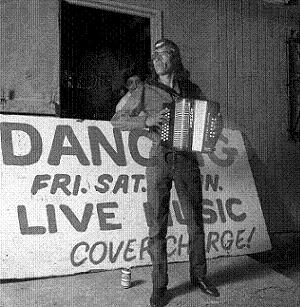
Tejeda, founder of San Antonio's Tejano Conjunto Festival and director of the Conjunto music program at Palo Alto College, has devoted his life to the Chicano arts. It all began, he says, in 1975, in a class at the University of Texas at Austin, a poetry workshop taught by . . . alurista. Meeting once a week, first on campus, then in the teacher's or students' homes, students read and critiqued poetry and stories, made music and talked politics during turbulent times.

"alurista is considered the poet laureate of Aztlan," says Tejeda, retrieving a battered spiral-bound journal titled "Trece Aliens," his only remaining copy of a Xeroxed compilation of the class' output.

"This was the beginning," he says. "I've been involved in writing and publications, really, since my college days. It's been a dream of mine to start a press, and a couple of years ago, Anisa and I just said, ‘Let's do it.' So, now, it's sort of come full circle."

Serendipity played a role in the publication of "Tunaluna." Onofre discovered the poet's website one evening, and Tejeda — "I hadn't spoken to him in years," he says — dashed off an e-mail. A couple of weeks later, a typed manuscript arrived by mail. The would-be publishers were "amazed" — and a little giddy.

"We were a just-started-never-published-nada small Chicano press," says Tejeda, "and we might publish alurista's poems! He had published nine books, but nothing in about 10 years."

Another "interesting convergence" came when Chicago painter Judithe Hernández saw an Internet posting about the publication of the alurista collection and contacted Aztlan Libre Press about cover artwork.

"She had done the illustrations for alurista's first book ("Floricanto en Aztlan") in 1971," says Onofre. "She offered her beautiful artwork for the cover as a gift to alurista."

Small presses rarely place books on the best-seller lists, but their role is critical, says Bryce Milligan, publisher of San Antonio's Wings Press.

"The literary role of small presses in America tends toward discovery, resurrection and preservation — the discovery of new writers, the recovery of ‘lost' works, and making the noncommercial literary works of established and deceased writers available," says Milligan, who's been a sounding board for Tejeda and Onofre. "With their first book, Aztlan Libre Press has accomplished the third of these with a strong work by a pioneer of the Chicano literary movimiento. They've done solid, important, necessary work. As a San Antonio publisher, I could not be more delighted with both the book and the press. ¡Bienvenidos, Aztlan Libre!"

There is a touch of the old revolutionary spirit in the Tejeda/Onofre household, where the "compañeros" live with their 3-year-old daughter Maya, and where Aztlan Libre Press business gets done. Perhaps alurista, in a poem titled "Birdnests," captures its essence:

we
remain
standing
with our slingshots
in our hands
no goliath shall prevail.

To purchase "Tunaluna" by alurista ($15 plus $3 shipping) visit the Aztlan Libre Press Web site at http://aztlanlibrepress.com/. Several readings are planned in October, including UTSA (Oct. 5), Texas Lutheran University (Oct. 6) and Palo Alto College (Oct. 8).

Jesús Garza, "By the way... Aztlan Libre Press has a great website. Click here!"

-30-

Tuesday, August 17, 2010

Esteban 'Steve' Jordan memorial set for Thursday


A memorial service and Mass for legendary and genre-defying accordionist Esteban “Steve” Jordan will be celebrated Thursday, August 19, 2010 at San Martin de Porres Catholic Church, 1730 Dahlgreen Avenue.

The service begins at 7 p.m.

Jordan, who played and lived in San José, California for a time is credited with introducing jazz, pop, blues and Chicano rock to the conjunto polka genre and best known as the Jimi Hendrix of the accordion, died at his West Side home late Friday night from complications of liver cancer. He was 71.

A family spokesperson confirmed that there will be no public viewing of Jordan's body. As per the musician's wishes, his body will be cremated this week.

-30-

Monday, July 12, 2010

Profiling's enabler: High court ruling underpins Arizona immigration law


By Gabriel J. Chin and Kevin R. Johnson

Washington Post

In its challenge to Arizona's controversial immigration law last week, the Justice Department argues that the state law conflicts with federal law, intruding on federal power and ability to regulate immigration. For many Americans, however, the lawsuit is needed because of concerns that Arizona's legislation, S.B. 1070, will lead to police harassment of people, particularly those of color, who cannot prove they are in this country legally. Yet for all the controversy over those concerns, few are talking about the real legal issue underlying the law.

Supporters and opponents of S.B. 1070 assume that racial profiling is unconstitutional, largely because many Americans believe that it ought to be. In fact, the U.S. Supreme Court has approved the racial profiling permitted -- indeed encouraged -- by S.B. 1070.

In a 1975 case regarding the Border Patrol's power to stop vehicles near the U.S.-Mexico border and question the occupants about their citizenship and immigration status, United States v. Brignoni-Ponce, the high court ruled that the "likelihood that any given person of Mexican ancestry is an alien is high enough to make Mexican appearance a relevant factor." In 1982the Arizona Supreme Court agreed, ruling in State v. Graciano that "enforcement of immigration laws often involves a relevant consideration of ethnic factors."

Arizona's immigration law states that a "law enforcement official or agency . . . may not consider race, color or national origin in implementing the requirements of this subsection except to the extent permitted by the United States or Arizona constitution." Although supporters of the law, including Gov. Jan Brewer (R) and other state officials, have said repeatedly that racial profiling is prohibited in its enforcement and that those charged with carrying out the law will be trained to avoid it, the fact that the legislature included this careful exception is significant.

Lawmakers took care to embrace the reliance on race permitted by cases such asBrignoni-Ponce. This choice deserves acknowledgment and discussion, just like that received by the rest of the law.

Brignoni-Ponce has resulted in immigration enforcement that many contend is race-based and in violation of the U.S. Constitution. In case after case, in states including Florida, Iowa and New York, defendants arguing that Border Patrol stops constituted unlawful searches and seizures under the Fourth Amendment have encountered claims by the U.S. government -- including the current administration -- that "Mexican" or "Hispanic" appearance, along with other factors, justified an immigration stop. Border enforcement officers regularly admit in court that "Hispanic appearance" is one reason for an immigration stop.

Racial profiling results from the perceived statistical association of particular races or nationalities with undocumented immigration -- the idea, in other words, that many undocumented immigrants are from Mexico. This rationale ignores the fact that the law generally requires individual suspicion to justify criminal investigation; that a "Mexican appearance" is a vague and ambiguous description and that people from Mexico bear an array of appearances.

We suspect that Brignoni-Ponce and its incorporation into S.B. 1070 have escaped the notice of many Americans because of the ways in which racial sensibilities have evolved since the 1954 ruling in Brown v. Board of Education. Modern American values and most of modern constitutional law are simply inconsistent with the equation of race and suspicion authorized and encouraged by Brignoni-Ponce. Today, being subject to questioning by law enforcement for no other reason than that others of your race, religion or national origin are supposed to commit more of a particular type of crime is nothing short of un-American.

The federal lawsuit raises a number of questions. We think the government's claim of federal preemption is likely to prevail: There is room for one immigration law, not a 50-state patchwork of immigration laws. But the discussion should not stop there. Perhaps that is why last Friday the League of United Latin American Citizens (LULAC) filed another challenge focusing on S.B. 1070's potential for racial profiling. For the Arizona officials who enacted S.B. 1070, the next step is to repeal the part of the law that authorizes racial profiling. As for the legal system as a whole: Brignoni-Ponce has been exceptional and out of the constitutional mainstream since it was decided. The U.S. and Arizona Supreme Courts should reconsider the endorsement of race-based law enforcement, which is contrary to modern notions of equality in America, and conform constitutional law to the principles held dear by most Americans.

Gabriel J. Chin is a professor at the University of Arizona Rogers College of Law. Kevin R. Johnson is dean and a professor of public interest law and Chicana/o studies at the University of California Davis School of Law.

-30-

Thursday, July 08, 2010

Please note!


I update my blog at least once a month. So don't be shy... check it out regularly and please leave your comments.

Photographs: Spring 2010


I have had the opportunity to lecture, present and travel this Spring. Here is an eclectic mix of photos from the first half of 2010. Please feel free to send me your comments and questions.

The first photo is of my wife Annie in Ensenada. Yes, it was cool near the beach.

In the second photo are Ben Cadena and Ed Robledo. This dynamic duo and others performed at the recent National Association of Latino Arts conference in San Jose.

The third photo was taken at a coffee shop across from the University of California at Berkeley. Here my wife Professor Ann Marie Leimer and our good friend Professor David Montejano talk about my upcoming lecture at the university.

It has been exciting first half of the year. I also lectured at the San Bernardino County Museum and my wife and I presented my work at San Jose State University.

The most interesting and different challenge I have taken this year was a solo motorcycle trip. A couple weeks back I rode the motorbike for five hours through the desert. Yes, it was “muy caliente” ... 100 plus degrees. I visited places like San Bernardino, Apple Valley, Joshua Tree and of course Palm Springs.

Other trips, lectures and exhibitions are planned. Such is the life of a greñudo Chicano lefty artist.

-30-

Saturday, July 03, 2010

Updated Blog Design

Folks....

I have updated the look (not the feel) of my blog. It took me a total of five minutes and I hope you like it. Please feel free to comment and make suggestions.

Jesus Manuel Mena Garza

Saturday, June 05, 2010

After 40 years, give or take a few, SJSU Chicano Commencement endures

By Joe Rodriguez, San José Mercury News
jrodriguez@mercurynews.com

Tony Quintero remembered the wailing cry of a friend's mother as a dozen or so defiant Chicano graduates walked out of San Jose State's main graduation ceremony a generation ago.

"No!" the woman cried, begging her son to stay seated. "Don't give up your degree!"

The degrees were safe, but much more was at stake. Upset about the low number of Mexican-American students and professors at the school, the graduates intended to shake the administration into action. Half-expecting a riot, 200 campus and city police officers lined Spartan Stadium.

Instead of violence, what broke out that June evening in 1968 was a separate graduation ceremony — Chicano Commencement — which lives to this day and holds its 40th official celebration Sunday. Some 2,000 people are expected at San Jose State's Event Center to honor 56 Chicano students and their families. The event has become a festive affair, a far cry from its controversial beginning.

To everyone's relief at Spartan Stadium, only a few boos broke the silence of the peaceful walkout. The students gathered in a field across the stadium with 200 to 300 sympathizers and relatives. The crowd listened to playwright Luis Valdez and other fiery speakers and watched a theater group perform a new satirical play called "Chicano Commencement." Each graduate got a chance to speak. Most, if not all, thanked their parents. Then everyone partied into the night.

Juan Garcia, now a professor at Fresno State, was a freshman who attended. "I remember thinking to myself, 'Hey! We should have a separate commencement every year.' I was that inspired."

It didn't happen the same way again, but it did happen. Today, such commencements — sometimes called Chicano/Latino Commencement — are held at private and state universities in California, including Stanford and UC Berkeley, and throughout the Southwest. San Jose State's was among the first.

Three short years later, in 1971, a different brand of Chicano activism took hold on campus. Student leaders Mauro Chavez and Chris Jimenez liked the idea of a separate commencement, but they didn't want to disturb the main graduation ceremony by walking out or demonstrating outside.

"Mauro said, 'You shouldn't spoil someone else's party for your own,' " Jimenez remembered. —‰'Let's have our own.' "

Instead of attending the main ceremony, the graduates organized and raised $3,000 for a separate ceremony for Mexican-American and other Latino college graduates from throughout the Bay Area. About 30 showed up at Guadalupe Church in East San Jose and brought their families. Jimenez's wife cooked a big pot of chicken. Others brought tortillas, beans, salads and soft drinks. Chavez's idea was to recognize the academic accomplishments of individual graduates, honor the sacrifices of their parents and inspire their little brothers and sisters to aim for college.

In addition, the graduates could select their own theme and keynote speaker. His broader goal was to change the university and other public institutions from the inside. Chavez died in 1992 after a long and distinguished career in academia.
"The highlight for me," Jimenez said, "was the families jumping up and down and shouting when the graduates went up for their diplomas. It became a shouting match between families, they were so proud and happy."

Standing on the sidelines, however, were some of the student protesters from 1968, and they weren't pleased with how Chicano Commencement was turning out.

"It became a celebration and not a political occasion," said Armando Valdez, now a behavioral scientist in Mountain View. "I would rather have seen continued protest. The reality is, little has changed for Chicanos in this society."

Jimenez still bristles at the criticism.

"They called us all sorts of names, 'vendidos,' sellouts," he said. "What did they do other than protest? Our philosophy was education. If you want social change, you need educated people."

Gabe Reyes, who helped organize the 1971 event as a student and later became an administrator at San Jose State, said the battle over Chicano Commencement underscored a wider question every civil rights activist faced at the time: By joining the institutions they wanted to change, did they risk becoming "co-opted" and changing little or nothing at the end?

"It was a question we all wrestled with," Reyes said.

A few years later, the organizers of Chicano Commencement abandoned separatism and encouraged graduates to also attend the school's main graduation ceremony. The university gradually embraced the ceremony as a way to promote campus diversity and boost recruitment of Latino students.

Linda Ortega, a staff member at San Jose State's engineering department, once invited former San Jose State President Robert Caret to a Chicano Commencement at the Santa Clara Convention Center attended by 2,000 people.

She asked him, "This is pretty awesome, don't you think?" Ortega recalled him responding, "I'm blown away." Before too long, black, Asian and gay graduates throughout California were staging their own parallel or ethnic commencements.

Christina Ramos, a student organizer with a new master's degree in public administration, agreed that the ceremony had lost its political edge for a while. But she said Arizona's new law for questioning undocumented immigrants has lit a fire under this Sunday's Chicano Commencement.

"It's still a political statement," Ramos said about the event. "We as Latinos are still not viewed as positive contributors to society. But we are still here. We are making a difference. We are graduating from college."

-30-

Best Fishing Combo For Oregon Coast Striped Bass

 I ASKED GOOGLE Ai: Suggest a rod and real combo for catching 20 pound striped bass off the coast of Oregon? PHOTO: August 2026 fishing in C...